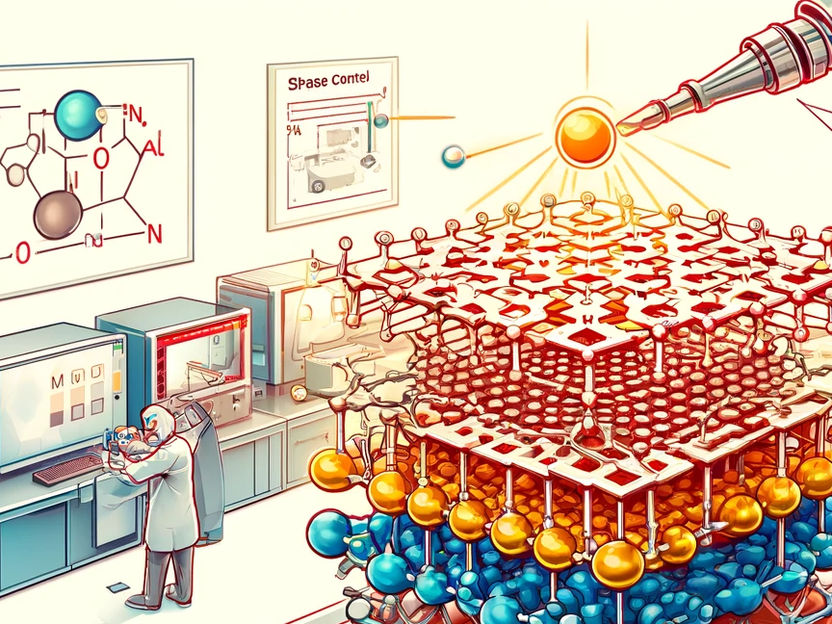
How dangerous are nanoplastics for babies in the womb?
The focus is on nanoplastic particles, which could lead to the development of a hypersensitive immune system in the child

Advertisement


allergies and asthma are widespread diseases that could arise during embryonal development in the womb. A team led by Empa researcher Tina Bürki is investigating the possible causes of this. The focus is on nanoplastic particles, which could lead to the development of a hypersensitive immune system in the child. The project is supported by the Eduard Aeberhardt Foundation and another foundation.
Asthma, hay fever or chronic skin conditions: The occurrence of allergic reactions is diverse and on the rise. Among other things, environmental factors during the child's early development in the womb are suspected, which lay the foundation for later illnesses. A team of researchers from Empa, ETH Zurich, EPFL, the University of Zurich and the Cantonal Hospital of St. Gallen is now focusing on micro- and nanoplastics. It is already known that the tiny plastic particles enter the body of pregnant women via drinking water, food and air and find their way to the unborn child. Here they could affect the fragile immune system of mother and child. Moreover, they are able to transport other pollutants, allergens and pathogens.
The new research project now aims to provide a holistic view of the significance of plastic particles during pregnancy. To achieve this, experts from the fields of materials science, cell biology and allergy research are working together with clinical experts. The project is funded by the Eduard Aeberhardt Foundation and another foundation.
Correctly assessing the risk
The team led by project manager Tina Bürki and Sina Ruhstaller from Empa's Particles-Biology Interactions laboratory in St. Gallen are particularly interested in the placenta, the central interface between mother and child. The organ forms exclusively during pregnancy and supplies the child with nutrients and messenger substances for a healthy development. The placenta could therefore play a decisive role when it comes to the immune response of mother and child to foreign substances.
It is already clear that nanoparticles can disrupt the communication between the placenta and the unborn child. However, the effect of micro- and nanoplastics on the immunological function of the placenta and the effects on the fetal immune system have not yet been elucidated. "There is thus an urgent need for a correct risk assessments of environmental pollutants for pregnant women," says Bürki.
In order to analyze the entire process of nanoparticle exposure, the researchers will examine the micro- and nano-abrasion of everyday plastic products and evaluate the interactions with typical allergy-causing substances and pollutants. Finally, using cell cultures of the human placenta and fetal blood cells, the transport in the body and the reaction to the various particles and pollutant-particle combinations can be mapped as realistically as possible. "By releasing hormones and other mediators, the contaminated placenta could contribute to abnormal developments in the child's immune system," says Tina Bürki. For the sustainable use of safe plastic products, it is therefore essential to know whether and which polymers have an increased potential to trigger allergies, says the Empa researcher.


Other news from the department science




















Most read news












More news from our other portals


























Last viewed contents
Frost & Sullivan: Which are the emerging growth markets for nondestructive test inspection services? - Brazil and South Africa lead the way, while India and China offer long-term growth opportunities
Seeing clearly into a new realm – researchers prototype a new generation of quantum microscopy - “What began as an experimental annoyance ended up being a hint towards a capability of our microscope that is unique among current alternatives”
Indo-German research collaboration in the field of surface engineering and thin films officially started
Production begins at BASF’s largest Indian investment to date - BASF inaugurates chemical complex in Dahej, India
Portable and precise gas sensor could monitor pollution and detect disease
Monitoring of Critical Raw Material Recycling from Battery Black Mass - This study demonstrates the effective use of measuring instruments for separation and analysis
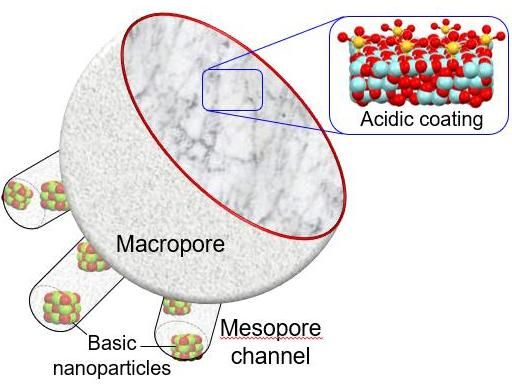
Making biodiesel from dirty old cooking oil just got way easier - New ultra-efficient catalyst can recycle old cooking oil into biodiesel and turn food scraps into high-value complex molecules
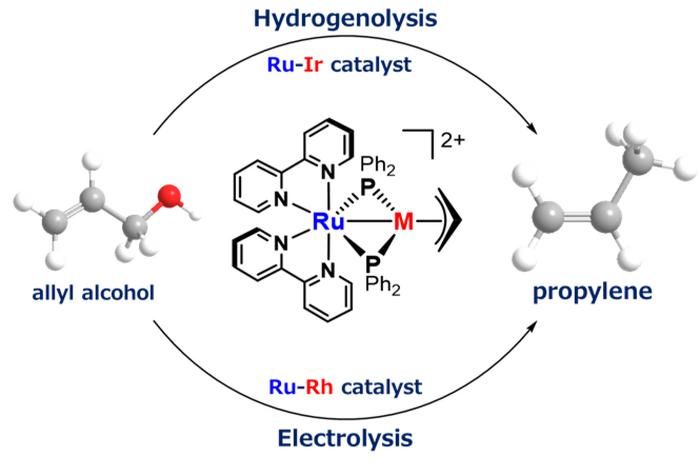
New catalyst developed for sustainable propylene production from biomass - Propylene production harnesses biodiesel waste byproduct
BASF expanding mobile emissions catalysts production capacity in India

Evonik to expand sodium methylate capacity in Argentina

Newly discovered material property may lead to high temp superconductivity