World premiere: "Mannheim 001" production plant produces marine fuel from wastewater and electricity
e-Methanol is a climate-neutral fuel alternative and therefore key to the sustainable transformation of the shipping industry
Advertisement


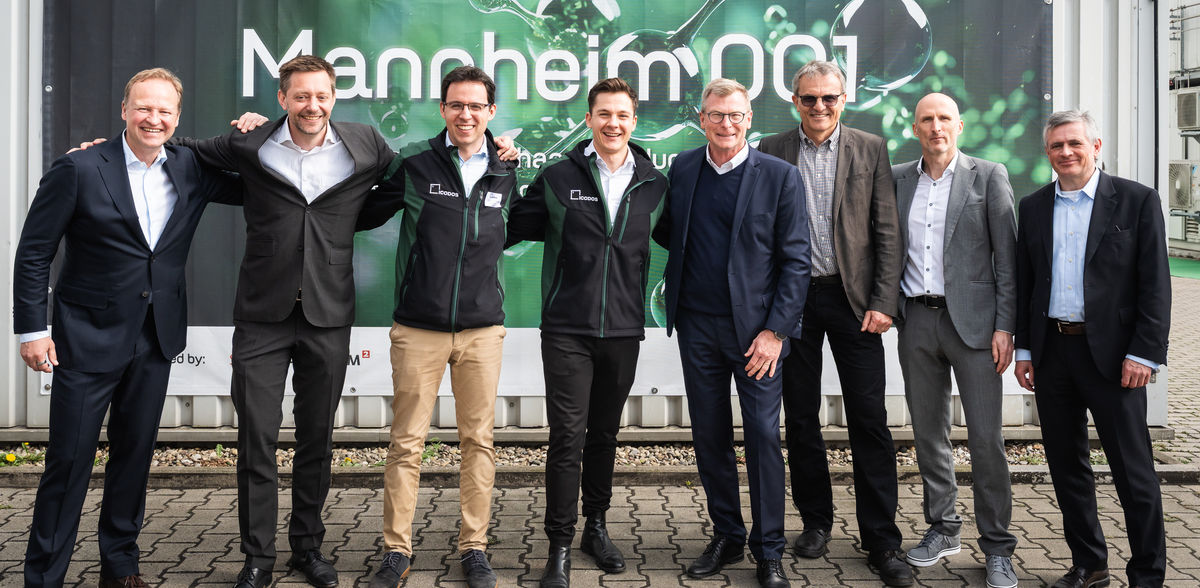
A pioneering innovation from Mannheim is setting new standards in the production of sustainable fuel. In a globally unique plant, sustainable marine fuel is being produced from wastewater and electricity for the first time. Behind it is a consortium consisting of the climate technology start-up ICODOS GmbH, Karlsruhe Institute of Technology (KIT) and Eigenbetrieb Stadtentwässerung (EBS) Mannheim. This pioneering project utilizes the immense potential of wastewater treatment plants - there are around 9,000 of them in Germany alone and the number is estimated at up to 75,000 at EU level.

ICODOS GmbH
Lighthouse project for sustainable shipping
The project is a shining example of the innovative strength of the start-up city of Mannheim and the good cooperation between the start-up scene and established municipal institutions such as the EBS. "We are proud to present the world's first plant that converts wastewater into sustainable marine fuel using electricity," explains Dr. Vidal Vazquez, Technical Managing Director of ICODOS. "This technology will have a lasting impact on the shipping industry and will make a decisive contribution to reducing CO2 emissions," adds David Strittmatter, Commercial Director of ICODOS.
Federal Transport Minister Dr. Volker Wissing emphasized at the opening: "In order to achieve our climate protection goals, we must keep all technological options open. In addition to electrification and hydrogen-based propulsion systems, we need climate-friendly fuels, especially in maritime shipping. Germany should play a pioneering role in research and development. This is a growth market of the future. It is also about making our country independent of energy imports. Mannheim 001' shows how economic efficiency and climate protection can go hand in hand. This project can set an example for many other locations in Germany and Europe."
As part of the project, biogas will be produced at the Mannheim sewage treatment plant. This will be further processed in the demonstration plant operated by KIT and ICODOS. The patented process makes it possible to efficiently purify the biogas and convert it into methanol in combination with electricity and hydrogen. The electricity is used for electrolysis to produce hydrogen. This then reacts with the CO2 dissolved from the biogas. The entire process is designed to remove unavoidable CO2 from the system and thus contribute to the reduction of greenhouse gases. The "e-methanol" produced ultimately serves as a sustainable marine fuel and demonstrates the potential of the entire process chain to convert wastewater into valuable energy sources.
"The new plant impressively demonstrates how research and entrepreneurial spirit can produce practical solutions for the sustainable transformation of our economy," says Professor Thomas Hirth, Vice President Transfer and International Affairs at KIT. "Here, a valuable material is obtained from biogas produced during wastewater treatment - an innovative approach that shows how existing resources can be used intelligently and in a climate-friendly way.
Note: This article has been translated using a computer system without human intervention. LUMITOS offers these automatic translations to present a wider range of current news. Since this article has been translated with automatic translation, it is possible that it contains errors in vocabulary, syntax or grammar. The original article in German can be found here.


Other news from the department business & finance












Most read news












More news from our other portals



























Something is happening in the chemical industry ...
This is what true pioneering spirit looks like: Plenty of innovative start-ups are bringing fresh ideas, lifeblood and entrepreneurial spirit to change tomorrow's world for the better. Immerse yourself in the world of these young companies and take the opportunity to get in touch with the founders.
Last viewed contents
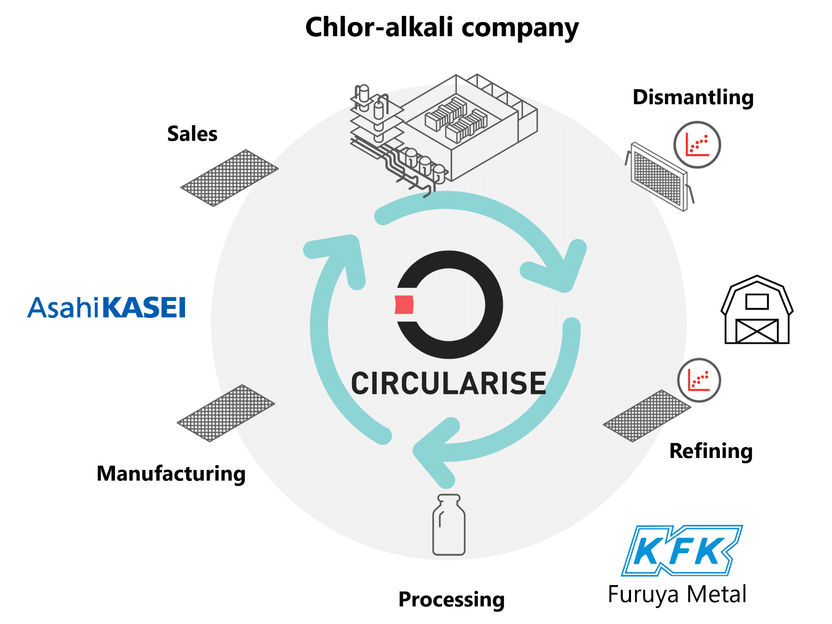
Asahi Kasei, Circularise, and Furuya Metal Launch Project for Precious Metal Traceability in Chlor-Alkali Electrolysis Electrodes - Demonstration Project Targets Supply Security for Scarce Iridium and Ruthenium

SOPAT GmbH and Malvern Panalytical announce a distribution agreement for US market
BASF, Quantafuel and REMONDIS want to cooperate on chemical recycling of plastic waste - More recycling of plastic waste which otherwise would be incinerated

Innovation boost for the hydrogen economy: Real-time diagnostics for electrolyisers and fuel cells in operation - Optimize load capacity and efficiency, extend service life, and reduce operating costs — a technological leap with great potential
Nobian starts direct delivery of calcium chloride from Frankfurt - "At a time when many companies are reducing their product offerings, we are expanding ours in Europe..."
BAM, HZB and HU are conducting joint research on sodium batteries - Berlin Battery Lab develops batteries that conserve raw materials and is also open to partnerships with start-ups
Innovation paves way to make ‘clean’ chemicals, plastics and food using solar energy - Integrated solar reactor uses sunlight, water, CO2 and engineered bacteria to grow biomass in a single beaker
Chemicals and energy sectors move away from fossil raw materials - Fraunhofer and an Estonian deep-tech start-up are testing a modular biomass platform on an industrial scale
From Flue Gas to Raw Material: Extracting Carbon from CO₂ Produced by Waste Incineration - KIT and EEW Energy from Waste (EEW) plan to use CO₂ from flue gases in the NECOC process

KAIST identifies a route to faster-charging, longer-lasting EV batteries - Research team uses a 3D digital twin to reveal localized degradation mechanisms during fast charging

Matthews Engineering and start-up hs-tumbler partner on dry battery electrode manufacturing - Companies aim to enable dry electrode manufacturing through trajectory mixing