Methanol Qualified as a Feedstock for Sustainable Aviation Fuel
Methanol-to-Jet: Drop-in fuel possible without modifying aircraft

Advertisement


The more than 23,000 large aircraft worldwide consume approximately 350 billion liters of fuel annually and account for about 3 percent of human- caused CO₂ emissions. For long-haul flights over 4,000 km in particular, there is no alternative to liquid fuels, as only these provide a sufficiently high energy density. The development of sustainable aviation fuels (SAF) has now reached an important milestone: Following successful qualification by the international standardization organization ASTM, methanol has been recognized as an approved feedstock for the alcohol-to-jet production pathway.
This means that in the future, methanol-to-jet blending components can be produced and mixed with at least 50 percent by volume of conventional kerosene to create a “drop-in” fuel—one that is fully compatible and can be used without any modifications to aircraft, engines, or existing infrastructure.
This decision marks a significant milestone for the “SAFari” collaborative project, which is funded by the Federal Ministry of Transportation. It was published on July 30, 2026, with the revision of the international specification ASTM D7566 Annex 5. The project aims to develop an efficient production process for sustainable aviation fuel based on methanol, thereby providing another technological building block for the decarbonization of aviation.
Throughout the multi-year project, the project partners closely supported the ASTM qualification process as members of the Methanol-to-Jet Task Force. The findings from the evaluation process were thus incorporated into the project work at an early stage and taken into account in the development of the production process. In this context, the early assessment of fuel quality was a key indicator of the project’s success. Since only small quantities of fuel were initially available during this development phase, the prescreening method developed at the DLR Institute of Combustion Technology was employed. It enables a comprehensive evaluation of fuel quality even with small sample quantities and provides an early assessment of whether a fuel meets the requirements of the ASTM specification. The results were immediately incorporated into process and catalyst development and helped ensure that the methanol-to-jet (MTJ) blending components developed in the project were specifically tailored to meet the anticipated international specification requirements.
Sustainable Methanol as the Basis for a New Aviation Fuel
SAF production based on MTJ technologies uses sustainable methanol derived from biogenic sources or produced from hydrogen and captured CO₂. In the methanol-to-olefins (MTO) synthesis, this methanol is converted into short- chain olefins, with water—a byproduct—removing the oxygen from the process. The short-chain olefins are then combined in an oligomerization process to form long-chain olefins, resulting in a product mixture that is liquid at room temperature. Through hydrogenation with hydrogen, the olefins are converted into stable paraffins. The result is a fuel blend that meets the aviation industry’s stringent requirements.
“In the SAFari project, we are working with our partners to develop an innovative process that aims to achieve a carbon-based SAF yield of over 85 percent by weight through customized catalysts and in-process recycling of material streams and heat. “With the successful completion of the ASTM qualification process, one of the biggest hurdles for demonstration and scaling has now been overcome,” explains Dr. Elias Frei, Head of the Hydrogen Technologies Division at Fraunhofer ISE. “Following the successful ASTM qualification, the project is now focusing on further optimizing and scaling up the manufacturing process,” says Dr. Achim Schaadt, Head of the Sustainable Synthesis Products Division, looking ahead. “The goal is to produce larger quantities of fuel in order to conduct further research and demonstrations, thereby paving the way for the industrial implementation of methanol-based Sustainable Aviation Fuel,” adds Dr. Franz Mantei, project manager of the SAFari project. The market potential for this technology is enormous: for European air traffic alone, the mandated quotas will result in approximately 40 million metric tons by 2050.
In addition to Fraunhofer ISE, the consortium for the SAFari project (“Sustainable Aviation Fuels based on Advanced Reaction and Process Intensification”) includes ASG Analytik-Service AG, BP Europa SE, Clariant Produkte (Deutschland) GmbH, the German Aerospace Center (DLR) (DLR), Technip Energies France S.A.S., Südzucker AG, the Federal Association of the German Aviation Industry (BDL), and Airbus Helicopters Deutschland GmbH. The consortium thus covers the entire value chain. The SAFari project has been funded by the Federal Ministry of Transport (BMV) since December 1, 2022, for a period of six years.


Other news from the department science





















Most read news











More news from our other portals



























Last viewed contents
“See you at the DISCO₂!”: Carbon Dioxide as a Valuable Resource for Industry - The Federal Ministry of Federal Affairs, Transport, and Telecommunications (BMFTR) is providing over 24 million euros in funding for the DISCO₂ research initiative on industrial CO₂ utilization

FUST Lab Receives Investment from Asia2G Capital - The Korean deep-tech company plans to use the capital to expand into the U.S., European, and Japanese markets

ACHEMA Middle East: Debut in Saudi Arabia not until 2027 - Messe Frankfurt Saudi Arabia and DECHEMA are responding to regional uncertainties and are also changing the venue

New core-shell design for anodes significantly increases performance of sodium-ion batteries - Researchers coat porous carbon with a filter-like layer that allows sodium ions to pass through while keeping disruptive electrolyte molecules out

New "chemical armor" could unlock the holy grail of solid-state battery technology - A simple one-step coating builds a silicon-indium hybrid shield on lithium metal, quadrupling current density and extending battery cycle life
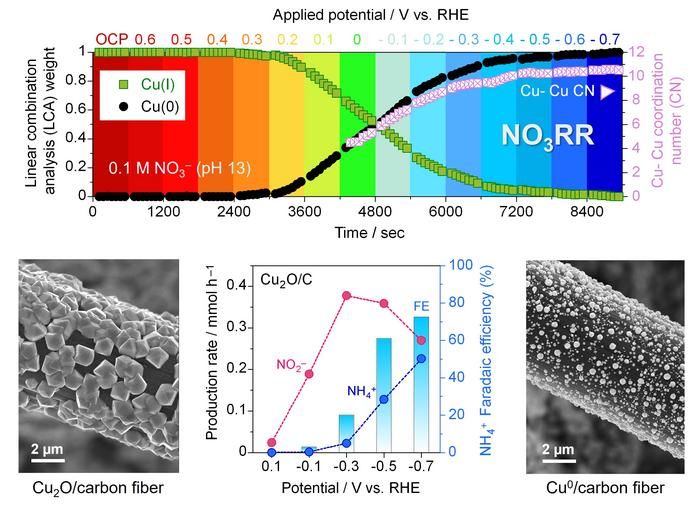
Scientists unveil mechanism behind greener ammonia production
Siemens to digitalize one of Europe's largest renewable hydrogen projects - Physics-based digital twin and real-time optimization
Collaboration between University of Bristol and Malvern Panalytical - Bringing academia and business together to solve global challenges

Digital lab day 2025 celebrates international success - virtual battery day 2025 follows in November

RE:VOLTAGE and CometHire Win the HTW Startup Challenge 2026 in Berlin - The competition awarded 10,000 euros in prize money in the GreenTech and Impact Entrepreneurship categories

Atomic reshuffle paves way for record-breaking catalysts for hydrogen production - "This opens a new strategy for designing adaptive catalysts for a wide range of applications"
