Electrochemical Process Enables Recovery of Valuable Raw Materials
Advertisement


lithium, cobalt and nickel are in high demand – and they are hard to obtain. Researchers at the Fraunhofer Institute for Manufacturing Technology and Advanced Materials IFAM are developing an electrochemical process to recover scarce raw materials in battery recycling. This new technology could also enable the extraction of rare earth elements from electronic waste in the future.
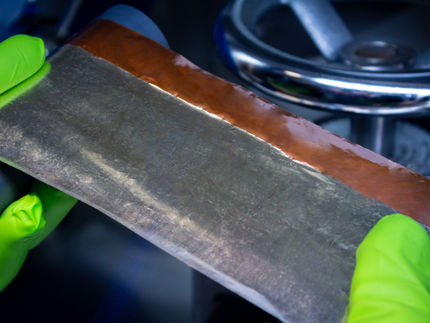
Researchers at Fraunhofer IFAM are developing specialized electrodes that recover valuable metals such as lithium and cobalt from the process water accumulated during battery recycling.
Copyright: Fraunhofer IFAM
Demand for lithium-ion batteries, which are indispensable for electric cars, smartphones and laptops, is growing. According to a study by consulting firm Deloitte, lithium imports to Germany rose from 514 million euros in 2013 to 21 billion euros in 2023 – an increase of roughly forty times. Raw materials such as cobalt and nickel are also highly important economically but are difficult to obtain. Importing these materials increases global dependencies.
Researchers at Fraunhofer IFAM in Bremen are working on a solution. “We want to recover valuable raw materials and rare earths at high yield and high purity, thereby closing the product loop and reducing dependencies,” explains Julian Schwenzel, Head of Electrical Energy Storage at Fraunhofer IFAM.
Reduced dependency on critical raw materials In the MeGaBat project, which focuses on methods for electrochemical extraction of active battery materials, researchers are developing an electrochemical process for isolating materials such as lithium, cobalt and nickel in battery recycling. The researchers are also planning to use the process to recover rare earths.
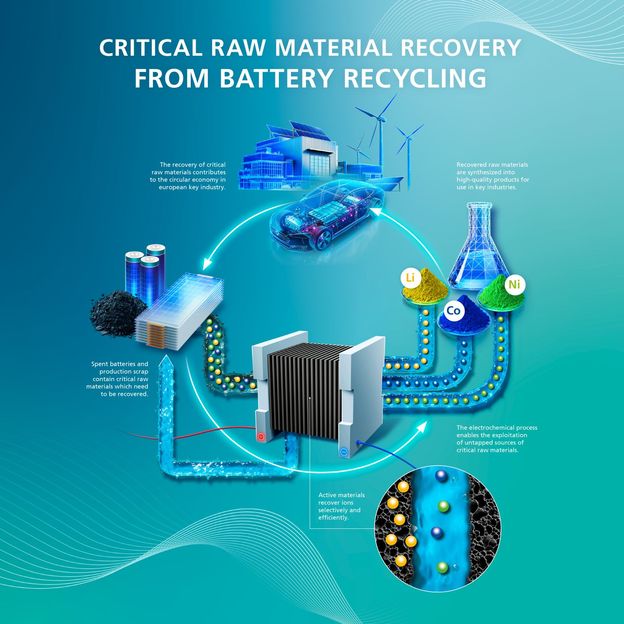
The idea behind the technology: The process water that accumulates in battery recycling is routed to an electrochemical reactor. The reactor holds two electrodes produced by the researchers at Fraunhofer IFAM by screen printing. “With their special properties, the electrodes selectively extract and store ions from the wastewater,” explains Cleis Santos, manager of the group for Electrochemical Processes for Recycling and Water Treatment. “This enables them to extract, for example, lithium ions, and we then obtain the separated substance as a high-purity powder at the end of the process.”
The purified water is returned to the process after isolation of the desired substance. With the appropriate modifications, the electrodes can also be used to uptake and recover other scarce raw materials from wastewater, such as cobalt, nickel or copper. “In the long term, it is conceivable that wastewater could be routed through multiple reactors in a large-scale system,” Santos explains. “We could thus recycle various critical raw materials within the same plant.” In contrast to current recycling methods such as pyro and hydrometallurgical processing – which is very energy-intensive and generates a lot of CO2 – the new technology works without chemicals such as bases or acids and requires less energy, making it more cost-effective.
In addition to improving the purity of the recovered raw materials, the efficiency of the entire process can also be improved by an estimated 30 to 40 percent. This is a crucial advantage, Schwenzel explains: “In the future, EU regulations will require that manufacturers more frequently declare their total carbon footprint from raw material to finished product, and new products must also contain a greater fraction of recycled material.” Efficiency and quality of recovery are therefore becoming increasingly important.”
The researchers have already successfully tested this new technology in the Fraunhofer IFAM laboratory. The team is currently working on a large-scale pilot plant. This could also recover rare earth elements in the future, such as from electronic waste: “So far, we’ve had to import 100 percent of our rare earth elements. “Our process would enable us to reduce this dependency,” says group leader Santos.



Other news from the department science




















These products might interest you

Most read news











More news from our other portals



























See the theme worlds for related content
Topic World Battery Technology
The topic world Battery Technology combines relevant knowledge in a unique way. Here you will find everything about suppliers and their products, webinars, white papers, catalogs and brochures.

Topic World Battery Technology
The topic world Battery Technology combines relevant knowledge in a unique way. Here you will find everything about suppliers and their products, webinars, white papers, catalogs and brochures.
Last viewed contents
Not just faster, but smarter: AI that explains its discoveries - Using a grey-box approach, a catalyst was identified in fewer than 50 experiments that outperforms the industry standard for propane dehydrogenation
Green hydrogen from sunlight and water - without electrolyzers and without electricity - Photreon, a spin-off from KIT, is developing a photoreactor panel that enables direct solar hydrogen production
Digital lab day 2025 celebrates international success - virtual battery day 2025 follows in November

RE:VOLTAGE and CometHire Win the HTW Startup Challenge 2026 in Berlin - The competition awarded 10,000 euros in prize money in the GreenTech and Impact Entrepreneurship categories
Atomic reshuffle paves way for record-breaking catalysts for hydrogen production - "This opens a new strategy for designing adaptive catalysts for a wide range of applications"

Global underground CO₂ storage hits record 43.6 million tonnes - London Register expands reach
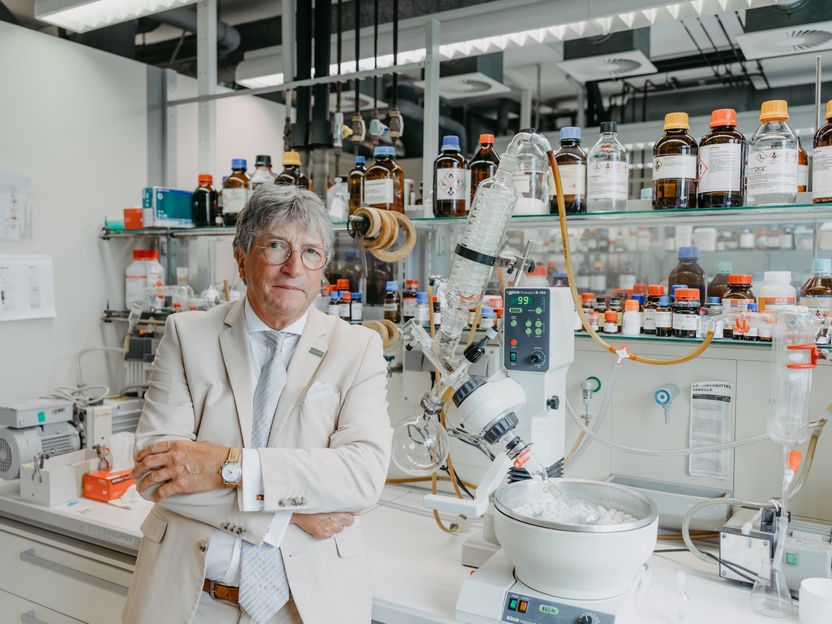
Research Breakthrough on the Path to a New Reserve Antibiotic - For the first time, chemists have succeeded in synthesizing the highly potent natural compound neosorangicin A

Endress+Hauser expands its presence in the U.S. - 44 million euros are being invested in the new facility in Greenwood, Indiana
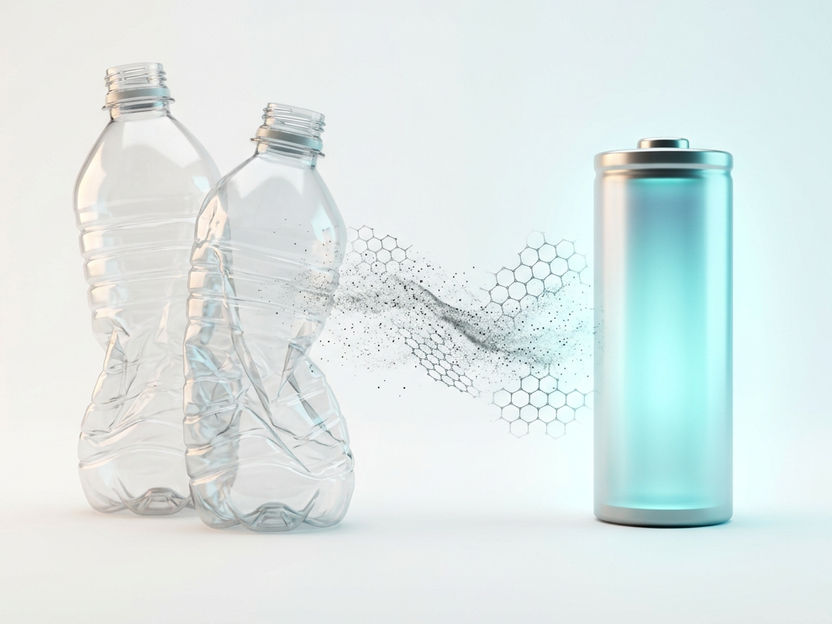
Plastic bottles could find new life in batteries as graphite - Penn State researchers converting PET waste into synthetic graphite that outperforms natural graphite
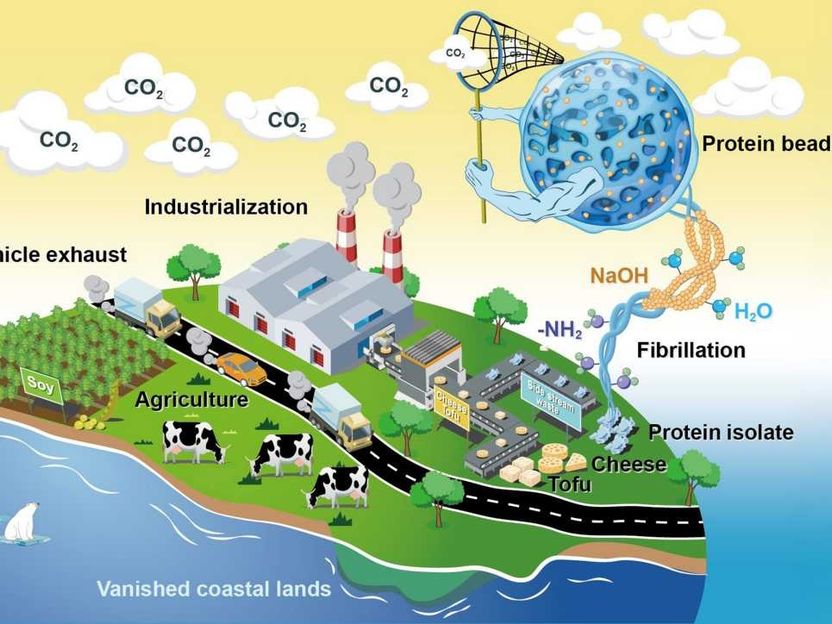
Turning food waste into carbon captors - Expected to be cheaper than other capture methods
Study shows: Lithium and sodium-ion technologies are more closely linked than assumed - "Switching to a new battery technology does not automatically open the door to new market players"