X-rays tear water apart before its electrons can relax
High-resolution electron spectroscopy detects neutral atomic oxygen
Advertisement


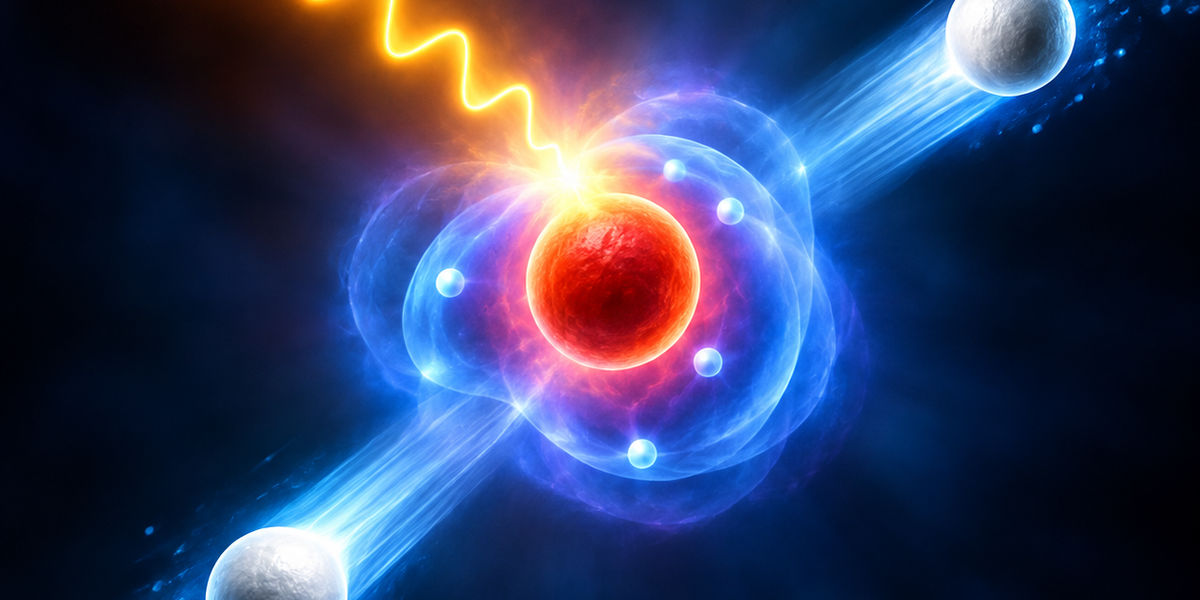
A single X‑ray photon can break both O–H bonds in a water molecule within a few femtoseconds (quadrillionths of a second), creating neutral atomic oxygen. This breakup happens before the electrons finish relaxing, revealing an ultrafast pathway for X‑ray–driven chemistry in water.
- Ultrafast double dissociation: both O–H bonds rupture within a few femtoseconds, forming neutral atomic oxygen before Auger decay (a rapid electron-emission relaxation) occurs.
- Clear spectral fingerprints: high-resolution electron spectroscopy at PETRA III (DESY, beamline P04) and MAX IV (FlexPES) showed sharp electron-energy features tied to neutral atomic oxygen.
- Theory confirmation: advanced molecular and atomic calculations identified the signals as excited neutral oxygen, not hydroxyl (OH) fragments.
- Why it matters: refines how X-ray–driven chemistry in water is understood and helps reinterpret earlier experimental signals; similar rapid pathways may exist in other small molecules and clusters.
Why this matters
Water is one of the simplest and most fundamental molecules, making it a benchmark for understanding how radiation changes matter. The formation of neutral atomic oxygen is particularly significant because atomic oxygen is highly reactive and can initiate further chemical reactions. These observations improve how scientists read X-ray measurements of water and more complex environments, and they point to similarly fast fragmentation routes in other small molecules and molecular clusters.
What the researchers did
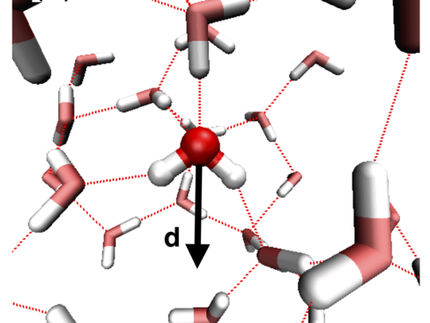
The team investigated isolated (gaseous) water molecules exposed to X-rays at two synchrotron facilities (large X-ray sources that accelerate electrons): PETRA III at DESY (Hamburg) and MAX IV (Lund). After absorbing an X-ray photon, a water molecule enters a core-ionized state (an inner-shell electron is removed) that typically relaxes very quickly by emitting another electron—Auger decay. Using high-resolution electron spectroscopy (a technique that precisely reads the energies of emitted electrons), the researchers followed what happens to the molecule between absorption and decay.
What they found
The emitted-electron spectra showed exceptionally sharp features that could not be explained by the decay of an intact water molecule or common fragments. Instead, detailed theoretical calculations showed that both O–H bonds had already broken, producing a neutral oxygen atom in an excited state before electronic relaxation occurred. That excited atom decays in a way that yields electrons with very specific energies—its “fingerprint”—allowing the team to identify it directly.
“What makes this result particularly exciting is that we see the molecule break apart before the electronic relaxation has even finished. Both O–H bonds rupture within the lifetime of the oxygen core hole, so the nuclear motion is essentially winning the race against the electrons.” — Florian Trinter, FHI, Berlin
Two facilities, one consistent picture
The experiments were performed at DESY’s PETRA III (beamline P04) and at MAX IV (FlexPES). Seeing the same characteristic signal at both facilities was key to establishing this as a genuine molecular fragmentation pathway and provided a consistent picture of what happens after X-ray excitation.
“Seeing the characteristic signal also at MAX IV was an important part of establishing this as a genuine molecular fragmentation pathway. The measurements at the two facilities give us a very consistent picture of what happens to the water molecule after X-ray excitation.” — Gunnar Öhrwall, MAX IV, Lund
How theory confirmed neutral oxygen
The theoretical analysis was crucial for distinguishing the atomic-oxygen signal from other possible pathways. Molecular and atomic calculations of the electron spectra showed that the observed features are fingerprints of excited neutral atomic oxygen, not of hydroxyl fragments.
“The energy of the emitted electrons provides a kind of fingerprint of the state that is formed. Our calculations show that the observed features are consistent with the decay of an excited neutral oxygen atom that has already separated from the water molecule.” — Ludger Inhester, CFEL, DESY, Hamburg
Rethinking earlier signals
The findings change how previously observed high-energy fragmentation features in water are interpreted. Similar signals, once associated with the decay of hydroxyl fragments, are better explained as signatures of neutral atomic oxygen when viewed with higher spectral resolution and supported by molecular and atomic calculations.
Why it happens so fast
Owing to the strongly repulsive character of the specific core-excited state (the electron arrangement after X-ray absorption), both O–H bonds can rupture even faster than the electronic relaxation. This provides a striking example of the interplay between electronic excitation (changes in electrons) and nuclear motion (movement of the atoms in the molecule).
Outlook
A clearer understanding of this ultrafast breakup will help scientists interpret X-ray experiments on water and related systems more reliably and refine models of radiation chemistry. It also opens the door to identifying similarly rapid pathways in other small molecules and molecular clusters.
Original publication



Other news from the department science





















Most read news











More news from our other portals



























See the theme worlds for related content
Topic World Spectroscopy
Investigation with spectroscopy gives us unique insights into the composition and structure of materials. From UV-Vis spectroscopy to infrared and Raman spectroscopy to fluorescence and atomic absorption spectroscopy, spectroscopy offers us a wide range of analytical techniques to precisely characterize substances. Immerse yourself in the fascinating world of spectroscopy!

Topic World Spectroscopy
Investigation with spectroscopy gives us unique insights into the composition and structure of materials. From UV-Vis spectroscopy to infrared and Raman spectroscopy to fluorescence and atomic absorption spectroscopy, spectroscopy offers us a wide range of analytical techniques to precisely characterize substances. Immerse yourself in the fascinating world of spectroscopy!