Physicists catch a magnetic wave that offers promise for more energy-efficient computing
Advertisement


A team of physicists has taken pictures of a theorized but previously undetected magnetic wave, the discovery of which offers the potential to be an energy-efficient means to transfer data in consumer electronics.
The research was conducted by scientists at New York University, Stanford University, and the SLAC National Accelerator Laboratory.
"This is an exciting discovery because it shows that small magnetic waves - known as spin-waves - can add up to a large one in a magnet, a wave that can maintain its shape as it moves," explains Andrew Kent, a professor of physics at NYU. "A specialized x-ray method that can focus on particular magnetic elements with very high spatial resolution enabled this discovery and should enable many more insights into this behavior."
"Magnetism has been used for navigation for thousands of years and more recently to build generators, motors, and data storage devices," adds co-author Hendrik Ohldag, a scientist at the Stanford Synchrotron Radiation Laboratory, where the soliton was discovered. "However, magnetic elements were mostly viewed as static and uniform. To push the limits of energy efficiency in the future we need to understand better how magnetic devices behave on fast timescales at the nanoscale, which is why we are using this dedicated ultrafast x-ray microscope."
These magnetic waves are known as solitons and were theorized to occur in magnets in the 1970s. They form because of a delicate balance of magnetic forces - much like water waves can form a tsunami. However, these magnetic waves are not destructive; they could potentially be harnessed to transmit data in magnetic circuits in a way that is far more energy efficient than current methods that involve moving electrical charge.
This is because solitons are stable objects that overcome resistance, or friction, as they move. By contrast, electrons, used to move data today, do generate heat as they travel, due to resistance and thus requiring additional energy, such as from a battery, as they transport data to its destination.
In their search, the scientists deployed x-ray microscopy at the Stanford Synchrotron Radiation Lightsource in order to image the behavior of specific magnetic atoms in materials. The technique offers extraordinarily high spatial resolution and temporal resolution. The scientists created a condition in magnetic materials where the sought-after solitons should exist by injecting an electrical current into a magnetic material to excite spin-waves.
Original publication
D. Backes, F. Macià, S. Bonetti, R. Kukreja, H. Ohldag, and A. D. Kent; "Direct observation of a localized magnetic soliton in a spin-transfer nanocontact"; Phys. Rev. Lett.; 2015


Other news from the department science




















Most read news












More news from our other portals


























Last viewed contents

Using gold nanoparticles to trigger sequential unfolding of 3D structures
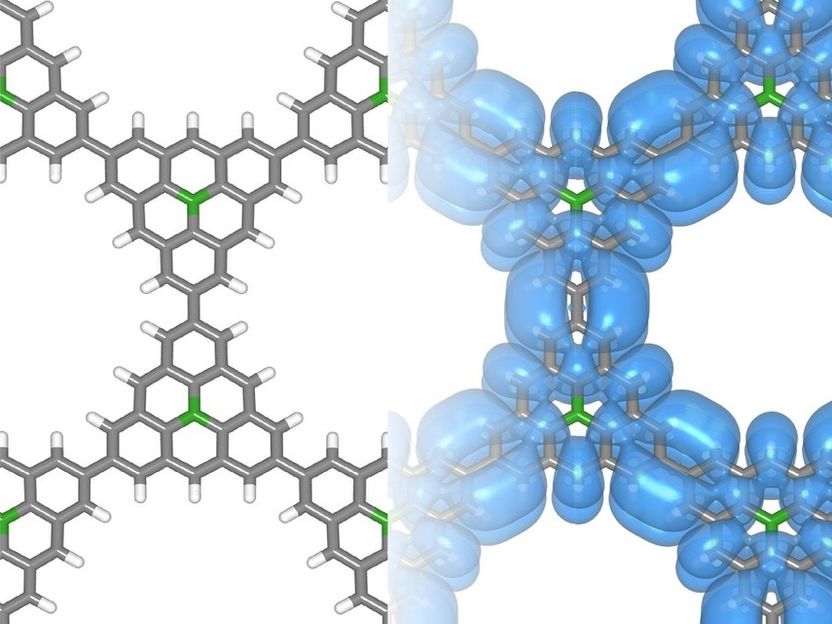
Magnetism without metal: a milestone for materials science - “This is fundamentally new”

Magnetic nanoparticles change their magnetic structure in a magnetic field - International research team studies the effects of magnetic fields on magnetic nanoparticles
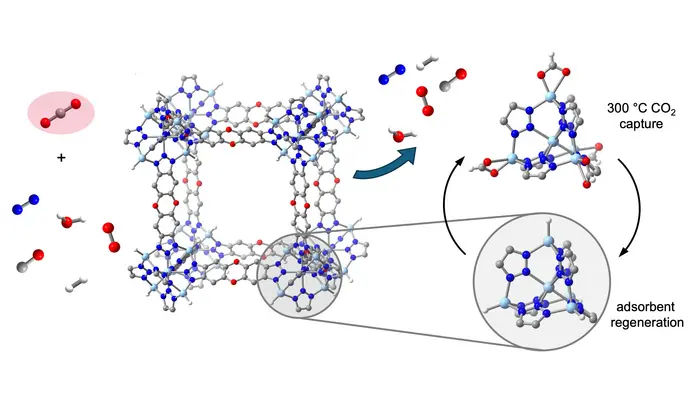
Breakthrough in capturing 'hot' CO2 from industrial exhaust - A metal-organic framework is capable of capturing CO2 at extreme temperatures
Quantum Tricks to Unveil the Secrets of Topological Materials
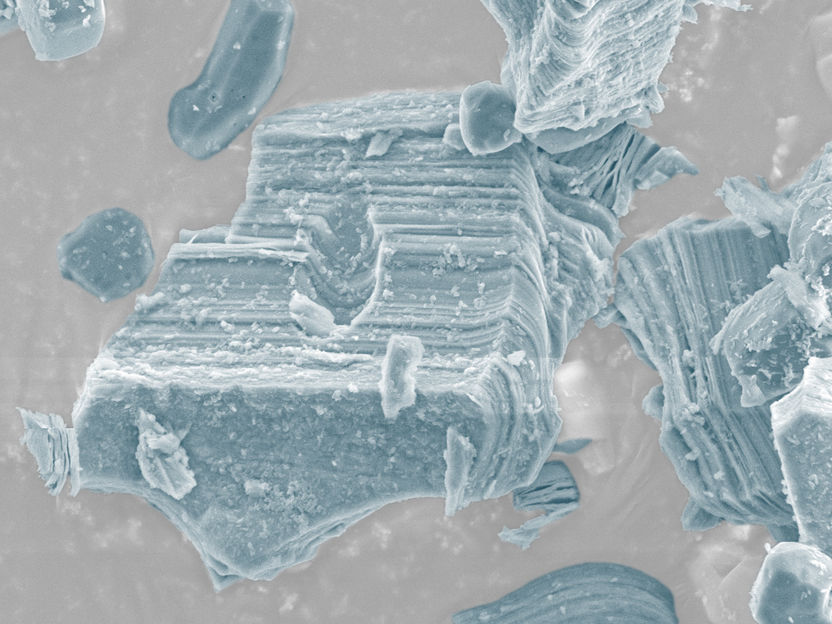
The nano-lasagna: Novel 2D materials gain momentum - Research team develops environmentally friendly MXene synthesis without hazardous hydrofluoric acid for industrial scaling

Starch Instead of Plastic: Colombian Startup Reinventing Fruit Packaging - Natupla: From ISC3 start-up of the month to a pioneer in starch-based, biodegradable plastics
Researchers Test Novel Titanium-Air Battery - This is the first time that experimental results of such a battery have been published

Flow research on the outskirts of space - Experiments in weightlessness isolate classic diffusion phenomenon
Hydrogen chloride can now be stored, processed, and electrolyzed safely thanks to breakthrough - New method paves the way for safer, more sustainable hydrogen and base chemical production
Bayer wins BDI Environmental Prize - Complexing agent helps to reduce impact on inshore waters