Dr Eike Griess appointed as Country Manager for LGC Promochem GmbH, Germany
Advertisement


LGC Promochem has appointed a new Country Manager to head up its business in Germany, LGC Promochem GmbH. Previously from German international biotech company, QIAGEN GmbH, where he managed the DNA sequencing and genomics business unit, Eike Griess will assume the day-to-day responsibility of running LGC Promochem´s business in Germany. He takes over from Tilo Karrer who will now concentrate on the strategy for developing LGC Promochem´s analytical and reference materials business across Europe.
Tilo Karrer, Managing Director, LGC Promochem GmbH said: "We are delighted to welcome Eike Griess to LGC Promochem. Eike´s expertise in handling the day-to-day operations in Germany will be vital as the size and breadth of the company increases. Eike´s strong background in the biotechnology sector and his many years of experience of managing products as well as sales and marketing functions will bring skills that are invaluable to the company as it continues to expand."
On joining the staff of LGC Promochem GmbH as Country Manager, Dr Eike Griess said: "This is an exciting time to be taking on the new role of Country Manager for LGC Promochem in Germany. LGC Promochem has built on its reputation to become Europe´s leading supplier of reference materials and its specific aim is to ensure the very highest level of customer satisfaction on an international scale. I welcome the opportunity as Country Manager to play a part in LGC Promochem´s future as it continues to grow internationally."



Other news from the department people














These products might interest you


Most read news











More news from our other portals


























Last viewed contents
Investing in the future: Bohle Technology Center to be opened in March 2015
Vitamins doing gymnastics: Scientists capture first full image of vitamin B12 in action - Work by University of Michigan and MIT team yields new understanding of crucial reaction in the body and in CO2-scrubbing bacteria
FEI's Quanta SEMs and Malvern's Advanced Particle Analysis Software Combine to Deliver Solution for Nanoscale Applications
CIM midsummer survey: Global chemicals industry continues to be optimistic
USC scientists turn a harmful greenhouse gas into a tool for making pharmaceuticals - New technique finds a use for ozone-destroying chemical waste product
ULTRA Scientific inorganic standards available through LGC Promochem - The optimum standards for tracing inorganic contaminants in soil, sediment, water, oil, plants and food materials
Improving the degradation of toxic hydrocarbons - Initiation of a worldwide research project under the direction of the HZI
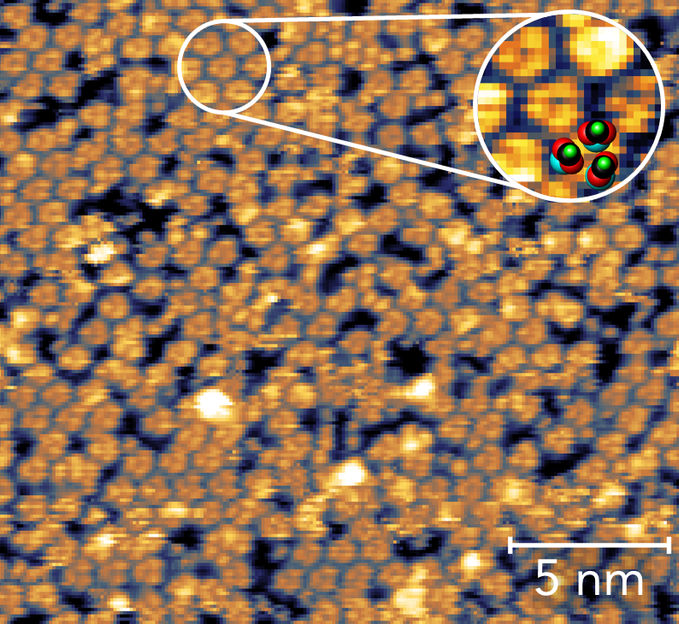
Dance of the molecules: New methods of producing tailor-made materials - Scientists observe vibrational dynamics of organic acid molecules on iron oxide surface

New insights into binding configuration and mobility of molecules on nanoparticle surfaces - Physicists investigate binding between molecules and nanoparticles with high resolution
New method developed for investigating the internal structure of atoms - Previously unknown properties of the element samarium revealed
Cereplast to Establish Italy-Based Bioplastic Manufacturing Plant - Plant Expected to Have 100,000 Tons of Capacity