BASF Coatings starts operations at production site for paints in Russia
Advertisement


BASF coatings has started up its new production site for paints in Russia. The new facility at Pavlovski Posad, 60 kilometers east of Moscow, has an annual production capacity of 6,000 tonnes of paints (basecoats and clearcoats). The new site will supply customers in the Russian automotive market with high-quality coatings. In addition, it will offer customers local support for application techniques and laboratory services.
"Our local production capacity provides us with a good basis for shaping the dynamic development of the Russian automotive market," explains Juan Ximenez-Camillo, head of BASF Coatings' Automotive OEM Coatings unit for Europe.
At the Pavlovski Posad site a staff of 50 is employed in production, at the quality test lab, the warehouse and in the workshop. As demand grows, the production line can also be expanded to a volume of 25,000-30,000 tonnes. Details on the amount invested were not disclosed.


Other news from the department manufacturing













These products might interest you


Most read news











More news from our other portals



























Last viewed contents
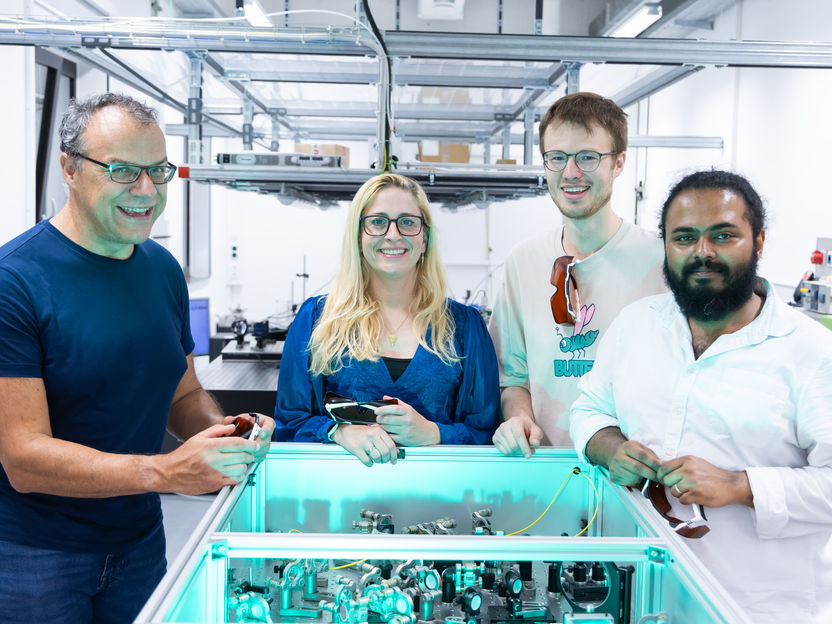
TU Graz develops mobile device for the high-precision measurement of air pollutants - A device the size of a moving box can detect traces of toxic gases from miles away
Search for new semiconductors heats up with gallium oxide
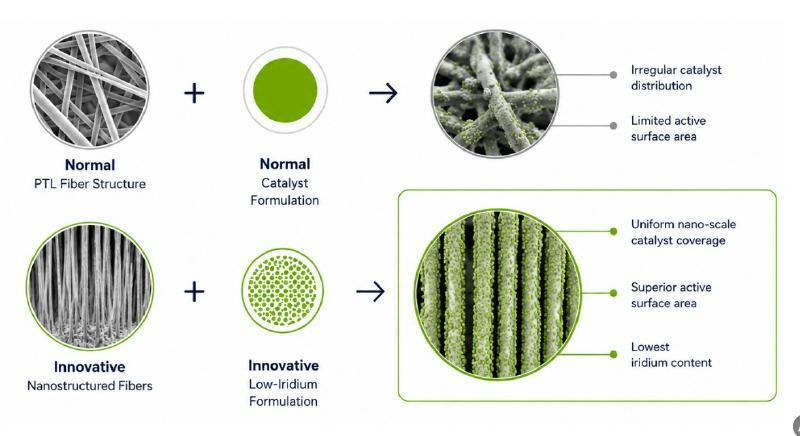
Smoltek Hydrogen and Heraeus Precious Metals advance next-generation ultra-low iridium electrolysis technology
Chemistry without detours: Researchers introduce a two-step process for producing phosphorus-containing chemicals - This promising innovation not only contributes to environmental protection but also saves significant time and costs

Evidence stacks up for poisonous books containing toxic dyes

Adhesives from waste wood, biofuel from straw - EU research project on the potential of agroforestry waste as environmentally friendly raw materials completed
Computational trick enables better understanding of exotic state of matter - New process relevant for fusion and materials research

Pushing boundaries: Detecting the anomalous Hall effect without magnetization in a new class of materials - The first experimental evidence for the anomalous Hall effect emerging in a collinear antiferromagnet with non-Fermi liquid behavior
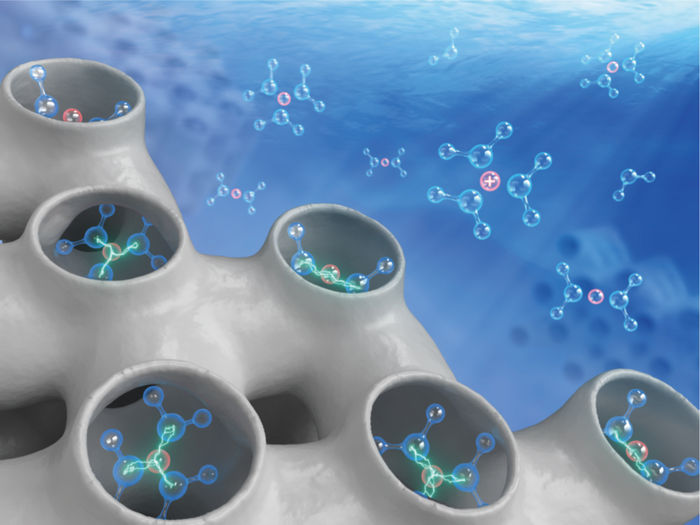
Unveiling how water and ions impact chemical reactivities at solid-aqueous interfaces
Chemistry meets biology: controlling artificial cell membranes through catalysis - Researchers develop an artificial metalloenzyme-based platform that enables programmable control of artificial membrane behavior
'Hot' oxygen atoms on titanium dioxide motivated by more than just temperature - PNNL scientists find unexpected chemical behavior on catalyst surface
