SPOLCHEMIE opens ZEBRA, a new plant for next-generation fluorochemical precursors
The facility is now entering full-scale operation

Advertisement


SPOLCHEMIE (Spolek pro chemickou a hutní výrobu, akciová společnost) was founded in 1856 and proudly commemorates its 170th anniversary this year.
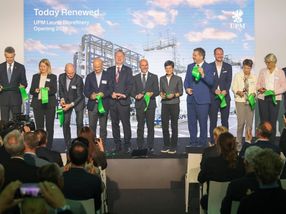
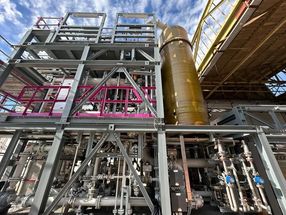
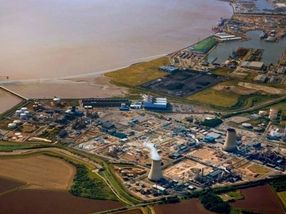
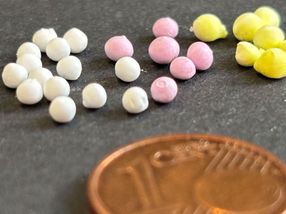
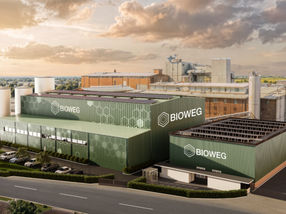
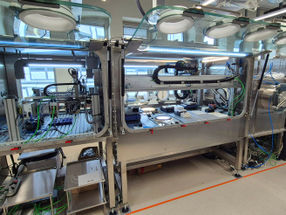
The company was also celebrating the official opening of its latest state-of-the-art manufacturing plant. Known as the “ZEBRA facility,” this new production unit manufactures high-purity precursors (intermediates) for the latest generation of fluorochemicals. These substances are essential components used worldwide in modern cooling and air-conditioning systems, as well as in insulation foam applications.
The facility is operated by SPOLCHEMIE Zebra, a.s., a wholly owned subsidiary of SPOLCHEMIE.
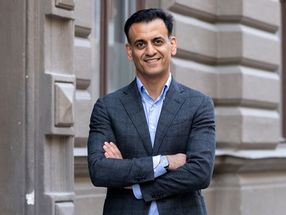
The total capital expenditure, including the supporting infrastructure, amounts to approximately EUR 100 million. „This major investment demonstrates our firm commitment as shareholder. It is also an important step in our strategic shift from traditional commodity (bulk) chemicals to specialty products with higher added value. This focus on innovation is particularly important at a time when the European chemical industry is facing pressure from high energy costs and strong competition from Asia“, said Daniel Tamchyna, CEO of KAPRAIN CHEMICAL.
The core production technology at the ZEBRA facility was developed entirely in-house by SPOLCHEMIE’s R&D department, which began working on the new chemical processes in 2009. Following years of laboratory research, extensive testing, and pilot-scale operations, this work culminated in the construction of a brand new industrial-scale production plant. The underlying inventions are protected by patents across all key markets worldwide. SPOLCHEMIE Zebra holds intellectual property (IP) covering four patent families, encompassing various stages of the manufacturing process as well as specific high-purity product compositions.
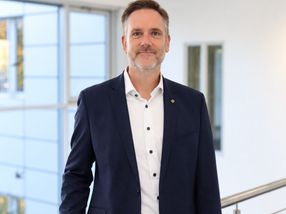
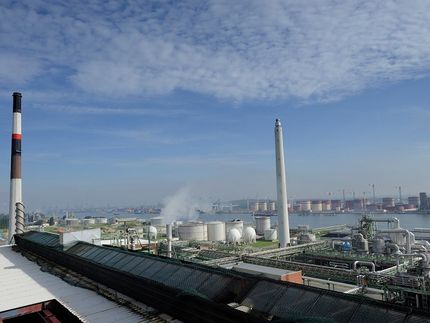
The new production facility is fully integrated into SPOLCHEMIE’s industrial site in Ústí nad Labem, where it utilizes internal product streams, including chlorine produced by the company’s membrane electrolysis unit. This integration enhances the efficiency and resilience of SPOLCHEMIE’s operations while reducing the company’s exposure to the highly competitive and cyclical markets for hydroxides and epoxy resins. “This project showcases our technological development capabilities and further strengthens our position as a versatile chlor-alkali player, capable of partnering with leading multinational companies”, said Bert Stiers, Member of the Board of SPOLCHEMIE Zebra.
The first products were produced in 2024, and the industrial plant was successfully commissioned and brought into regular operation in May 2025. Since then, SPOLCHEMIE’s teams have continuously optimized and fine-tuned the production parameters. Having already produced and delivered more than 25,000 tonnes of high-purity precursors, the facility is now entering full-scale operation.
SPOLCHEMIE Zebra’s intermediates are specifically designed for use in fourth-generation fluorochemicals, which are replacing older substances that are gradually being phased out. These new products do not deplete the ozone layer, while their global warming potential (GWP) is only a fraction of that of their predecessors. The project therefore delivers significant environmental benefits on a global scale. SPOLCHEMIE estimates that the downstream use of its precursors will help avoid more than 10 million tonnes of CO₂-equivalent emissions annually.
As part of its strong commitment to corporate social responsibility (CSR), SPOLCHEMIE is also pleased to highlight the ZEBRA project’s contribution to local employment. The project has created both direct and indirect jobs, helping to strengthen and anchor employment in the Ústí nad Labem region. At the peak of construction, more than 350 people were involved in the project. Today, 65 full-time SPOLCHEMIE employees remain directly involved in the new business line.


Other news from the department business & finance