 Verified
MARSXpress 2.0
Microwave digestion device MARSXpress 2.0
Extremely simple operation of the appliance and the digestion containers
Flexible number of samples from 1 to 40 samples
Universal use of all sample types
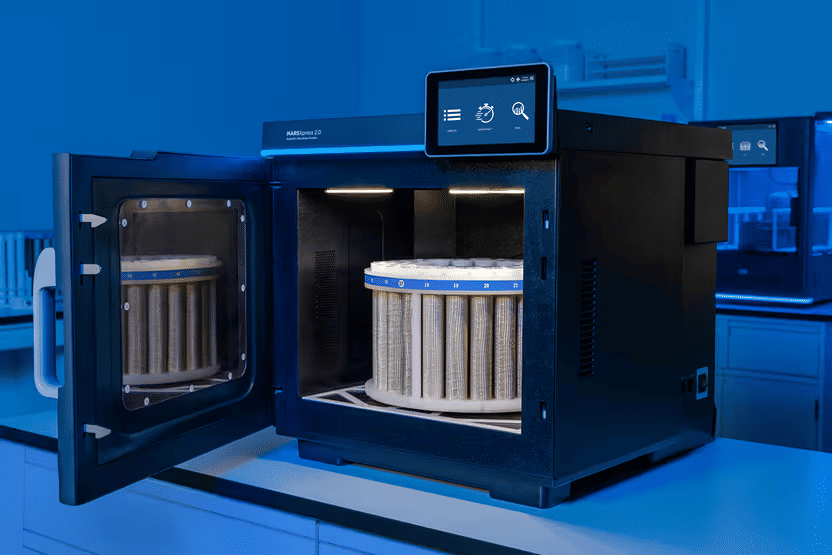

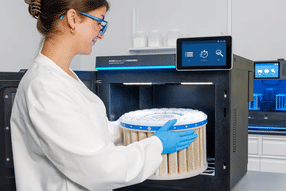
Microwave digestion device with built-in intelligence
MARSXpress 2.0 microwave digestion with built-in intelligence
40 in one go? This is not a mixture of the fairy tales of the Brave Little Tailor and Ali Baba and the 40 Thieves! Rather, it is the realistic answer to the bottleneck in element determination in the analytical laboratory. Spectrometric methods such as ICP-OES and ICP-MS have become faster, more powerful and more convenient. Only sample digestion was time-consuming and limited in sample throughput.
Once upon a time...
Since the end of the 1980s, this bottleneck in digestion has been overcome with the use of microwave systems. As a pioneer in microwave laboratory technology, CEM developed a microwave pressure digestion device in which samples are digested with mineral acids at elevated temperatures and pressures.
Over the past decades, microwave devices have undergone significant further development. Improved sensor systems, better pressure vessels, simpler software, increased safety standards and improved microwave energy input have been developed. This high technical level has enabled microwave digestion technology to become established in analytical laboratories, so that it is used in daily routine operations and has found its way into a large number of DIN, EN, ISO and VDI standards.
Make a wish...
However, the desire for further developments has been at the top of the wish list for many laboratory managers over the years: Increasing sample throughput! Typically, commercial microwave pressure digestion devices can digest around one or two dozen samples simultaneously under high pressure and high temperature conditions. For clinical samples (urine, blood, hair... etc.), for biological samples, agricultural samples, commodities and food (fish, tissue, meat and sausage products... etc.), as well as for environmental samples (soil, sludge, wastewater, waste... etc.), this sample throughput is still too low, according to many laboratory managers.
The solution...
A desirable sample throughput for the laboratory managers of most analytical laboratories would be to double or triple the current status quo. There is now a solution: the MARSXpress 2.0 microwave digestion device can achieve a throughput of 40 samples simultaneously. Container systems with different volumes of 10 ml, 30 ml, 55 ml, 75 ml, 110 ml etc. are available for a wide range of applications.
As a further innovation, CEM engineers have integrated artificial intelligence (AI) into the new device to make the user's daily work much easier: Smart Temperature Measurement, Smart Container Technology, Smart Vessel Assembly, Smart Programming, Smart Flexibility & Smart Information
Conclusion
The new MARSXpress 2.0 makes microwave digestion for subsequent element determination using ICP-OES or ICP-MS even easier, more convenient and faster.
Note: This article has been automatically translated. LUMITOS offers this service to make product information available in more languages. As this article was created automatically, errors and deviations from the original are possible. The original presentation in German can be found here.
1
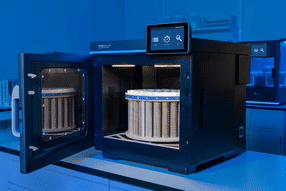
MARSXpress 2.0 microwave digestion device with built-in intelligence
2
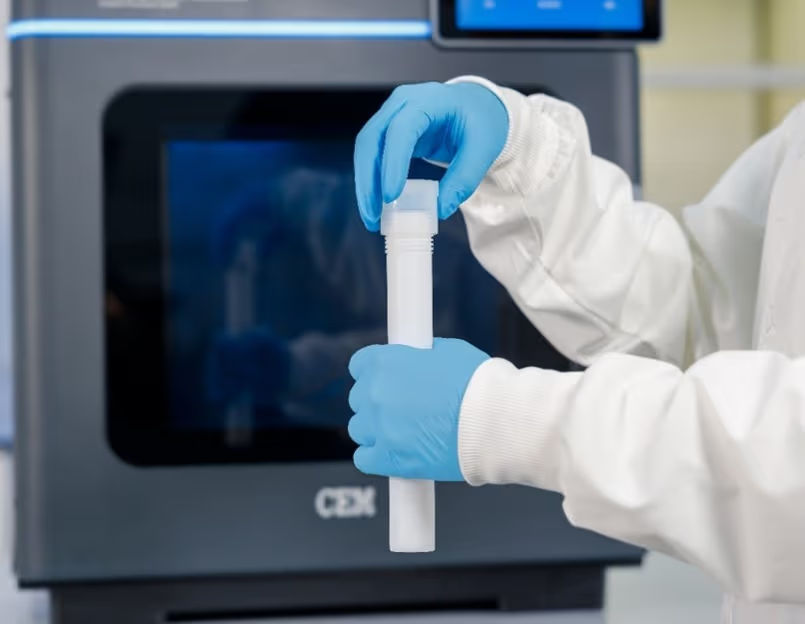
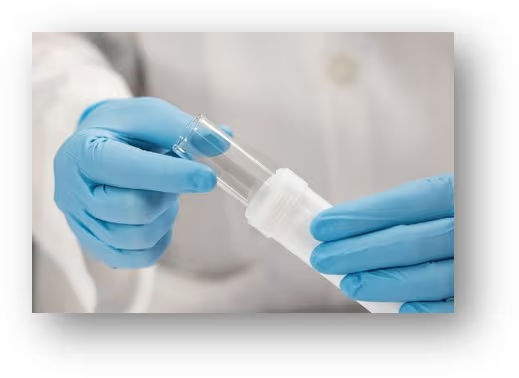
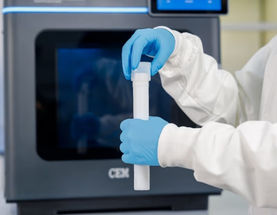
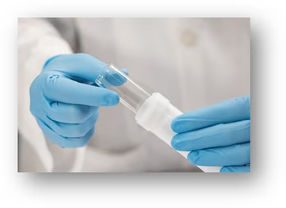
Simple container installation
3
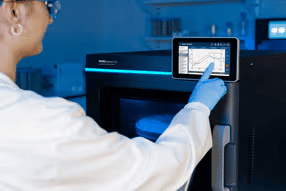
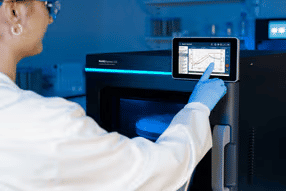
Simple operation thanks to built-in intelligence
4
Variable number of samples from single samples, 2, 3... up to 40 samples simultaneously
5
MiniClave inserts: From weighing to analysis in the same vessel
Request information about MARSXpress 2.0 now
Microwave digestion systems: MARSXpress 2.0
Microwave digestion device MARSXpress 2.0

Product classification MARSXpress 2.0
Product categories
Applications
Manufacturers of similar products


Find more microwave digestion systems and related products


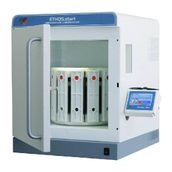


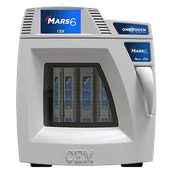
Find MARSXpress 2.0 and related products in the theme worlds
Topic world Digestion
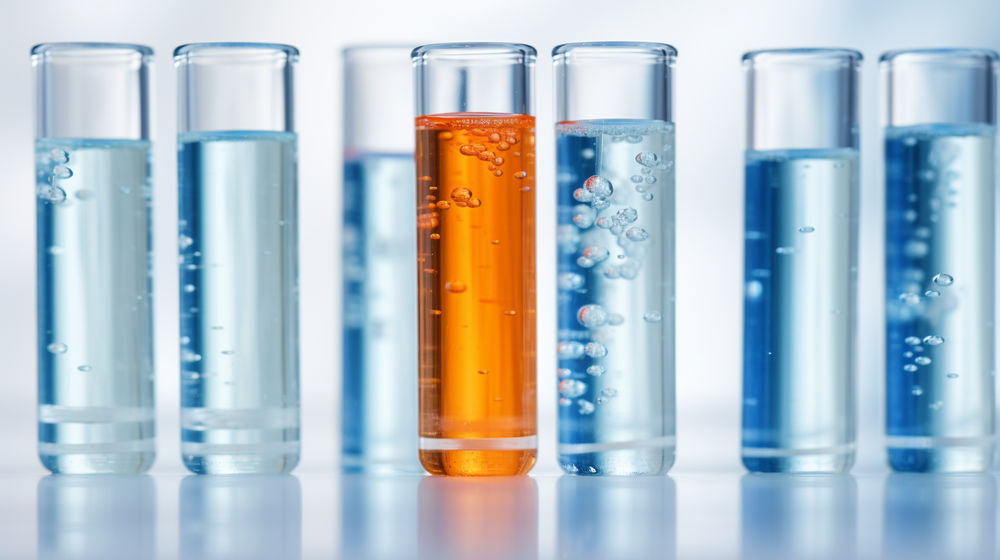
Sample digestion is a critical step in chemical analysis that often determines the success or failure of an investigation. It involves the targeted transformation and preparation of a sample to make the components of interest accessible for analysis. Various methods such as thermal, chemical or enzymatic digestion are used to dissolve matrix components, remove unwanted components and release target substances.
Topic world Digestion
Sample digestion is a critical step in chemical analysis that often determines the success or failure of an investigation. It involves the targeted transformation and preparation of a sample to make the components of interest accessible for analysis. Various methods such as thermal, chemical or enzymatic digestion are used to dissolve matrix components, remove unwanted components and release target substances.
Topic world Extraction
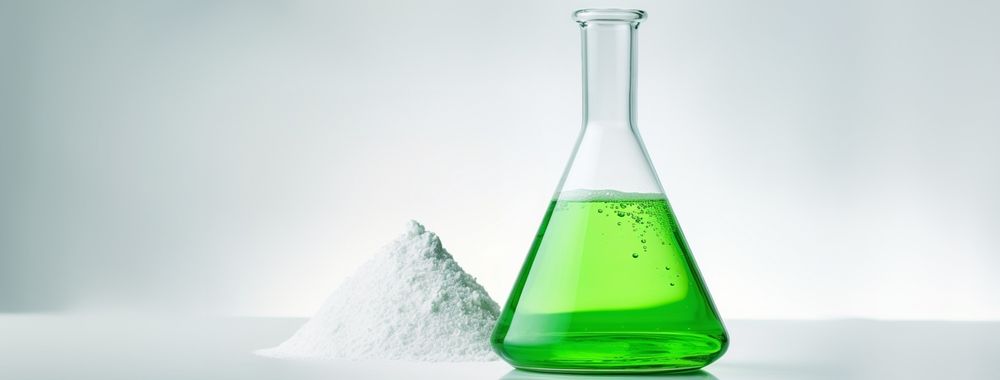
Extraction is a fundamental process in the chemical laboratory that enables specific components to be isolated and concentrated from a mixture. Whether it's extracting active ingredients from natural products, removing impurities from synthesis products, or preparing analytical samples, extraction is a key step in achieving precise and efficient results in chemical research and analysis.
Topic world Extraction
Extraction is a fundamental process in the chemical laboratory that enables specific components to be isolated and concentrated from a mixture. Whether it's extracting active ingredients from natural products, removing impurities from synthesis products, or preparing analytical samples, extraction is a key step in achieving precise and efficient results in chemical research and analysis.