New study on carbon nanotubes gives hope for medical applications
Advertisement


A team of Swedish and American scientists has shown for the first time that carbon nanotubes can be broken down by an enzyme – myeloperoxidase (MPO) – found in white blood cells. Their discoveries are presented in Nature nanotechnology and contradict what was previously believed, that carbon nanotubes are not broken down in the body or in nature. The scientists hope that this new understanding of how MPO converts carbon nanotubes into water and carbon dioxide can be of significance to medicine.
“Previous studies have shown that carbon nanotubes could be used for introducing drugs or other substances into human cells,” says Bengt Fadeel, associate professor at the Swedish medical university Karolinska Institutet. “The problem has been not knowing how to control the breakdown of the nanotubes, which can caused unwanted toxicity and tissue damage. Our study now shows how they can be broken down biologically into harmless components.”
Carbon nanotubes were once considered biopersistent in that they did not break down in body tissue or in nature. In recent years, research has shown that laboratory animals exposed to carbon nanotubes via inhalation or through injection into the abdominal cavity develop severe inflammation. This and the tissue changes (fibrosis) that exposure causes lead to impaired lung function and perhaps even to cancer. For example, a year or two ago, alarming reports by other scientists suggested that carbon nanotubes are very similar to asbestos fibres, which are themselves biopersistent and which can cause lung cancer (mesothelioma) in humans a considerable time after exposure.
This current study thus represents a breakthrough in nanotechnology and nanotoxicology, since it clearly shows that endogenous MPO can break down carbon nanotubes. This enzyme is expressed in certain types of white blood cell (neutrophils), which use it to neutralise harmful bacteria. Now, however, the researchers have found that the enzyme also works on carbon nanotubes, breaking them down into water and carbon dioxide. The researchers also showed that carbon nanotubes that have been broken down by MPO no longer give rise to inflammation in mice.
“This means that there might be a way to render carbon nanotubes harmless, for example in the event of an accident at a production plant,” says Dr Fadeel. “But the findings are also relevant to the future use of carbon nanotubes for medical purposes.”
Original publication: : Valerian E. Kagan, Nagarjun V. Konduru, Weihong Feng, Brett L. Allen, Jennifer Conroy, Yuri Volkov, Irina I. Vlasova, Natalia A. Belikova, Naveena Yanamala, Alexander Kapralov, Yulia Y. Tyurina, Jingwen Shi, Elena R. Kisin, Ashley R. Murray, Jonathan Franks, Donna Stolz, Pingping Gou, Judith Klein-Seetharaman, Bengt Fadeel, Alexander Star, Anna Shvedova; “Carbon nanotubes degraded by neutrophil myeloperoxidase induce less pulmonary inflammation”; Nature Nanotechnology 2010.


Other news from the department science




















Most read news












More news from our other portals


























Last viewed contents
New approach to calculate electron traffic jam in transition metal dichalcogenide
Seeing clearly into a new realm – researchers prototype a new generation of quantum microscopy - “What began as an experimental annoyance ended up being a hint towards a capability of our microscope that is unique among current alternatives”
Indo-German research collaboration in the field of surface engineering and thin films officially started
Production begins at BASF’s largest Indian investment to date - BASF inaugurates chemical complex in Dahej, India
Portable and precise gas sensor could monitor pollution and detect disease
Monitoring of Critical Raw Material Recycling from Battery Black Mass - This study demonstrates the effective use of measuring instruments for separation and analysis
Making biodiesel from dirty old cooking oil just got way easier - New ultra-efficient catalyst can recycle old cooking oil into biodiesel and turn food scraps into high-value complex molecules
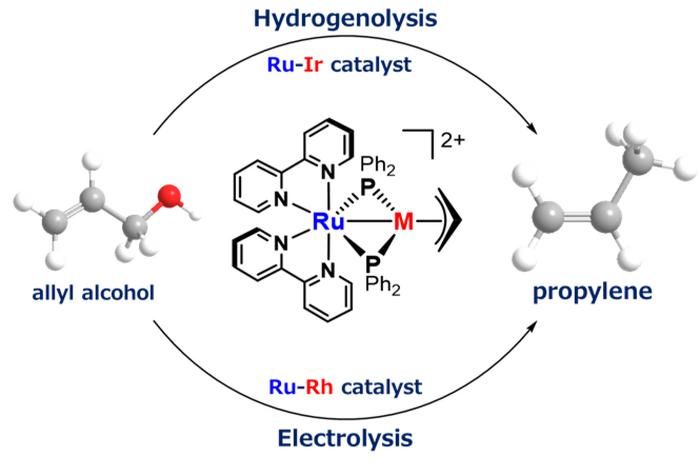
New catalyst developed for sustainable propylene production from biomass - Propylene production harnesses biodiesel waste byproduct
BASF expanding mobile emissions catalysts production capacity in India

Evonik to expand sodium methylate capacity in Argentina

Newly discovered material property may lead to high temp superconductivity