New metal-free, recyclable polypeptide battery that degrades on demand
Breakthrough could lead to battery production moving away from cobalt
Advertisement


The introduction of lithium-ion (Li-ion) batteries has revolutionized technology as a whole, leading to major advances in consumer goods across nearly all sectors. Battery-powered devices have become ubiquitous across the world. While the availability of technology is generally a good thing, the rapid growth has led directly to several key ethical and environmental issues surrounding the use of Li-ion batteries.
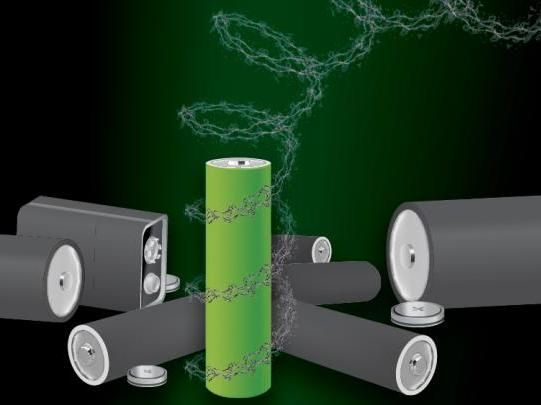
Graphic representation of metal-free, recyclable polypeptide battery.
Texas A&M University College of Engineering
Current Li-ion batteries utilize significant amounts of cobalt, which in several well-documented international cases is mined using child labor in dangerous working environments. Additionally, only a very small percentage of Li-ion batteries are recycled, increasing the demand for cobalt and other strategic elements.
A multidisciplinary team of researchers from Texas A&M University has made a breakthrough that could lead to battery production moving away from cobalt. In an article published in the May issue of Nature, Dr. Jodie Lutkenhaus, Axalta Coating Systems Chair and professor in the Artie McFerrin Department of Chemical Engineering, and Dr. Karen Wooley, distinguished professor in the Department of Chemistry and holder of the W.T. Doherty-Welch Chair in Chemistry in the College of Science, outline their research into a new battery technology platform that is completely metal free. This new battery technology platform utilizes a polypeptide organic radical construction.
"By moving away from lithium and working with these polypeptides, which are components of proteins, it really takes us into this realm of not only avoiding the need for mining precious metals, but opening opportunities to power wearable or implantable electronic devices and also to easily recycle the new batteries," said Wooley, recently honored as the 2021 SEC Professor of the Year. "They [polypeptide batteries] are degradable, they are recyclable, they are non-toxic and they are safer across the board."
The all-polypeptide organic radical battery composed of redox-active amino-acid macromolecules also solves the problem of recyclability. The components of the new battery platform can be degraded on demand in acidic conditions to generate amino acids, other building blocks and degradation products -- one of the major breakthroughs in this research, according to Lutkenhaus.
"The big problem with lithium-ion batteries right now is that they're not recycled to the degree that we are going to need for the future electrified transportation economy," Lutkenhaus added. "The rate of recycling lithium-ion batteries right now is in the single digits. There is valuable material in the lithium-ion battery, but it's very difficult and energy intensive to recover."
The development of a metal-free, all-polypeptide organic radical battery composed of redox-active amino-acid macromolecules that degrade on demand marks significant progress toward sustainable, recyclable batteries that minimize dependence on strategic metals. As a next step, Wooley and Lutkenhaus have begun working in collaboration with Dr. Daniel Tabor, assistant professor in the Department of Chemistry, through a 2020 Texas A&M Triads for Transformation (T3) grant that aims to utilize machine learning to optimize the materials and structure of the battery platform.
Original publication


Other news from the department science





















Most read news












More news from our other portals

























See the theme worlds for related content
Topic World Battery Technology
The topic world Battery Technology combines relevant knowledge in a unique way. Here you will find everything about suppliers and their products, webinars, white papers, catalogs and brochures.

Topic World Battery Technology
The topic world Battery Technology combines relevant knowledge in a unique way. Here you will find everything about suppliers and their products, webinars, white papers, catalogs and brochures.
Last viewed contents
Shedding light on mechanisms of electrochemical energy storage - UV-visible spectroscopy gives researchers a tool to study battery materials - a breakthrough that could speed the design of higher performing energy storage devices

Researchers discover new ultra strong material for microchip sensors - A material that doesn't just rival the strength of diamonds and graphene, but boasts a yield strength 10 times greater than Kevlar

Brown chemists report promising advance in fuel-cell technology

Climate pioneers cooperate to produce solar fuels - INERATEC joins forces with Synhelion

Micro- and nanoplastics in the body are passed on during cell division - That plastic may increase metastasis of tumors

Search for new semiconductors heats up with gallium oxide
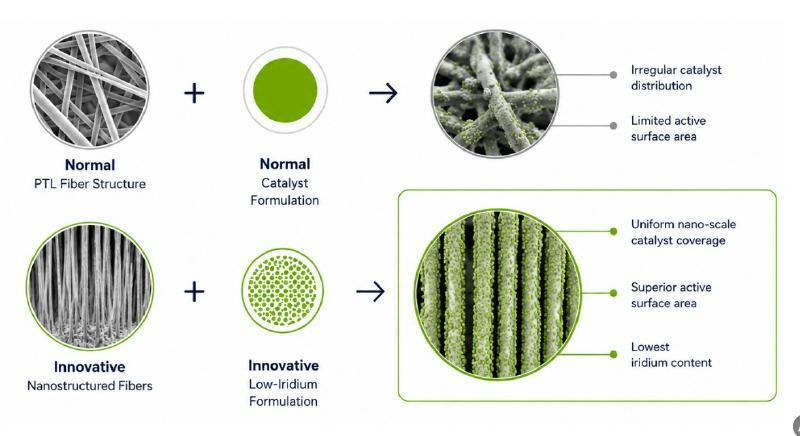
Smoltek Hydrogen and Heraeus Precious Metals advance next-generation ultra-low iridium electrolysis technology

Chemistry without detours: Researchers introduce a two-step process for producing phosphorus-containing chemicals - This promising innovation not only contributes to environmental protection but also saves significant time and costs

Evidence stacks up for poisonous books containing toxic dyes

Adhesives from waste wood, biofuel from straw - EU research project on the potential of agroforestry waste as environmentally friendly raw materials completed
Computational trick enables better understanding of exotic state of matter - New process relevant for fusion and materials research