Research guides future of plastic waste chemical recycling
Advertisement


New research from Cornell University aims to ease the process of chemical recycling – an emerging industry that could turn waste products back into natural resources by physically breaking plastic down into the smaller molecules it was originally produced from.

Symbolic image
Unsplash
In a new paper, “Consequential Life Cycle Assessment and Optimization of High-Density Polyethylene Plastic Waste Chemical Recycling,” published in the Sept. 13 issue of the journal ACS Sustainable Chemistry & Engineering, Fengqi You, the Roxanne E. and Michael J. Zak Professor in Energy Systems Engineering and doctoral student Xiang Zhao detail a framework incorporating several mathematical models and methodologies that factor everything from chemical recycling equipment, processes and energy sources, to environmental effects and the market for end products.
The framework is the first comprehensive analysis of its kind that quantifies the life-cycle environmental impacts of plastic waste chemical recycling, such as climate change and human toxicity.
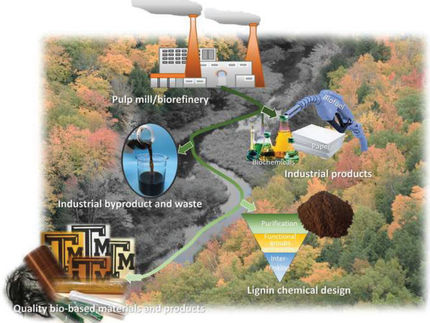
Billions of tons of plastic have been produced since the 1950s, yet most of it – 91%, according to one often cited study – has not been recycled. While growing landfills and contaminated natural areas are among the concerns, the failure to reduce and reuse plastic is also seen by some as a missed economic opportunity.
That’s why the emerging industry of chemical recycling is capturing the attention of the waste industry and researchers like You, who is helping to identify optimal technologies for chemical recycling and providing a roadmap for the future of the industry.
Not only does chemical recycling create a ‘circular economy,’ in which a waste product can be turned back into a natural resource, but it opens the door for plastics such as high-density polyethylene – used to produce items such as rigid bottles, toys, underground pipes, and mail package envelopes – to be recycled more commonly.
You’s framework can quantify the environmental consequences of market dynamics that typical life-cycle sustainability assessments would overlook. It’s also the first to combine superstructure optimization – a computational technique for searching over a large combinatorial space of technology pathways for minimizing cost – with life-cycle analysis, market information and economic equilibrium.
The paper highlights the benefits of consequential life-cycle optimization when compared with more traditional analytical tools. In one scenario, to maximize economic outcomes while minimizing environmental impacts, life-cycle optimization produced a more than 14% decrease in greenhouse gas emissions and a more than 60% reduction of photochemical air pollution when compared with the attributional life-cycle assessment approach typically used in environmental assessment studies.
While the analysis gives industry experts and policy makers a general pathway for advancing chemical recycling and a circular economy for plastics, a myriad of choices and variables along the technological path must be considered. For instance, if the market demand for basic chemicals like ethylene and propylene is strong enough, the framework recommends a specific type of chemical separation technology, while if butane or isobutene are desired, another type technology is optimal.
“It’s a chemical process and there are so many possibilities,” You said. “If we want to invest in chemical recycling, what technology would we use? That really depends on the composition of our waste, the variants of polyethylene plastic, and it depends on current market prices for end products like fuels and hydrocarbons.”
Environmental consequences of chemical recycling depend on variables such as supplier process of chemical feedstocks and products. For instance, the framework found that producing butene onsite as opposed to having it supplied can reduce photochemical air pollution from recycling plants by nearly 20%, while onsite use of natural gas increases more than 37% of potentially harmful ionizing radiation.
“There’s always something we can twist and adjust in the technology and process, and that’s the tricky part,” said You, who added that as new chemical recycling techniques emerge and markets change, consequential life-cycle optimization will remain a powerful tool for guiding the emerging industry.
Original publication


Other news from the department science





















Most read news











More news from our other portals



























Last viewed contents

The competitiveness of low-carbon fuels depends on location - New infrastructure could boost European production

Deep tech startup Reduciner introduces novel technology to turn captured carbon into sustainable fuels - Raising 3.6 million euros in its initial funding round, the Finnish startup plans to build its first industrial-scale pilot
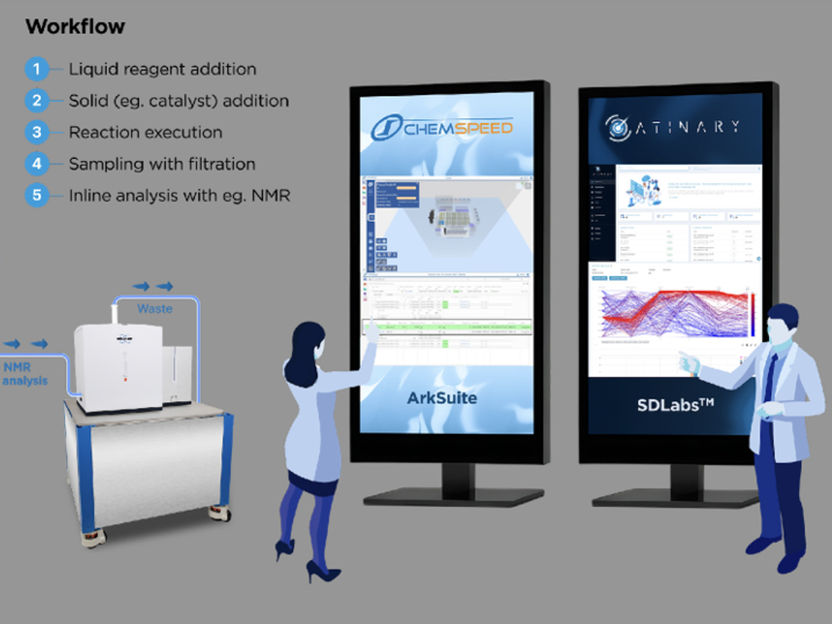
Bruker announces strategic collaboration with Atinary Technologies to advance self-driving laboratories

FUST Lab Receives Investment from Asia2G Capital - The Korean deep-tech company plans to use the capital to expand into the U.S., European, and Japanese markets

ACHEMA Middle East: Debut in Saudi Arabia not until 2027 - Messe Frankfurt Saudi Arabia and DECHEMA are responding to regional uncertainties and are also changing the venue

New core-shell design for anodes significantly increases performance of sodium-ion batteries - Researchers coat porous carbon with a filter-like layer that allows sodium ions to pass through while keeping disruptive electrolyte molecules out

New "chemical armor" could unlock the holy grail of solid-state battery technology - A simple one-step coating builds a silicon-indium hybrid shield on lithium metal, quadrupling current density and extending battery cycle life
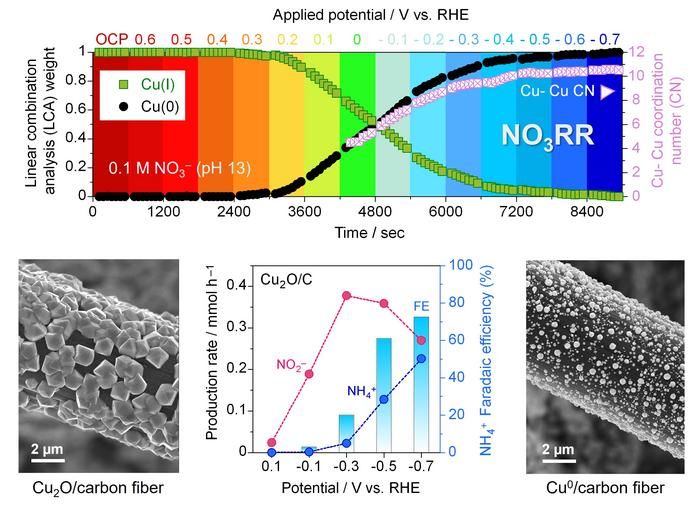
Scientists unveil mechanism behind greener ammonia production
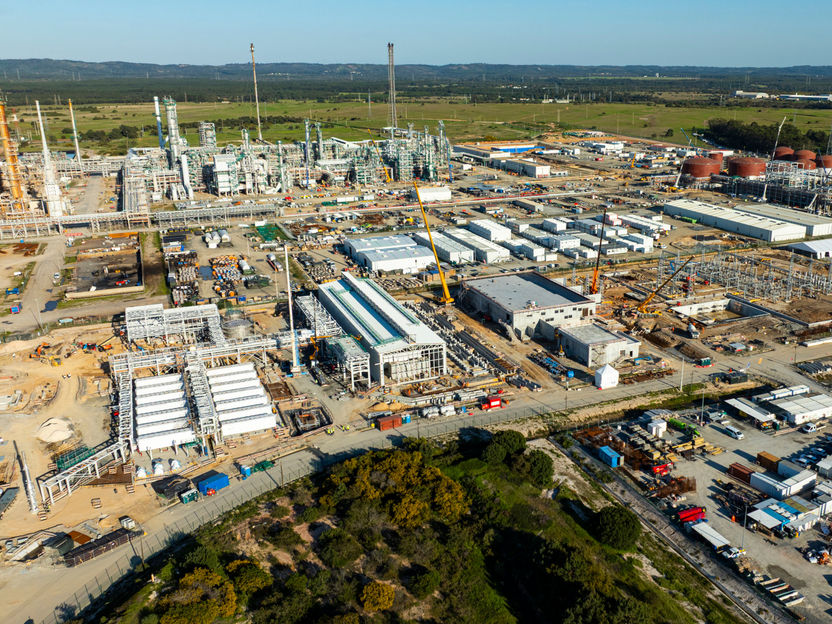
Siemens to digitalize one of Europe's largest renewable hydrogen projects - Physics-based digital twin and real-time optimization

Collaboration between University of Bristol and Malvern Panalytical - Bringing academia and business together to solve global challenges

Digital lab day 2025 celebrates international success - virtual battery day 2025 follows in November