Nanoplastics can disrupt human liver, lung cells’ processes in lab experiments
What happens when people unknowingly eat, drink or inhale nearly invisible pieces of plastic?
Advertisement


Although it’s unclear what impact this really has on humans, researchers have now taken a step toward answering that question. In ACS’ Environmental Science & Technology, a team reports laboratory results indicating that tiny plastic particles could enter liver and lung cells and disrupt their regular processes, potentially causing adverse health outcomes.
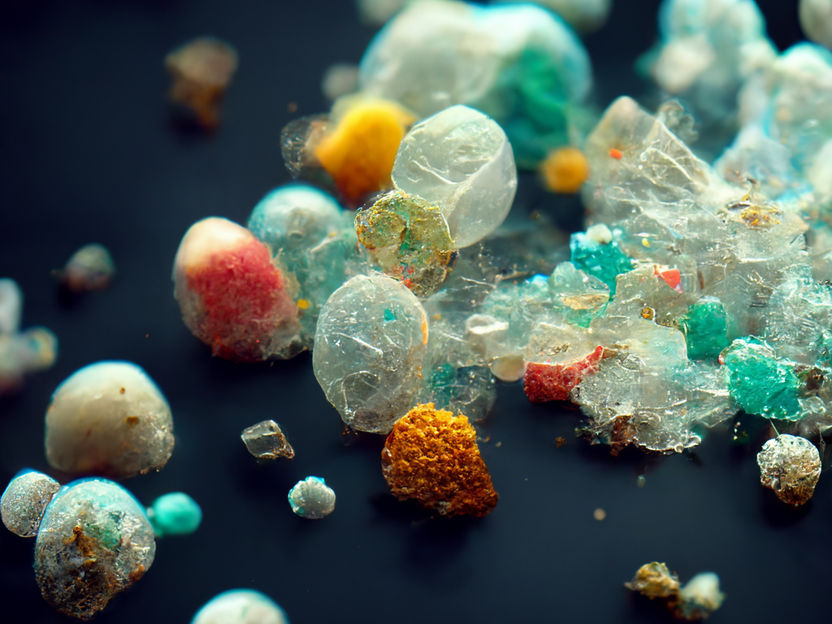
Symbolic image
Computer generated picture
Plastic can’t be avoided in daily life. Many products that we bring into our homes are made of plastic or wrapped in plastic packaging — all of which could release micro- and nanometer-sized pieces that could be accidentally consumed or inhaled. Although the health risks to humans from taking in nanoplastics isn’t entirely clear, researchers recently have shown that particles less than 100 nm-wide can enter animals’ blood and organs, causing inflammation, toxicity and neurological changes. So, Zongwei Cai, Chunmiao Zheng and colleagues wanted to examine the molecular-level and metabolic impacts when human lung and liver cells are exposed to similarly sized nanoplastics.
The researchers cultured human liver and lung cells separately in laboratory plates and treated them with different amounts of 80 nm-wide plastic particles. After two days, electron microscopy images showed that nanoplastics had entered both types of cells without killing them.
To learn more about what happened to the cells, the researchers looked at the compounds released by mitochondria — crucial energy-producing organelles that are thought to be sensitive to nanoplastics — during metabolism. As liver and lung cells were exposed to more nanoplastics, they produced more reactive oxygen species and different amounts of nucleotides, nucleosides, amino acids, peptides and carboxylic acids, indicating that multiple metabolic processes were disturbed. In some cases, mitochondrial pathways appeared to be dysfunctional. These observations demonstrate that while nanoplastics exposure doesn’t kill human lung and liver cells, it could disrupt critical processes, potentially causing negative impacts to organs, the researchers say.
Original publication


Other news from the department science





















Most read news












More news from our other portals

























Last viewed contents
Increases Evonik’s global hydrogen peroxide capacity by approx. 30 percent - Evonik’s new hydrogen peroxide plant officially opened in Jilin
Researchers turn coffee and plastic waste into climate solution - “What begins with a Starbucks coffee cup and a discarded plastic water bottle can become a powerful tool in the fight against climate change...”

Team develops bioprocess for converting plant materials into valuable chemicals

Wonder material graphene claims yet another superlative
Magnets trump metallics - Magnetic fields can block conductivity of carbon nanotubes

Cellphone converts into powerful chemical detector - With only $50 worth of components, an ordinary cellphone transforms into a sophisticated scientific instrument, capable of identifying chemicals, drugs, and pathogens
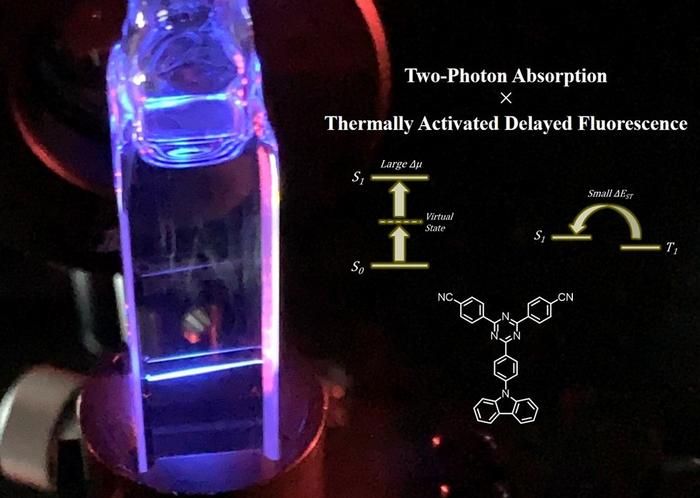
Dual-function organic molecule may advance display technologies and medical imaging - Researchers overcome a long-standing molecular design challenge by realizing efficient light emission and photon absorption in the same compound.

Cylib selected as Strategic Project under EU Critical Raw Materials Act - cylib is building a facility in Dormagen designed to process up to 140,000 EV batteries per year
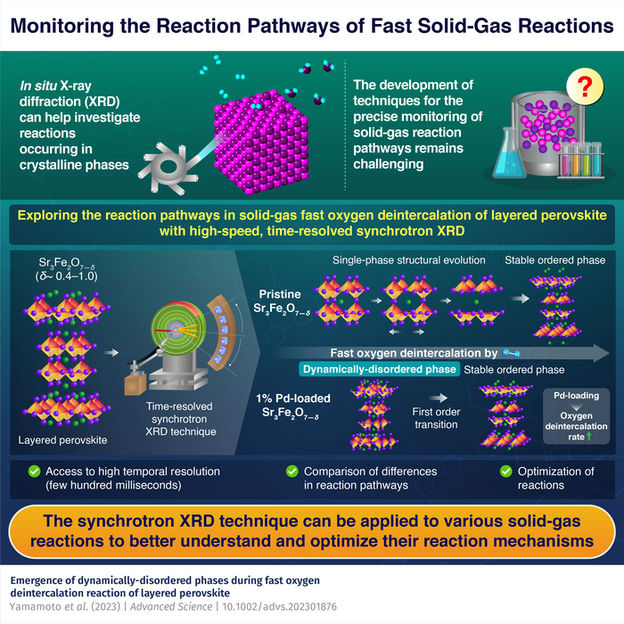
Advanced X-ray technique unveils fast solid-gas chemical reaction pathways
BASF invests in alkoxylate capacity expansion
PerkinElmer Acquires C&A Service Solutions Ltd.