When all details matter - Heat Transport in Energy Materials
Discovery could contribute to more energy-efficient technologies by allowing for the tailoring of nanoscale thermal insulators through defect engineering

Advertisement


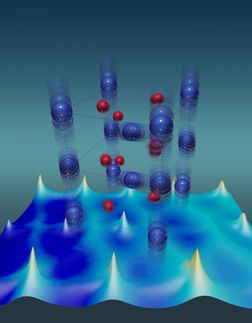
Researchers at the NOMAD Laboratory at the Fritz Haber Institute of the Max Planck Society have shed light of the microscopic mechanisms that determine thermal conduction in heat insulators. Through their computational research they have demonstrated that even short lived and microscopically localized defect structures have a substantial impact on macroscopic transport processes. This discovery could contribute to more energy-efficient technologies by allowing for the tailoring of nanoscale thermal insulators through defect engineering.
The NOMAD Laboratory researchers have recently elucidated on fundamental microscopic mechanisms that offer to tailor materials for heat insulation. This development advances the ongoing efforts to enhance energy efficiency and sustainability.
The role of heat transport is crucial in various scientific and industrial applications, such as catalysis, turbine technologies, and thermoelectric heat converters that convert waste heat into electricity. Particularly in the context of energy conservation and the development of sustainable technologies, materials with high thermal insulation capabilities are of utmost importance. These materials allow to retain and utilize heat that would otherwise go to waste. Therefore, improving the design of highly insulating materials is a key research objective in enabling more energy-efficient applications.
However, designing strongly heat insulators is far from trivial, despite the fact that the underlying fundamental physical laws are known for nearly a century. At a microscopic level, heat transport in semiconductors and insulators was understood in terms of the collective oscillation of the atoms around their equilibrium positions in the crystal lattice. These oscillations, called “phonons” in the field, involve zillions of atoms in solid materials and hence cover large, almost macroscopic length- and time-scales.
In a recent joined publication in Physical Review B (Editors Suggestions) and Physical Review Letters, researchers from the NOMAD Laboratory at the Fritz Haber Institute have advanced the computational possibilities to compute thermal conductivities without experimental input at unprecedented accuracy. They demonstrated that for strong heat insulators the above-mentioned phonon picture is not appropriate. Using large-scale calculations on supercomputers at of the Max Planck Society, the North-German Supercomputing Alliance, and the Jülich Supercomputing Centre, they scanned over 465 crystalline materials, for which the thermal conductivity had not been measured yet. Besides finding 28 strong thermal insulators, six of which featuring an ultra-low thermal conductivity comparable to wood, this study shed light on a hitherto typically overseen mechanisms that allows to systematically lower the thermal conductivity. “We observed the temporary formation of defect structures that massively influences the atomic motion for an extremely short period of time”, says Dr. Florian Knoop (now Linköping University), first author of both publications. “Such effects are typically neglected in thermal-conductivity simulations, since these defects are so short-lived and so microscopically localised compared to typical heat-transport scales, that they are assumed to be irrelevant. However, the performed calculations showed that they trigger lower thermal conductivities”, adds Dr. Christian Carbogno, a senior author of the studies.
These insights may offer new opportunities to fine-tune and design thermal insulators on a nanoscale level through defect engineering, potentially contributing to advances in energy-efficient technology.
Original publication
Florian Knoop, Thomas A. R. Purcell, Matthias Scheffler, and Christian Carbogno; Anharmonicity in Thermal Insulators: An Analysis from First Principles; Phys. Rev. Lett. 130, 236301 – Published 7 June 2023
Florian Knoop, Matthias Scheffler, and Christian Carbogno; Ab initio Green-Kubo simulations of heat transport in solids: Method and implementation; Phys. Rev. B 107, 224304 – Published 7 June 2023


Other news from the department science



















These products might interest you


Most read news












More news from our other portals


























Last viewed contents
DKSH is growing in the US with new collaborations and geographic expansion

LUMITOS and SPECTARIS present the first digital lab day in May 2025 - Digital event for the laboratory sector offers a unique platform for innovation and networking

A new design for an easily fabricated, flexible and wearable white-light LED
Combining 3D printing and metals science leads to stronger, crystal-inspired materials
Researchers reveal a novel metal where electrons flow with fluid-like dynamics - "This novel liquid will flow inside the metal exactly in the same way as water flows in a pipe”

Brenntag to acquire Italian activated carbon specialist

Ultracold atoms in a "Rydberg-dress" - Scientists have developed a novel technique to let atoms interact over large distances

OQ Chemicals Resumes Operations in German Plants
Agilent Technologies Presents Thought Leader Award to Dr. Arturo Keller - Scientist Recognized for Study of Agricultural Applications of Nanotechnology and Environmental Impact

Discovery paves the way for faster computers, longer-lasting batteries - Researchers have has discovered a ‘recipe’ which allows molecular switches to work at room temperature