ORLEN partners with Yokogawa to develop cutting-edge technology for sustainable aviation fuel production

Advertisement


ORLEN and Yokogawa Europe, the regional headquarters for Japan’s Yokogawa Electric Corporation, announce they have joined forces to initiate industrial-scale production of carbon neutral synthetic aviation fuels. In a landmark Memorandum of Understanding signed on September 21, the two companies have come together to enhance the technological process responsible for synthesising fuel from carbon dioxide and green hydrogen. ORLEN is looking to establish itself as a frontrunner in this emerging market segment, poised to drive effective decarbonisation of the aviation industry.

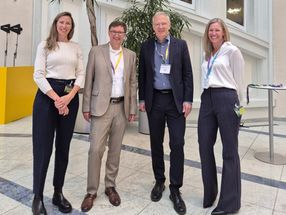
Akio Miyajima - Japanese Ambassador to Poland, Takayuki Matsubara - President of Yokogawa Europe, Jozef Wegrecki - Board Member ORLEN, Armen Artwich - Board Member ORLEN
Yokogawa Europe B.V./ORLEN S.A.
ORLEN is investing in technologies that shape the future of economy. Synthetic fuels are essential in the pursuit of the aviation sector’s carbon neutrality, offering the distinct advantage of not relying on fossil fuels. ORLEN’s target is to attain a production capacity of 70 thousand tonnes of such fuels annually by the end of 2030.
'ORLEN’s partnership with Yokogawa marks a major milestone towards achieving our strategic goal to launch synthetic fuel production. Our joint project will help us to develop a comprehensive industrial-scale process for the production of synthetic fuels. With our Japanese partner we already have a very successful track record of cooperation in optimisation of our refining and petrochemical processes. I am happy such an experienced and reliable partner will support the development of ORLEN’s new business line,' says Daniel Obajtek, ORLEN’s CEO and President of the Management Board.
Under the partnership, ORLEN and Yokogawa aim to develop an integrated management solution for the production of synthetic fuels. The joint endeavour will involve the creation of a virtual replica of a production facility, referred to as a ‘digital twin’, which will enable the simulation and fine-tuning of production processes with a focus on selecting the most economically viable and environmentally sustainable synthesis method. The solution will be applied to a new production facility of synthetic fuels production, which will be constructed by the end of 2030.
Sustainable synthetic fuels are obtained by combining hydrogen produced through electrolysis powered by renewable energy, with carbon dioxide molecules sourced from various industrial processes, including power generation, biomass plants, cement factories, steel mills, and fertilizer plants. Thus, the production of synthetic fuels can significantly curb industrial emissions of greenhouse gases.
One of the exceptional advantages of synthetic fuels lies in their near-identical properties to conventional petroleum-derived products, such as gasoline, diesel, and jet fuel, while helping to reduce greenhouse gas emissions. Thanks to their properties, synthetic fuels can be used with current combustion engine vehicles without the need for any technical modifications. Moreover, the already established storage, transport, and distribution infrastructure designed for petroleum fuels can be used without any modifications for synthetic fuel logistics. This promises to meaningfully expedite and economise the decarbonisation of various sectors, with aviation as a prime beneficiary. ORLEN expects the aviation industry to be the principal consumer of synthetic fuels.
'Through this co-innovation with ORLEN, we will accelerate the decarbonization of aviation fuels. This will be powered by seamlessly integrated and highly autonomous digital systems,' states Takayuki Matsubara, President of Yokogawa Europe.
Yokogawa already provides a comprehensive spectrum of solutions to the ORLEN Group, encompassing automation technology, software for modelling refinery and petrochemical processes, and tools for optimising energy consumption in production facilities.


Other news from the department business & finance






Most read news












More news from our other portals



























Last viewed contents
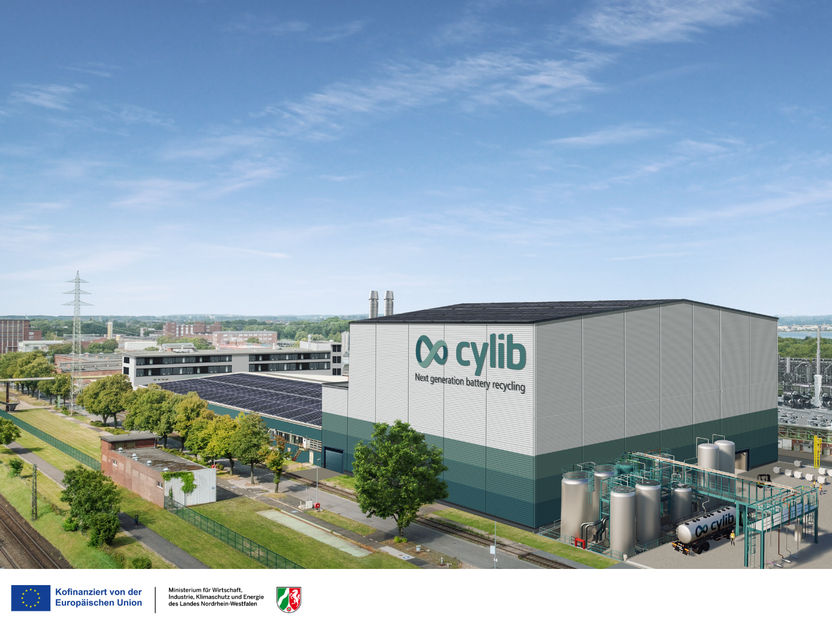
Cylib confirms EUR 26.1 million grant for battery recycling facility - Scale-up to build sustainable lithium-ion battery recycling facility at CHEMPARK Dormagen for European resilience
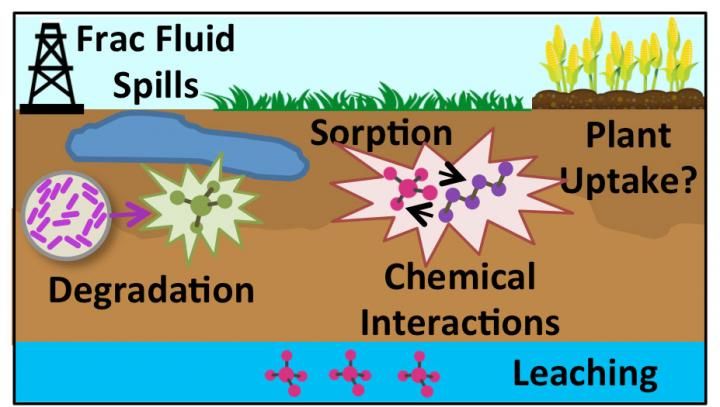
Hydraulic fracturing chemical spills on agricultural land need scrutiny
Don't Give the Slightest Chance to Toxic Elements in Medicinal Products - New high-accuracy reference solutions for the SI-traceable measurement
Bodo Möller Chemie Group enters exclusive acquisition talks with Rocktin - Strengthen adhesives distribution in Asia
Researchers develop procedure to interpret x-ray emission spectra of liquid water - Study helping to advance the understanding of the structure of water

How can life emerge in a world of minerals? - The European Research Council (ERC) has awarded an ERC Synergy Grant to the project “The role of silica at the dawn of life on our planet” (PROTOS)
New reactor could save millions when making ingredients for plastics and rubber from natural gas - With oil production dropping, a process using natural gas is needed to avert a shortage of a workhorse chemical used for automotive parts, cleaning products and more
Manganese could make luminescent materials and the conversion of sunlight more sustainable
Fibers from old tires can improve fire resistance of concrete

Consortium develops evolutionary concept for recycling of end-of-life polyurethane mattress foams - Ecomaison, Covestro, Secondly and Federal Eco Foam launch research project
Controversial Mass Products: Ceresana Analyzes the Global Market for Plasticizers