Non-destructive on-site analysis of organic substances using a small modular spectrometer platform
A compact and cost-effective alternative to expensive benchtop devices based on line sensors
Advertisement


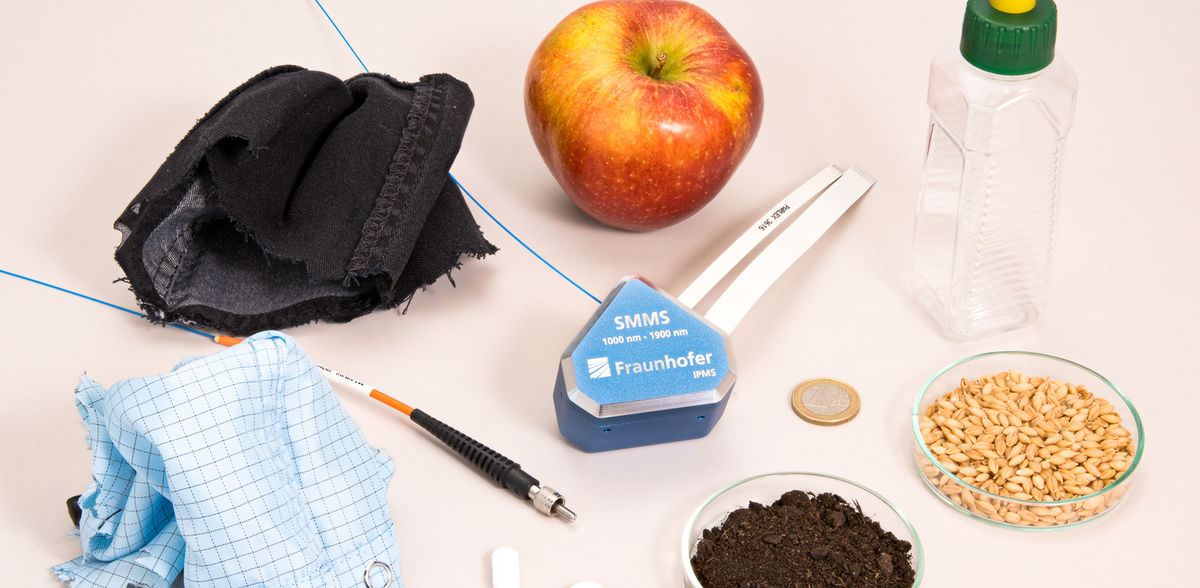
Compact and ultra-compact near-infrared (NIR) spectroscopy systems for the evaluation of organic substances are critical to industries as diverse as food, textiles, and pharmaceuticals. On-site, non-destructive analysis provides confidence in quality control and saves time. The non-resonant Scanning Mirror Micro Spectrometer (SMMS) platform developed at the Fraunhofer Institute for Photonic Microsystems IPMS offers a compact and cost-effective alternative to expensive benchtop devices based on line sensors and also allows individual spectrometer configuration.
With a focus on on-site applications, Fraunhofer IPMS has developed a new Scanning Mirror Micro Spectrometer (SMMS) platform based on a single-axis MEMS (Micro Electro-Mechanical System) scanning mirror. The non-resonant scanning approach offers the possibility to realize unique measurement scenarios such as the narrowing of the spectral range and the associated reduction of measurement time.
The latest IPMS microscanner technology allows different spectrometer configurations with customizable spectral range and spectral resolution. The spectral range in the standard configuration covers 1000 nm to 1900 nm, but can be customized by selecting different diffraction gratings and detectors, especially with variants up to 2200 nm and 2500 nm. The spectral resolution is ≤ 10 nm (FWHM) over the entire spectral range and can be customized by selecting a suitable entrance and/or exit slit. Individual customer evaluation kits are available on request.
In addition to the compact size, there are technological aspects that are relevant for high-volume manufacturability. Competitive manufacturing costs are achieved through the use of basic components and reduced electronic complexity, as well as efficient assembly and interconnection technology and system integration.
Application areas of the system include the near infrared spectral range in the different system variants up to wavelengths of 1900 nm, 2200 nm or 2500 nm, enabling applications in the food, textile and pharmaceutical industries. Other applications include medical and life sciences, materials processing and quality control of plastics, petrochemicals, recycling and other applications requiring reliable non-destructive on site analysis.
The novel spectrometer platform will be presented at the "analytica" trade fair in Munich from April 9 to 12. Visitors to the Fraunhofer IPMS booth A3.407 will have the opportunity to test its performance and discuss their specific requirements.


Other news from the department science



















These products might interest you


Most read news












More news from our other portals


























See the theme worlds for related content
Topic World Spectroscopy
Investigation with spectroscopy gives us unique insights into the composition and structure of materials. From UV-Vis spectroscopy to infrared and Raman spectroscopy to fluorescence and atomic absorption spectroscopy, spectroscopy offers us a wide range of analytical techniques to precisely characterize substances. Immerse yourself in the fascinating world of spectroscopy!

Topic World Spectroscopy
Investigation with spectroscopy gives us unique insights into the composition and structure of materials. From UV-Vis spectroscopy to infrared and Raman spectroscopy to fluorescence and atomic absorption spectroscopy, spectroscopy offers us a wide range of analytical techniques to precisely characterize substances. Immerse yourself in the fascinating world of spectroscopy!
Last viewed contents
Chemistry by type of stew - Can it be so easy to combine very different substances in a "one-pot synthesis" to create a new class of materials?

Metrohm Deutschland GmbH & Co. KG - Filderstadt, Germany
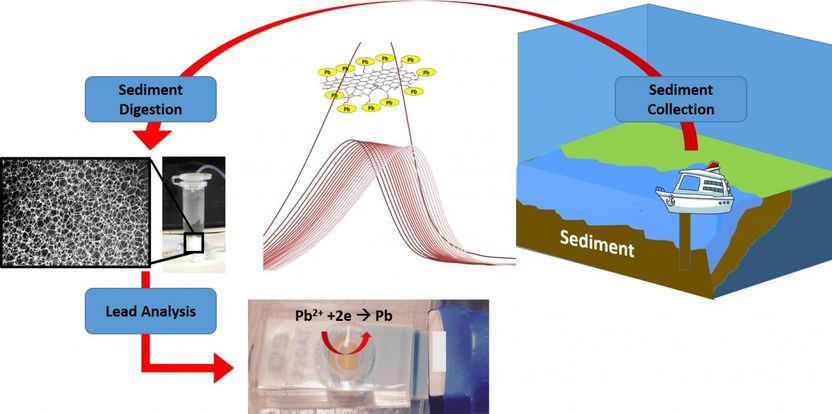
New device can measure toxic lead within minutes - Researchers create portable lab-on-a-chip that could detect many contaminants
Prospector AI Search, now powered by chemical intelligence - Kimia's AI brings natural language search to Prospector's formulators for the first time
Two plant species invent the same chemically complex and medically interesting substance - Different building blocks: The plants use similar chemical pathways to biosynthesize these compounds, but use different starting materials and enzymes
Technique could aid mass production of biodegradable plastic

Jochen Block Award 2025 for Dr. Thomas Seidensticker - Start-up “simplyfined” wants to make the chemical industry more sustainable
BASF increases its presence in growing African markets - Sales in Africa to more than double by 2020
Eastman Opens New Specialty Fluids Testing Lab in Singapore

Plastic Particles and Climate Change as Drivers for Antimicrobial Resistance - EU-funded research project deals with plastic pollution and the spread of antimicrobial resistance in aquatic systems

Rising star in the energy world - Developing high-performance MXene electrodes for next-generation powerful battery