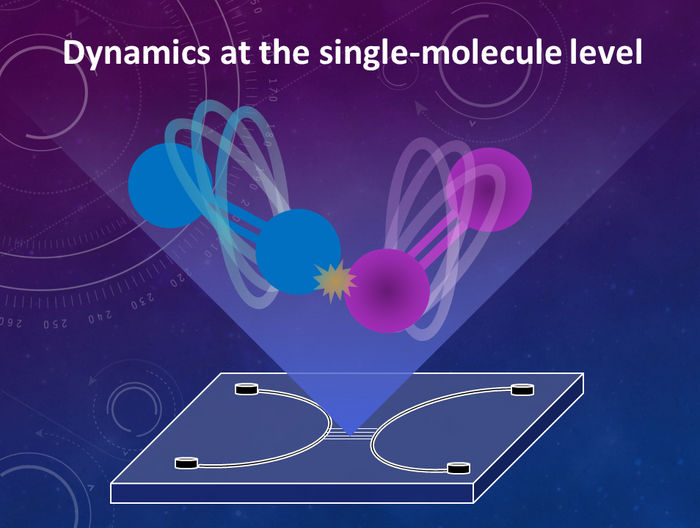
Significant Breakthrough in Understanding of the Two-State Reactivity Mechanism
Scientists discovered first experimental methodology for measuring low-energy, spin-forbidden transitions in molecular catalysts

Advertisement


Iron-based catalysts are essential in various fields, including medicine, energy, and environmental science. They facilitate reactions that are vital for producing pharmaceuticals, clean fuels, and breaking down pollutants. These catalysts operate by enabling the directed transformation of molecules into desired products, and can do so using energy efficient, environmentally friendly methods. The chemistry that these iron-based catalysts are capable of depends on the oxidation- and spin-state of the iron, and changes to either of these can result in very different reactivity and products. A continuing challenge in catalysis is harnessing these differing states to increase reactivity, or the rate at which the transformation takes place, while maintaining specificity, in order to generate a majority of the desired products.
Specifically, iron(IV)-oxo complex are highly reactive intermediates involved in various oxidation reactions, such as the conversion of methane to methanol. The iron(IV)-oxo catalysts are known to have either S = 2 or S = 1 spin-states, with the S = 2 spin-states having been shown to generally be more reactive. A long-standing theory known as the two-state reactivity model suggests that the catalysts with an S = 1 ground state can switch between different spin states to drive reactions. A component of this theory is that the energy separation between these two spin-states, should be correlated with oxidative reactivity. A large challenge in probing this mechanism has been that the energy difference between these spin states had never been measured experimentally. The difficulty of measuring this excitation energy is two-fold: the transitions between these states are spin-forbidden leading to low intensity, and they are expected to be low-energy placing them outside the range of standard spectroscopic techniques.
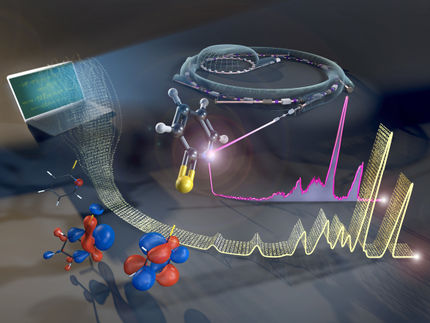
Researchers at the Max Planck Institute for Chemical Energy Conversion and MPI für Kohlenforschung have made a significant breakthrough in understanding of the two-state reactivity mechanism. Using a combination of advanced spectroscopic techniques: resonant inelastic X-ray scattering (collected at the PEAXIS beamline at the BESSY II Helmholtz-Zentrum Berlin für Materialien und Energie) and magnetic circular dichroism, the researchers were able to directly measure the elusive triplet-quintet excitation energy in these complexes.
The implications of this research are significant: With experimental measurements of this crucial excitation, scientists can now refine their theoretical models allowing for the design of more efficient and selective catalysts. This work also demonstrates, to their knowledge, the first experimental methodology for measuring low-energy, spin-forbidden transitions in molecular catalysts.
Original publication


Other news from the department science




















Most read news












More news from our other portals


























Last viewed contents

New record on the growth of graphene single crystals
WACKER Expands HCl Production for the Semiconductor Industry in Burghausen

Chemists create eco-friendly method to make chlorine-based materials for drugs and chemicals - “Our method uses sustainable, low-cost catalysts and operates at room temperature with gentle blue light”
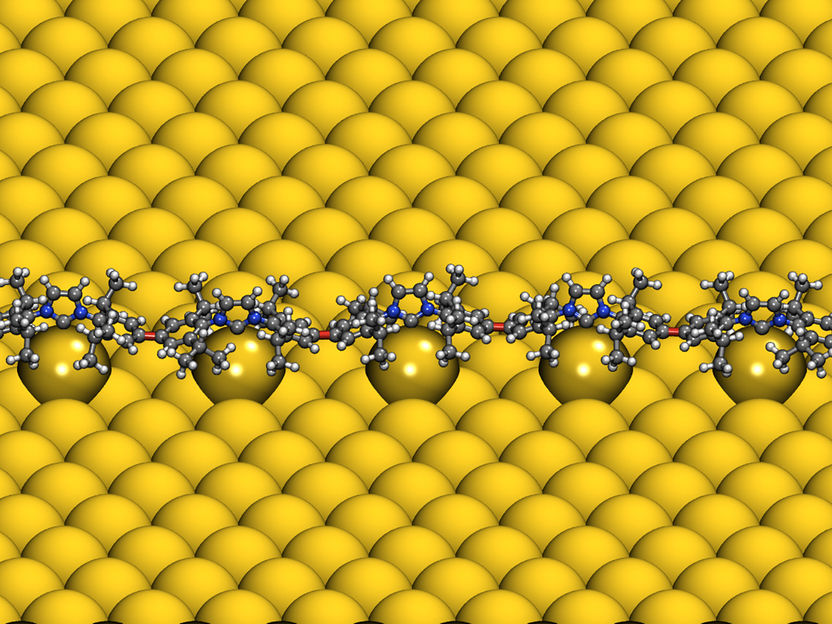
Researchers produce polymers from ballbot-type carbenes for the first time - Researchers have produced long-chain mobile polymers on metallic surfaces, doing so by means of ballbot-type molecules which glide over the surface
Fujitsu Develops World's Fastest Method of Quantum Chemical Calculations for Drug Discovery - Succeeds in validating its feasibility together with Tokai University

The Secret Contamination of Polar Bears - Hundreds of unrecognized halogenated contaminants discovered in polar bear serum

A more complete picture of the nano world
BASF increases prices for methylamines and derivatives in Europe

Unilever appoints Hein Schumacher as new CEO

New clues help explain why PFAS chemicals resist remediation - Work suggests new avenues for cleaning up these 'forever chemicals'