CO₂ removal and storage: Which options are feasible and desirable?
A new framework helps to evaluate the feasibility of ocean-based CO2 removal processes and assesses their impact on humans and nature
Advertisement


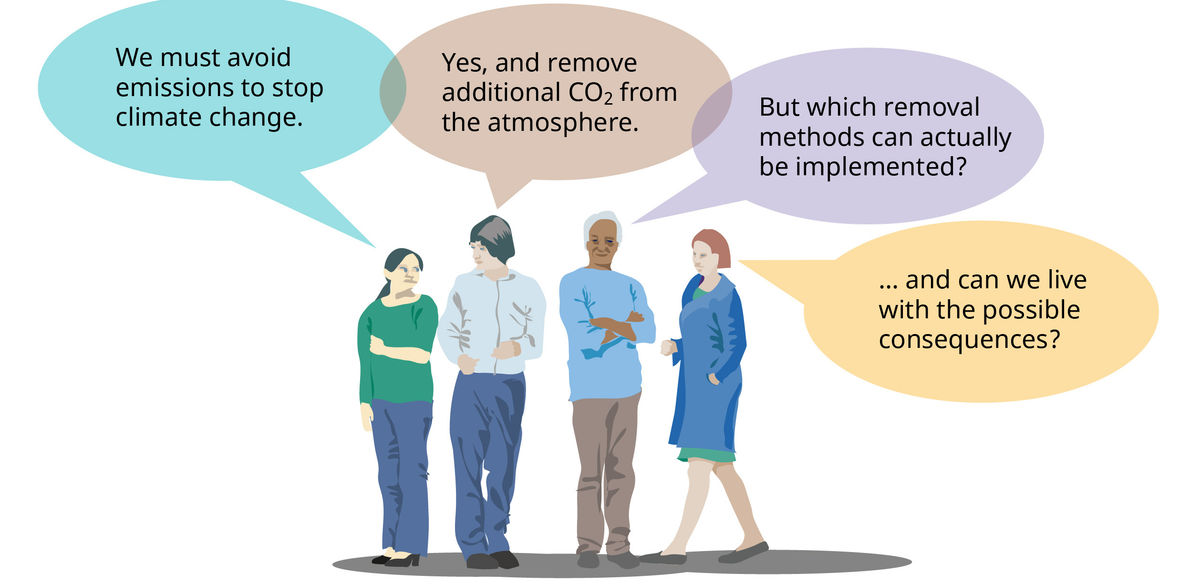
As climate change increases, so does the pressure on humanity to remove carbon dioxide (CO2) from the atmosphere - possibly with the help of the oceans. But which of the proposed marine CO2 removal and storage options should be used? Scientists from the CDRmare research mission, among them researchers from Kiel University, have developed a new assessment framework to help decision-makers make evidence-based decisions about whether marine CO2 removal methods or projects are feasible and whether their consequences for humans and nature are desirable. The researchers emphasise that decisions on using such methods must not only focus on their technical, legal and political feasibility but should also assess the potential consequences of their implementation for humans and nature in a structured and transparent way.
Experts develop and use assessment frameworks for climate response options to collect, structure and prioritise all relevant information in a technology assessment. However, existing assessment schemes for climate change response options such as CO2 capture and storage, do not adequately fulfil this task, experts from the CDRmare research mission conclude in two new peer-reviewed publications.
“Answering whether and how a CO2 removal option should be implemented should take its effectiveness, economic viability and its impact on people and the environment into account. However, existing assessment frameworks do not allow doing so. Our framework solves this problem by offering a structured guide for evaluating marine CO2 removal projects. Stakeholders can use it to analyse all the key issues and make evidence-based decisions,' says JProf Dr Christian Baatz, a climate and environmental ethicist at the University of Kiel and co-author of both new articles.
29 criteria for a comprehensive assessment of marine CO₂ removal methods
The new framework includes 29 criteria that help to analyse seven key issues. These include questions about the technical, legal and political feasibility of the methods to be assessed, as well as questions about economic efficiency, equity and environmental ethics. Due to this complexity, the researchers recommend that experts from academia, industry, public administration, interest groups and affected populations be involved in the evaluation process. In line with this principle, the researchers tested the practical suitability of the new evaluation guidelines in a series of transdisciplinary workshops attended by numerous representatives from public administration and interest groups.
“Our experience in testing the assessment framework shows that no one should attempt to assess a marine CO2 removal method or a specific project on their own. Due to the high complexity of the issue, an assessment requires the expertise of many people,” says co-author Dr Lukas Tank, also a climate and environmental ethicist at Kiel University.
Ideally feasible and desirable
In addition to the list of criteria, the researchers defined five guiding principles to help ensure that the best possible information is collected during the evaluation process. These guiding principles aim to ensure that the evaluation process is transparent and involves all potentially affected parties.
“Ultimately, it is up to political and societal decision-makers to decide whether a particular marine CO2 removal project should go ahead. At best, they will choose options that are effective, technically, legally and politically feasible, as well as economically, equitably and environmentally sound. Our assessment framework can help them do this," says Prof Dr Gregor Rehder, a chemist at the Leibniz Institute for Baltic Sea Research Warnemünde (IOW). He was also an author on both papers and led the CDRmare research network ASMASYS, under which the research for both papers took place.
Original publication
Lukas Tank, Lieske Voget-Kleschin, Matthias Garschagen, Miranda Boettcher, Nadine Mengis, Antonia Holland-Cunz, Gregor Rehder, Christian Baatz; "Distinguish between feasibility and desirability when assessing climate response options"; npj Climate Action, Volume 4, 2025-4-2
Christian Baatz, Lukas Tank, Lena-Katharina Bednarz, Miranda Boettcher, Teresa Maria Morganti, Lieske Voget- Kleschin, Tony Cabus, Erik van Doorn, Tabea Dorndorf, Felix Havermann, Wanda Holzhüter, David Peter Keller, Matthias Kreuzburg, Nele Matz-Lück, Nadine Mengis, Christine Merk, Yiannis Moustakis, Julia Pongratz, Hendrikje Wehnert, Wanxuan Yao, Gregor Rehder; "A holistic assessment framework for marine carbon dioxide removal options"; Environmental Research Letters, 2025-4-4


Other news from the department science





















Most read news











More news from our other portals



























Last viewed contents

Global Initiative for Sustainable Chemistry - Integrated hubs for green chemistry research aim to transform how chemicals and materials are designed

RE:VOLTAGE and CometHire Win the HTW Startup Challenge 2026 in Berlin - The competition awarded 10,000 euros in prize money in the GreenTech and Impact Entrepreneurship categories
Atomic reshuffle paves way for record-breaking catalysts for hydrogen production - "This opens a new strategy for designing adaptive catalysts for a wide range of applications"

Global underground CO₂ storage hits record 43.6 million tonnes - London Register expands reach
Research Breakthrough on the Path to a New Reserve Antibiotic - For the first time, chemists have succeeded in synthesizing the highly potent natural compound neosorangicin A

Endress+Hauser expands its presence in the U.S. - 44 million euros are being invested in the new facility in Greenwood, Indiana
Plastic bottles could find new life in batteries as graphite - Penn State researchers converting PET waste into synthetic graphite that outperforms natural graphite
Turning food waste into carbon captors - Expected to be cheaper than other capture methods
Study shows: Lithium and sodium-ion technologies are more closely linked than assumed - "Switching to a new battery technology does not automatically open the door to new market players"

ETH spin-offs sweep the board at Venture Awards
How to generate and steer electrons in liquid water - Surprising results reveal a new aspect of extremely strong electric fields in liquid water