Turning waste into the future: scientists produce base materials for nylon from polystyrene
They have made bacteria break down polystyrene and convert it into useful chemicals
Advertisement


It still sounds a bit like science fiction, but it actually works: bacteria that recycle environmentally harmful substances such as polystyrene to produce the raw materials for nylon without the need for new crude oil. This is exactly what the Saarbrücken Professor of Biotechnology, Christoph Wittmann, and other colleagues from neighboring disciplines have now achieved. They have published exactly how it works in the Chemical Engineering Journal.
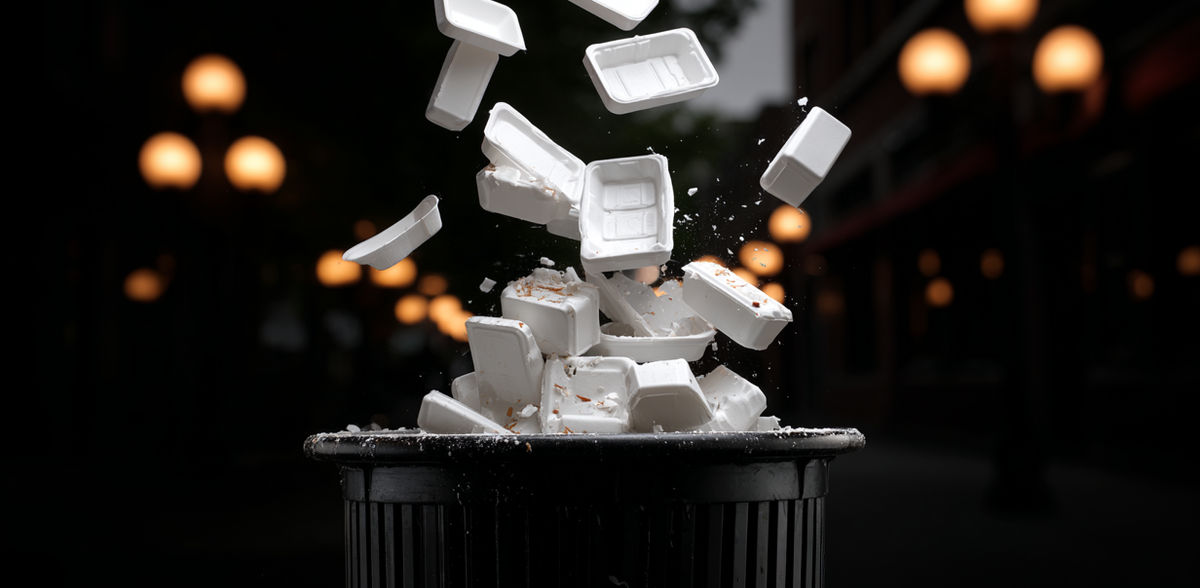
Not all plastic waste is the same. While one plastic can be easily recycled, the situation can be very different for another. "Polystyrene is one such problem child," says Christoph Wittmann. The Professor of Systems Biotechnology at Saarland University has been studying the question of how to dispose of or recycle certain plastics in an environmentally friendly way for his entire research career. Thanks to his work and that of his colleagues, the "problem child" polystyrene, the best-known variety of which, Styrofoam, is probably familiar to everyone, could now lose its status and perhaps even become a much sought-after raw material for basic chemicals.
Worldwide, a whopping 20 million tons of polystyrene waste are produced every year, only a small proportion of which can be recycled. If Christoph Wittmann has his way, this could soon be a thing of the past. Together with polymer chemists from Professor Markus Gallei's working group and materials scientists from the Leibniz Institute for New Materials (INM) in Saarbrücken, as well as other partners from Dortmund and Vienna, the biotechnologist from Saarland has succeeded in getting bacteria to break down the molecular building blocks of polystyrene and convert them into useful chemicals. The necessary building blocks were previously extracted from the polystyrene waste using an energy-saving process - thus laying the foundation for microbial recycling.
Put simply, of course. As you can imagine, you can't give an educational speech to a bacterium of the species Pseudomonas putida with a raised index finger. Instead, it takes years of laboratory work to manipulate the bacterium's metabolism in such fine doses that it develops an appetite for Styrofoam building blocks (very few bacteria like this by nature) and is also motivated to excrete useful substances as a "digestive product".
Such substances include muconic acid, which in turn can be broken down into adipic acid and hexamethylenediamine. "And these two each have six carbon atoms and two acid or amino groups," explains Christoph Wittmann. Chemists will now sit up and take notice, because: "These are the two components for the production of nylon," explains the scientist. And nylon, in turn, plays an outstanding role in the world of plastics. Countless everyday objects contain nylon, from the famous nylon tights to carpets, car seats and even kitchen utensils, cable ties and dowels. This makes it clear that biological "upcycling" turns polystyrene, which is difficult to recycle, into a valuable raw material for high-quality technical and even high-performance plastics - a real gain over classic "recycling".
The process from Saarbrücken, which was also developed thanks to funding from the EU's "Repurpose" project, is now opening up completely new approaches for the chemical industry to keep the many millions of tons of polystyrene waste in the material cycle and to obtain new raw materials from it. "The highlight is that our colleagues at INM led by Aránzazu del Campo were able to prove that the materials obtained using our process have the same properties as the materials that are produced from scratch in the factory on the basis of crude oil," says Christoph Wittmann. The material properties of plastics made from recycled polystyrene are therefore the same as those made from brand-new plastics. This is important for the resilience of products, for example. They then last just as well as products made from "fresh" crude oil.
The researchers were also able to gain these insights thanks to the good cooperation and short distances on the Saarland University campus. "That's a very special feature here in Saarbrücken," explains the biotechnologist. Today, no researcher can successfully work in isolation, especially in their own field. "Sustainability needs interdisciplinary teams," he says. "You can't do it alone."
Note: This article has been translated using a computer system without human intervention. LUMITOS offers these automatic translations to present a wider range of current news. Since this article has been translated with automatic translation, it is possible that it contains errors in vocabulary, syntax or grammar. The original article in German can be found here.
Original publication
Michael Kohlstedt, Fabia Weiland, Samuel Pearson, Devid Hero, Sophia Mihalyi, Laurenz Kramps, Georg Gübitz, Markus Gallei, Aránzazu del Campo, Christoph Wittmann; "Biological upcycling of polystyrene into ready-to-use plastic monomers and plastics using metabolically engineered Pseudomonas putida"; Chemical Engineering Journal


Other news from the department science





















Most read news











More news from our other portals



























Last viewed contents
New paths for quantum technologies: Optical control of nuclear spins in molecules - Molecular systems can be chemically tailored and could thus enable atomically precise qubits

How Carbon Accounting Rules Shape Incentives for Hydrogen Production

How Chemicals End Up in the Mountains - Permanent chemicals harm insects—even in near-natural habitats
Quasiparticle solves mystery of vanishing conductivity - CAU team detects polarons in rare earth compound for the first time
Cryo-electron microscopy – Reaction cycle of an enzyme for CO2 fixation decoded - A promising enzyme candidate for biofuel production from carbon dioxide

Protein Content in Foods — New Conversion Factors Enable More Precise Assessment - Max Rubner Institute Releases New Database for Nitrogen-to-Protein Conversion

AI-driven microorganism mix has the potential for groundbreaking innovation - Federal Ministry for the Environment Launches First Joint SPRIND Challenge for a Biotech Breakthrough in the Circular Economy
Researchers develop cleaner, scalable process to recycle lithium-ion batteries - "We’ve shown that it’s possible to create high-performance batteries from recycled materials at scale"
30 Million Euros for Catalyst Research Using AI-Controlled Laboratories - ASCEND is leveraging automated learning loops and 3D thin-film catalysts to develop industrially viable drop-in substitutes.

Converting CO₂ Directly into Fuels and Chemicals - TU Berlin Launches Two Research Projects on Direct Electrochemical CO₂ Conversion—Without the Detour via Hydrogen
Malvern Instruments and PANalytical to merge