Topping-Out Ceremony for Europe's Largest Laboratory Infrastructure for Technology Transfer in Green Chemistry
Chemical Invention Factory: TU Berlin Bridges the Gap Between Research and Startup Founding
Advertisement


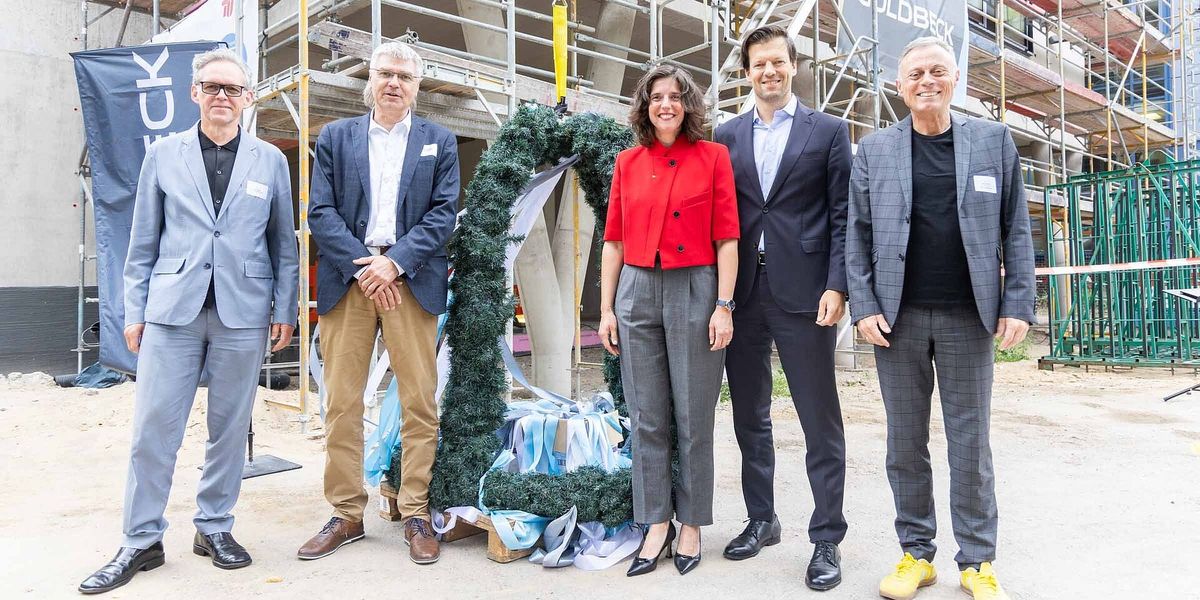
On the Charlottenburg campus of the Technical University of Berlin, the Chemical Invention Factory – John Warner Center (CIF) is taking shape as a venue for knowledge transfer in green chemistry that is unique in Europe. On September 4, 2026, TU Berlin celebrated the topping-out ceremony for the new building—together with guests from the worlds of science, politics, and business, including Dr. Henry Marx, State Secretary for Science and Research of the State of Berlin.
Once completed, the CIF will be Europe’s largest laboratory infrastructure specifically designed for science-based technology transfer and pre-startup teams in green chemistry. Here, researchers will be able to further develop their findings under real-world conditions, validate them for specific applications, and prepare to launch their startups.
From a construction standpoint, the CIF also marks an important milestone for TU Berlin: Following the TEM electron microscopy building, it is the second new building in many years that the university is constructing as the project owner. Approximately 20 million euros have been allocated for the project. Seven million euros of this amount come from the State of Berlin’s Special Fund for Infrastructure of the Growing City and Sustainability (SIWANA), while TU Berlin is contributing approximately 13 million euros. Construction work is on schedule and within budget, with completion planned for 2027.
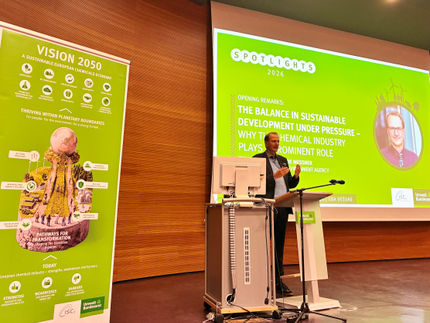
Prof. Dr. Fatma Deniz, President of TU Berlin: “The chemical industry is facing a fundamental transformation. However, many technologies for a climate-neutral and circular-economy-oriented chemical industry have yet to be developed. At TU Berlin, we are combining chemistry and chemical engineering with innovation and entrepreneurship to achieve this. The Chemical Invention Factory – John Warner Center (CIF) will create a space where specialized laboratory infrastructure, scientific expertise, and a strong innovation ecosystem come together. In this way, excellent research will lead to concrete applications and new companies—from Berlin for Europe.”
Dr. Henry Marx, State Secretary for Science and Research: “Berlin is committed to chemistry—and we’re moving forward at a rapid pace. With the Chemical Invention Factory, Berlin is making a targeted investment in a field of research and innovation that is of great importance for industrial value creation, sustainability, and the economic future of our region. In doing so, we are aligning with both the state’s research policy strategy and the federal government’s chemistry agenda. Our goal is clear: excellent research should lead more quickly to new technologies, successful spin-offs, and economic value creation. Berlin has outstanding conditions for this, particularly in the field of chemistry. The Chemical Invention Factory bridges the crucial gap between scientific discovery and startup creation, establishing a hub with nationwide influence. The fact that we are already celebrating the topping-out ceremony less than a year after the groundbreaking demonstrates that Berlin is not only investing in this field of the future—Berlin is moving at full speed.”
Prof. Xaver Egger, managing partner of sehw architektur GmbH: “Innovation arises where people, ideas, and disciplines come together. The CIF combines an open space for interaction with a think tank for research-based innovations that have a societal impact, and unites both under a textile façade to form a shared identity.”
Holger Schöfisch, branch manager at Goldbeck: “For us, innovation doesn’t begin with the use of a building, but rather during the construction process itself. With our systematic construction method, we create the conditions to implement even challenging projects efficiently, in a resource-efficient manner, and to a high standard of quality. Today’s topping-out ceremony demonstrates what is possible when well-thought-out processes, collaborative partnerships, and the commitment of all involved successfully come together.”
From Research Findings to Practical Application
Many innovations in Green Chemistry originate in scientific laboratories. However, on the path to practical application, technology transfer and pre-startup teams often lack the appropriate infrastructure: specialized laboratories and equipment, as well as spaces where new processes can be tested outside the traditional research setting. The Chemical Invention Factory is designed to close precisely this gap.
The new building will provide modern laboratory, analysis, and office spaces for teams developing, among other things, sustainable materials, production methods, and chemical processes. In doing so, the CIF builds on the experience of INKULAB on the Charlottenburg campus. The pilot project featuring chemical lab containers—funded as part of the IHK educational projects—demonstrated early on just how great the need is for specialized infrastructure to facilitate knowledge transfer in chemistry, and how much physical proximity and close collaboration further drive innovative solutions.
An Ecosystem for Green Chemistry
The CIF is part of a comprehensive Berlin-based transfer ecosystem for green chemistry. Universities, researchers, students, startups, companies, and other partners are working together within this ecosystem to more quickly translate chemical innovations into sustainable and circular applications.
The Chemical Invention Factory and INKULAB provide specialized laboratory infrastructure for this purpose. The innovate! lab gGmbH, founded by the Berlin University Alliance, complements this with an entrepreneurial framework in which the talents it supports can further develop scientific findings in green chemistry into socially and economically relevant applications. With a grant of 5 million euros, the Joachim Herz Foundation (JHS) is providing the financial foundation for building this entrepreneurial transfer ecosystem.
As part of the greenCHEM T!Raum initiative, funded by the Federal Ministry of Research, Technology, and Space, TU Berlin, Freie Universität Berlin, and Humboldt University of Berlin are jointly developing new transfer formats and equipping female students and researchers to make the transition from research to practical application.
This creates a seamless technology transfer chain: from identifying and training scientific talent, through the development of new technology transfer and startup models, to technical validation and scaling in specialized laboratories.
TU Berlin Takes Back Construction Responsibility
The new Chemical Invention Factory building is being constructed by TU Berlin’s construction department, which is acting as the project owner. In May 2025, the university signed the contract with the general contractor Goldbeck, and construction began as early as September of that same year. One year later, the shell of the building is complete—meaning the project remains on schedule and within budget. The design for the new building was created by the Berlin-based architectural firm sehw architektur, which won the design competition.
The CIF is also part of a series of larger construction projects in which TU Berlin is once again taking on responsibility as the project owner. The TULIUM museum and exhibition building is also currently under construction on the main campus, with a topping-out ceremony scheduled for late September. Also in September, another extensive construction project under the university’s responsibility will begin with the renovation of the former civil engineering building, Building B.
Note: This article has been translated using a computer system without human intervention. LUMITOS offers these automatic translations to present a wider range of current news. Since this article has been translated with automatic translation, it is possible that it contains errors in vocabulary, syntax or grammar. The original article in German can be found here.



Other news from the department science





















Most read news











More news from our other portals



























Something is happening in the chemical industry ...
This is what true pioneering spirit looks like: Plenty of innovative start-ups are bringing fresh ideas, lifeblood and entrepreneurial spirit to change tomorrow's world for the better. Immerse yourself in the world of these young companies and take the opportunity to get in touch with the founders.
Last viewed contents

Next Hydrogen is hunting for a new CEO to lead its commercial growth phase - Founding CEO Raveel Afzaal will continue to lead the company until the handover
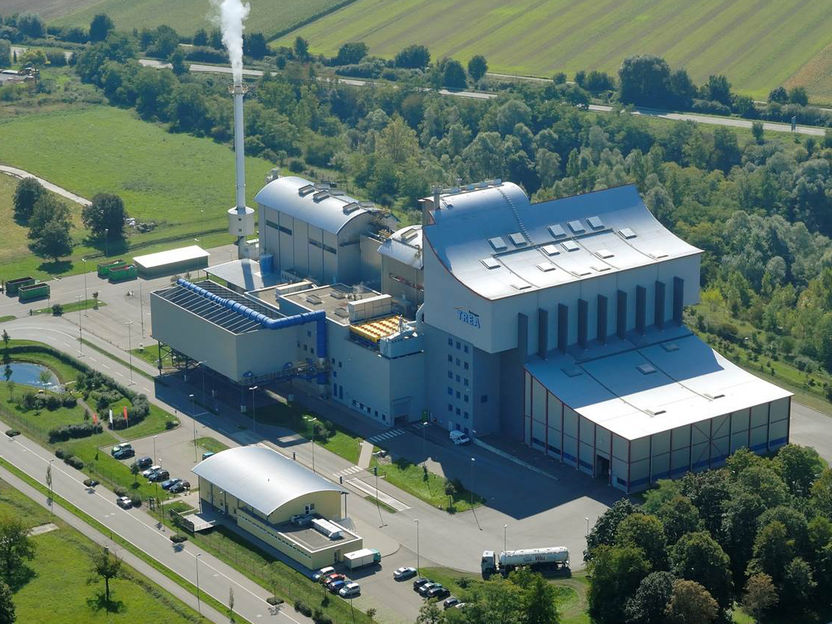
From Flue Gas to Raw Material: Extracting Carbon from CO₂ Produced by Waste Incineration - KIT and EEW Energy from Waste (EEW) plan to use CO₂ from flue gases in the NECOC process

KAIST identifies a route to faster-charging, longer-lasting EV batteries - Research team uses a 3D digital twin to reveal localized degradation mechanisms during fast charging

Matthews Engineering and start-up hs-tumbler partner on dry battery electrode manufacturing - Companies aim to enable dry electrode manufacturing through trajectory mixing

Winter-ready lithium batteries: scientists use "polarity-contras" electrolyte strategy to outsmart extreme cold - Lithium metal batteries retain 80% capacity after 150 cycles at -40 °C

The competitiveness of low-carbon fuels depends on location - New infrastructure could boost European production
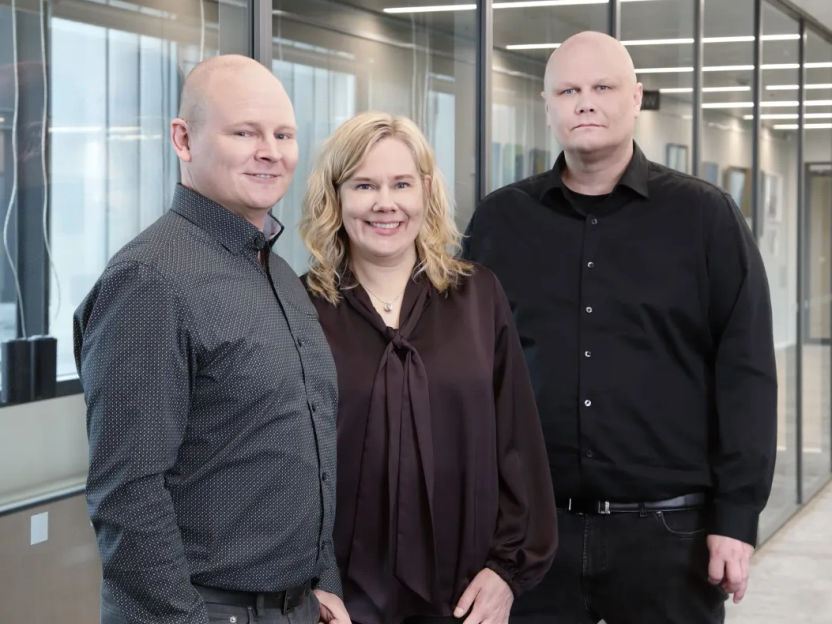
Deep tech startup Reduciner introduces novel technology to turn captured carbon into sustainable fuels - Raising 3.6 million euros in its initial funding round, the Finnish startup plans to build its first industrial-scale pilot
Bruker announces strategic collaboration with Atinary Technologies to advance self-driving laboratories

FUST Lab Receives Investment from Asia2G Capital - The Korean deep-tech company plans to use the capital to expand into the U.S., European, and Japanese markets

ACHEMA Middle East: Debut in Saudi Arabia not until 2027 - Messe Frankfurt Saudi Arabia and DECHEMA are responding to regional uncertainties and are also changing the venue
New core-shell design for anodes significantly increases performance of sodium-ion batteries - Researchers coat porous carbon with a filter-like layer that allows sodium ions to pass through while keeping disruptive electrolyte molecules out
