Dow Increases PG Capacity at Stade Plant by 10 KTA During Routine Maintenance
Advertisement


The Dow Chemical Company (Dow) has increased its propylene glycol (PG) capacity by an additional 10 kilotons per annum (KTA), at its Stade, Germany plant after completion of equipment optimization during scheduled routine maintenance.
“Dow is a PG industry leader in Europe,” said Vincent Lacoste, PG product manager. “Not only does this capacity increase advance Dow’s position to meet the growing demand for PG in Europe and across the globe, but it also brings additional support for de-icing demand during the winter months, after an industry shortage during the 2010-2011 winter season.”
This capacity increase follows last year’s implementation of an advanced energy and technology optimization project, during planned maintenance, which resulted in a large scale expansion, completed in August 2010.
Resulting from an optimization of existing equipment without altering the PG production process, the capacity increase has raised the plant’s propylene glycol nameplate capacity to approximately 280 KTA. After carefully evaluating the change by comparison of pre- and post- change analytical data for the pharmaceutical grade product Propylene Glycol USP/EP based on IPEC Americas Significant Change Guide for Bulk Pharmaceutical Excipients 2009, Dow has deemed this change to be considered minor and, therefore, treated as a “level one” change.


Other news from the department manufacturing












Most read news











More news from our other portals



























Last viewed contents

Biological processing of precious metal ores - BRAIN AG and CyPlus GmbH develop disruptive technologies

Sustainable Chemistry Based on Wood - Producing materials for solar cells, light-emitting diodes and other organic electronics applications as sustainably as possible

Flexing the power of a conductive polymer - A new material holds promise for the next generation of organic electronics
Max-Planck-Institut für Struktur und Dynamik der Materie - Hamburg, Germany
Fast and energy-saving synthesis method for new electrocatalysts - Water electrolysis and the associated hydrogen production could become more energy-efficient in the future

Modified microwave oven cooks up next-gen semiconductors - The breakthrough could change the geometry of transistors used in microchips
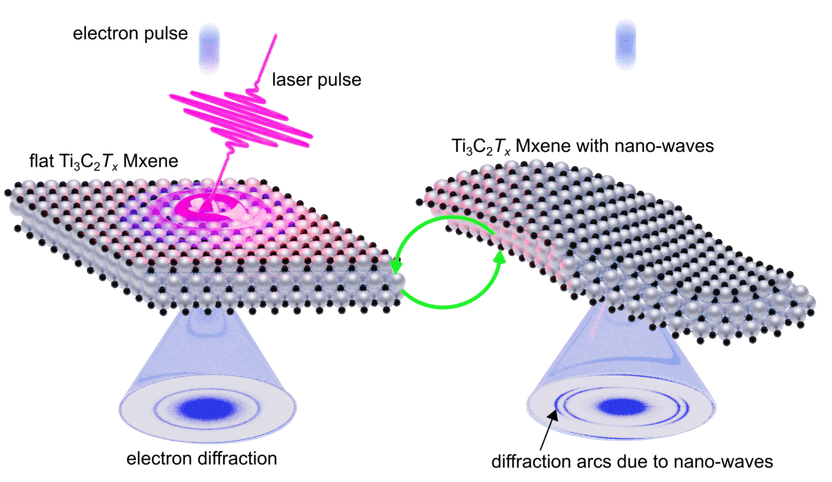
Light-induced shape shifting of MXenes - Femtosecond light creates switchable nano-waves in MXenes and moves the materials’ atoms at a record-breaking speed
A touch of gold and silver - For the first time, it is possible to produce crystalline layers of precious metals that consist of a single atomic layer and which are semiconducting
Nanoparticle supersoap creates 'bijel' with potential as sculptable fluid

Inspired by nature: Scientists have developed a nanopore-microchip

Reinforcement of structures with Memory Steel