Demonstration of large-scale technique to produce quantum dots
Advertisement


A method to produce significant amounts of semiconducting nanoparticles for light-emitting displays, sensors, solar panels and biomedical applications has gained momentum with a demonstration by researchers at the Department of Energy's Oak Ridge National Laboratory.
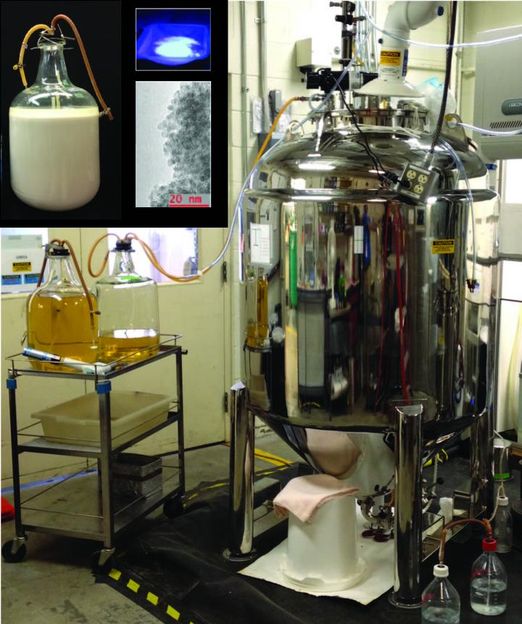
Using this 250-gallon reactor, ORNL researchers produced three-fourths of a pound of zinc sulfide quantum dots, shown in the inset.
ORNL
While zinc sulfide nanoparticles - a type of quantum dot that is a semiconductor - have many potential applications, high cost and limited availability have been obstacles to their widespread use. That could change, however, because of a scalable ORNL technique.
Unlike conventional inorganic approaches that use expensive precursors, toxic chemicals, high temperatures and high pressures, a team led by ORNL's Ji-Won Moon used bacteria fed by inexpensive sugar at a temperature of 150 degrees Fahrenheit in 25- and 250-gallon reactors. Ultimately, the team produced about three-fourths of a pound of zinc sulfide nanoparticles - without process optimization, leaving room for even higher yields.

The ORNL biomanufacturing technique is based on a platform technology that can also produce nanometer-size semiconducting materials as well as magnetic, photovoltaic, catalytic and phosphor materials. Unlike most biological synthesis technologies that occur inside the cell, ORNL's biomanufactured quantum dot synthesis occurs outside of the cells. As a result, the nanomaterials are produced as loose particles that are easy to separate through simple washing and centrifuging.
The results are encouraging, according to Moon, who also noted that the ORNL approach reduces production costs by approximately 90 percent compared to other methods.
"Since biomanufacturing can control the quantum dot diameter, it is possible to produce a wide range of specifically tuned semiconducting nanomaterials, making them attractive for a variety of applications that include electronics, displays, solar cells, computer memory, energy storage, printed electronics and bio-imaging," Moon said.
Successful biomanufacturing of light-emitting or semiconducting nanoparticles requires the ability to control material synthesis at the nanometer scale with sufficiently high reliability, reproducibility and yield to be cost effective. With the ORNL approach, Moon said that goal has been achieved.
Researchers envision their quantum dots being used initially in buffer layers of photovoltaic cells and other thin film-based devices that can benefit from their electro-optical properties as light-emitting materials.
Original publication
Ji-Won Moon, Tommy J. Phelps, Curtis L. Fitzgerald Jr., James G. Elkins, Gyoung Gug Jang, Pooran C. Joshi, Michelle Kidder, Beth L. Armstrong, Illia N. Ivanov, David E. Graham; "Manufacturing demonstration of microbially mediated zinc sulfide nanoparticles in pilot-plant scale reactors"; Applied Microbiology and Biotechnology; 2016


Other news from the department science



















These products might interest you


Most read news












More news from our other portals


























See the theme worlds for related content
Topic world Sensor technology
Sensor technology has revolutionized the chemical industry by providing accurate, timely and reliable data across a wide range of processes. From monitoring critical parameters in production lines to early detection of potential malfunctions or hazards, sensors are the silent sentinels that ensure quality, efficiency and safety.

Topic world Sensor technology
Sensor technology has revolutionized the chemical industry by providing accurate, timely and reliable data across a wide range of processes. From monitoring critical parameters in production lines to early detection of potential malfunctions or hazards, sensors are the silent sentinels that ensure quality, efficiency and safety.
Last viewed contents

Chembid enters into partnership with COATINO from Evonik - With this cooperation, chembid and Evonik want to simplify the processes from the production to the sale of coating products for their customers

Ciba establishes leading technology Technical Service laboratory in China - Expansion to Ciba’s strong global Technical Service laboratory network further enhances its ability to meet customer needs

Take ... Baking Powder! Simple Ingredients for a Chemical Hydrogen Storage System - Easy to Store and Transport
Electrochemically-produced ammonia could revolutionize food production

Anton Paar acquires product line for particle characterization

Metso introduces an advanced lithium carbonate process to support battery materials production - At the core of the process is soda pressure leaching, which selectively extracts lithium with fewer soluble impurities in one pass
BASF executives to take over Ciba CEO and CFO roles

Transforming waste heat into clean energy - Researchers use supercomputers to explore new materials for thermoelectric generation
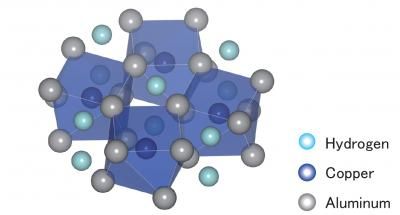
New aluminum alloy stores hydrogen - Versatile, lightweight material opens the door to fuel cells of the future
Researchers from Kiel and Bochum develop new information storage device
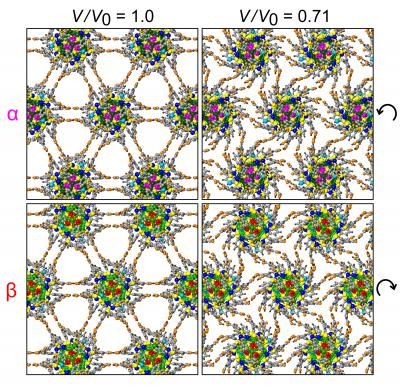
Self-assembled superlattices create molecular machines with 'hinges' and 'gears'
