LSU researcher receives NSF rapid response grant to study health of marshes impacted by oil
Brings together three universities to develop detailed analysis and insight into molecular-level affects
Advertisement


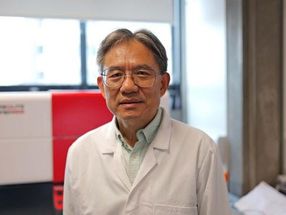
LSU Associate Professor of Chemistry Robert Cook has recently received a rapid response grant from the National Science Foundation, or NSF, to investigate the impact of oil from the Deepwater Horizon disaster on Louisiana's highly fertile, productive and delicate marshlands by studying dissolved organic matter, or DOM.
The project brings together researchers from three universities – LSU, Texas A&M and Georgia Tech – to collect and analyze contaminated and non-contaminated water from Barataria Bay in order to complete a complex analysis of the oil's impact on this area. The three principal investigators include Cook at LSU; Tom Bianchi of Texas A&M's Department of Oceanography; and Mike Perdue of Georgia Tech's School of Earth and Atmospheric Sciences.
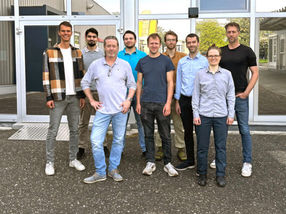
"The group is inter-institutional and interdisciplinary, as required by the complexity of the problem we are tackling," said Cook. Three graduate students serve as an integral part of the team – Paulina Kolic of LSU and Nelson Green and Yaoling Zhang from Georgia Tech.
Two types of water samples were sought: first, 500-liter samples, from which DOM will be isolated. Second, smaller samples were obtained from transects originating from the 500-liter sampling sites.
"The analysis of these samples in regard to marsh health is parallel to taking blood pressure, heart rate and reflex tests at your annual doctor's visits," said Cook, who also holds an NSF CAREER award. "However, we all know that once we reach a certain age, a health check requires more advanced tests on our blood and internal workings, which is why our analysis has three levels of increasing complexity."
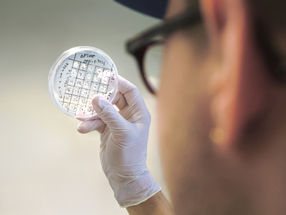
The small samples were used to measure water quality parameters such as dissolved oxygen concentration and salinity, as well as the quantity and nature of DOM in each specimen. DOM is being isolated from the 500-liter marsh water samples then inspected at the molecular level using spectroscopic analysis and other tools. The four 500-liter samples – two metric tons of water in total – were placed in cold storage immediately upon arrival on LSU's campus.
"Due to the brackish nature of the water, we're using a new technique developed by the Perdue lab at Georgia Tech," said Cook. "It combines reverse osmosis to remove the water and electrodialysis to remove the salt." This combined procedure was carried out in Cook's lab on the LSU campus, using equipment shipped from Perdue's Georgia Tech lab. Of the original 2,000-liters of water, only 20 or so liters remained. The remaining water was frozen and shipped to Georgia Tech for freeze drying.
Once the DOM is fully isolated for each sample site, it will be divided up between the three participating labs. Cook's lab will conduct an analysis giving a molecular-level carbon profile of the dissolved organic matter. Perdue's group will deliver molecular formula data on this matter, and Bianchi's lab will pursue the origin of the source material for the dissolved matter.
"The samples we are currently studying will allow for an early diagnosis of coastal marsh health at the molecular level," said Cook. "Our combined group hopes to obtain further funding to continue molecular-level monitoring of the health of these marshes, so that – over the next two to three years – we might study their evolution as a result of the oil contamination."


Other news from the department science