Biobased spintronics: Sustainable magnetic field sensors – printed
Core-shell particles made of iron and iron oxide in a cellulose matrix replace problematic raw materials
Advertisement


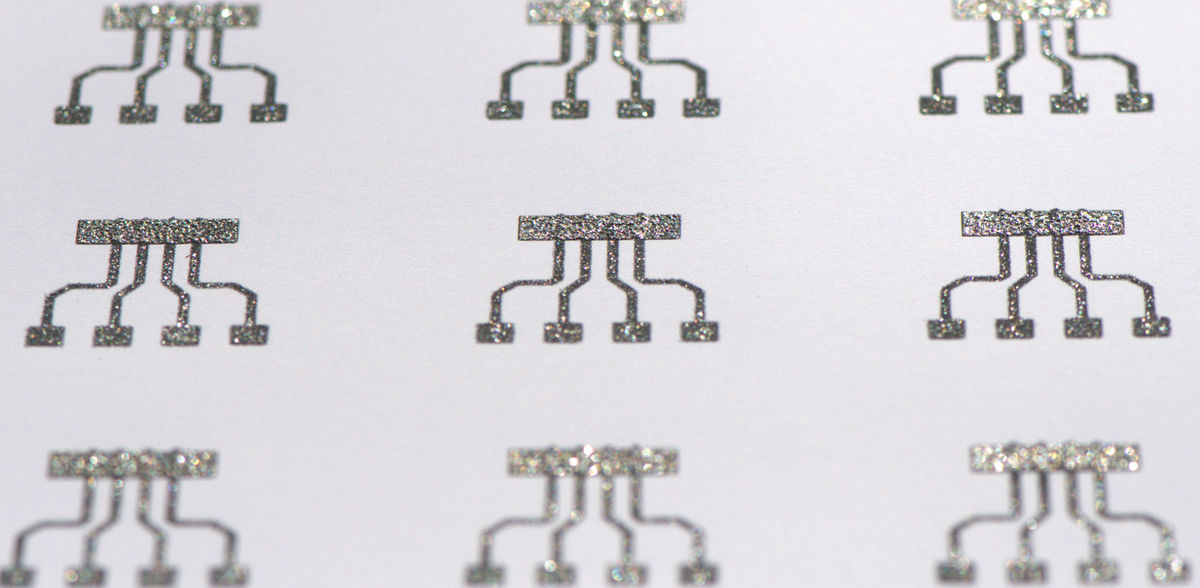
magnetic field sensors are found in automobiles, smartphones and security systems. But many of these components are made of materials that are neither health- nor environment-friendly and are complex to produce. In Nature Communications, an international team led by researchers from the Helmholtz-Zentrum Dresden-Rossendorf (HZDR) has now presented a sustainable alternative: printed sensors composed of iron, iron oxide and bio-based materials like cellulose and starch. They measure magnetic fields reliably, are resource-saving to produce and can purportedly be disposed of safely or recycled after use.
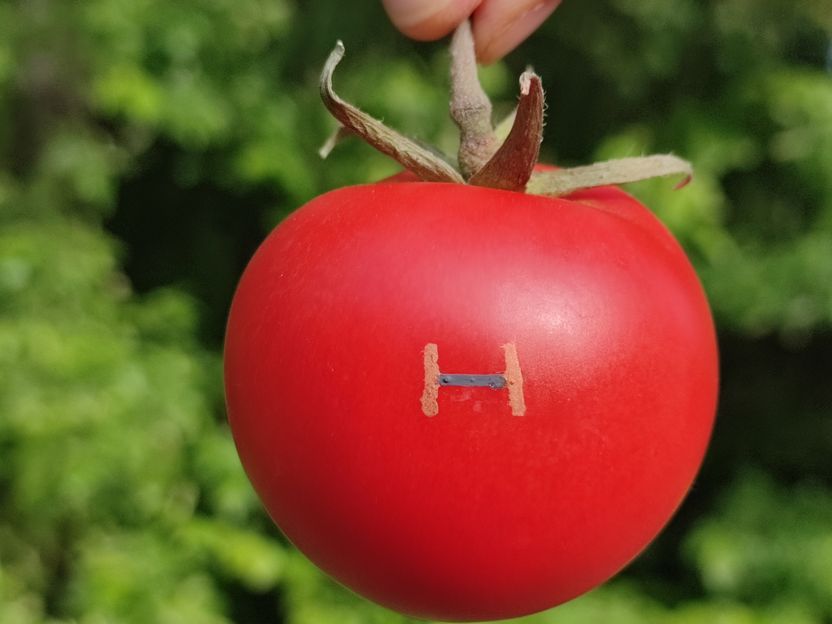
Biodegradable magnetic field sensor printed on a tomato – an example of sustainable bioelectronics.
Lin Guo
Iron, cellulose, and beeswax: an international team led by HZDR researchers has demonstrated that these environmentally friendly materials are sufficient to produce novel magnetic field sensors. Instead of using traditional manufacturing methods, the team opts for bio-based inks and industrial print technologies.
Today, magnetic field sensors are one of the invisible mass-produced products in the electronics industry. They measure movement, positions or distances and can be found in window contacts, steering wheels, hard disks, packaging and cell phones. Billions of these components are manufactured every year. “Many of these sensors contain materials like nickel or cobalt,” says Dr. Denys Makarov, head of the Intelligent Materials and Systems Department at the Institute of Ion Beam Physics and Materials Research at HZDR. “These are materials that can harm the environment and health when not properly disposed.” At the same time, producing them often requires energy-intensive processes and complex manufacturing steps.
The development of sustainable sensors is a technical challenge. While iron is easily available and biocompatible, on its own, it does not achieve the sensitivity required for many of today’s magnetic field sensors. The research team therefore combined iron with iron oxide and developed special core-shell particles in which the iron core is surrounded by a thin layer of oxide.
“Humanity has known about iron and cellulose for centuries,” says Lin Guo, who is implementing the project in his dissertation. “The challenge is to develop a sensor that performs usably with these sustainable materials.” To do so, he notes, the precise composition and processing of the particles are crucial. According to the team, the printed sensors achieve levels of sensitivity comparable to today’s commercial solutions in certain areas.
The sensors are produced by screen printing, a process that is more familiar in the textile industry. Instead of removing a large area of material, the sensor layer is applied in a targeted manner. We only print sensors where we need them,” Makarov explains. This does not just save material but energy, too.
When sensors can disappear
The end of the sensors’ service life also played an important role in the development. Conventional electronics are usually used until they break and need to be disposed of. The aim of the present study is to use materials that can be safely degraded or recycled afterwards. Therefore, iron-iron oxide core-shell particles were embedded in a matrix of biocompatible materials such as cellulose and starch. A layer of biocompatible polymers or natural materials like beeswax protects the sensors against moisture while also determining their lifespan. “By encapsulating the printed sensors we can regulate how long they remain stable,” says Guo. The service life can be individually tailored to different applications. If the biological matrix later dissolves in water, what is left over is mainly oxidized iron particles. “That’s basically rust,” says Denys Makarov. Potentially toxic substances like certain nickel and cobalt compounds are intentionally excluded from the process.
The technology required to manufacture printed magnetic field sensors has already been licensed. Now, the team is working on specific applications, especially in fields where electronic components are only needed for a certain time, such as in intelligent packaging, disposable medical products and agricultural sensor systems. Here, sustainable magnetic field sensors could, in the future, help to produce electronics more sustainably.
In parallel, the team is already working on additional concepts. Future projects will focus, among other aspects, on more durable encapsulations, new biocompatible materials, and integrating sensors into flexible electronic systems.
Original publication
Lin Guo, Rui Xu, Proloy Taran Das, Eduardo Sergio Oliveros-Mata, Xuan Peng, Oleksandr V. Pylypovskyi, René Hübner, Fabian Ganss, Xiaotao Wang, Yi Li, Sebastian Gepp, Yevhen Zabila, Xilai Bao, Shengbin Li, Qihao Zhang, Igor Veremchuk, Željko Janićijević, Larysa Baraban, Clemens Voigt, Sindy Mosch, Oliver Gutfleisch, Run-Wei Li, Denys Makarov; "Eco-sustainable magnetoresistive sensors towards disposable magnetoelectronics"; Nature Communications, Volume 17, 2026-3-27



Other news from the department science













These products might interest you




Most read news








More news from our other portals



























See the theme worlds for related content
Topic world Sensor technology
Sensor technology has revolutionized the chemical industry by providing accurate, timely and reliable data across a wide range of processes. From monitoring critical parameters in production lines to early detection of potential malfunctions or hazards, sensors are the silent sentinels that ensure quality, efficiency and safety.

Topic world Sensor technology
Sensor technology has revolutionized the chemical industry by providing accurate, timely and reliable data across a wide range of processes. From monitoring critical parameters in production lines to early detection of potential malfunctions or hazards, sensors are the silent sentinels that ensure quality, efficiency and safety.