Scenarios for a New “Iron Age”: Iron Complements Hydrogen as an Energy Source
Study Shows the Potential of Iron Powder for Long-Term Energy Storage, Energy Transmission, and the Use of Existing Power Plant Infrastructure in the Energy System of the Future
Advertisement


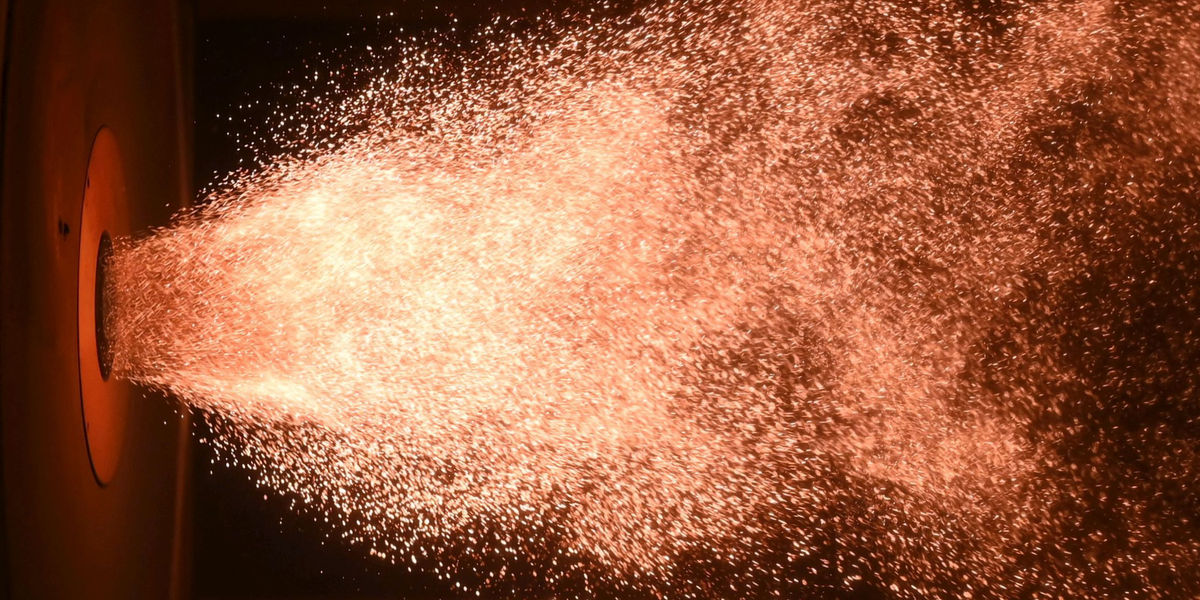
In the future, iron could serve as a chemical energy storage medium and make large amounts of renewable energy available over the long term. In this process, iron powder is burned in aCO2-neutral cycle and then converted back to its original state using energy. Researchers at the Karlsruhe Institute of Technology (KIT) have, for the first time, conducted a comprehensive study of this technology’s potential for electricity generation. Their findings show that while iron does not replace hydrogen, it can effectively complement it in a climate-neutral energy system. Published in *Chem Circularity*.
Whether it’s wind energy from coastal regions or solar power from desert areas—iron could serve as a transportable energy carrier in the future to make these renewable energies usable worldwide. “This works in a cycle without carbon dioxide emissions or environmentally harmful substances,” says Julia Schuler from the Institute for Industrial Management and Industrial Production (IIP) at KIT. Iron powder is burned to generate energy. What remains is iron oxide, or rust. This is then reduced back to iron using renewable hydrogen, a process that removes the oxygen it contains. The iron powder is suitable for reuse. “Iron powder behaves very similarly to coal during combustion. This raises the question in research as to whether existing coal-fired power plants can be converted to iron combustion,” says Schuler. Adjustments would be necessary primarily in the heat generator; other power plant components such as the steam cycle, turbines, generator, and grid connection could continue to be used in this concept.
Iron Cycle Complements the Hydrogen Economy
Building on findings from the “Clean Circles” research project on the iron cycle, scientists at KIT have now investigated, in a study funded by the Baden-Württemberg Energy Research Foundation, how the iron cycle can be used for electricity generation in a climate-neutral European energy system. To this end, they expanded an established energy system model (PERSEUS) to include the option of retrofitting coal-fired power plants, as well as reduction facilities and storage and transport routes. Using the expanded model, they then optimized the development of the European energy system through 2050. In this scenario, the iron cycle competed with other technologies such as batteries, hydrogen storage, and hydrogen power plants.
The results show that iron does not replace hydrogen-based power generation but can usefully complement it in a climate-neutral energy system. Iron offers particular advantages as a long-term storage solution. The powder is relatively easy to store and transport, whereas the use of hydrogen requires a complex network of pipelines, import terminals, and underground storage facilities. With iron powder, renewable energy could also be transported globally with less infrastructure investment. At the same time, local reduction plants could convert excess electricity in Europe into iron powder—a storable energy carrier—via the intermediate step of hydrogen production.
In the simulations, iron powder-fired power plants proved particularly attractive in countries with limited opportunities for hydropower or underground hydrogen storage. In such regions, iron can help bridge supply gaps during extended periods of low electricity generation from wind and solar plants. At the same time, it relieves pressure on the hydrogen infrastructure, for example when import capacities or transmission lines reach their limits. Due to its many coal-fired power plants, the potential is also particularly high in Germany. Turbines, grid connections, district heating networks, and other parts of the infrastructure could be retained.
Reducing Costs with the Iron Cycle
The researchers viewed it as an encouraging sign for the further development of the technology that power plants fueled by iron powder were an integral part of a cost-minimized energy system across all scenarios considered. “In the future, iron could play a specific but economically viable role in achieving climate neutrality and ensuring the reliable availability of renewable energy,” says Schuler. Whether a new “Iron Age” is actually dawning depends largely on how costly it will be to retrofit existing power plants and how efficiently iron oxide can be reduced back to iron in the future.
Note: This article has been translated using a computer system without human intervention. LUMITOS offers these automatic translations to present a wider range of current news. Since this article has been translated with automatic translation, it is possible that it contains errors in vocabulary, syntax or grammar. The original article in German can be found here.
Original publication


Other news from the department science