Charging ahead with sustainable zinc-iodine battery development
Biodegradable oligosaccharides solve a key problem

Advertisement


While soaring demand for lithium-ion batteries pushes prices higher, Flinders University experts are making headway in the development of a safe and more sustainable aqueous zinc-iodine rechargeable battery.
In their latest study, published in high-profile international journal Angewandte Chemie, the Flinders research team has designed an aqueous zinc-ion battery (AZIB) that can be charged and discharged over 60,000 cycles.
“Rechargeable aqueous zinc-iodine batteries are shaping up as a viable alternative to lithium-ion batteries for large-scale energy storage and our group is now working with industry to establish a prototyping platform for this battery system,” says Associate Professor in Chemistry Zhongfan Jia, Matthew Flinders Fellow at Flinders University’s College of Science and Engineering.
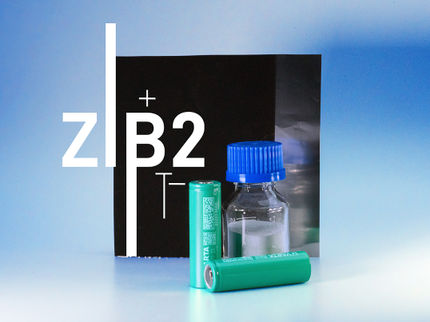
Iodine is among the simplest molecules to exhibit reversible electrochemical reactions and can provide a theoretical electrical charge capacity of 211 mAh/g (milliampere-hours per gram). However, a major challenge for this emerging battery technology is to prevent polyiodine species from shuttling through the separator.
The Flinders University team’s system is based on a low-cost organic cyclodextrin-based polymer host material that effectively traps and releases polyhalides in AZIBs that can operate at 1.3 to 1.4 volts (V) with a capacity of 200 mAh/g over 8000 cycles when fully charged in seven minutes, or 150 mAh/g for over 60,000 cycles when fully charged in just three minutes.
Cyclodextrins are a family of cyclic oligosaccharides produced by enzymatic conversion from starch. Cyclodextrins have been widely used in food, pharmaceutics and cosmetic ingredients and their unique hydrophilic exterior and hydrophobic interior cavity make them ideal for caging polyiodides. The novel host-guest chemistry prevents the shuttle effect of polyiodine species.
“This system offers a new approach to mitigate polyiodide shuttling by using polymers derived from inexpensive, biodegradable oligosaccharides, thereby enabling sustainable and long-lasting aqueous zinc-iodine batteries,” says Associate Professor Jia.
Increasing demand and consumption of lithium-ion batteries (LIBs), from electric vehicles to portable electronic devices, have led to resource shortages, costly supply issues and major waste-recycling issues. Australia produces about 3300 tonnes of LIB battery waste a year, which is expected to rise to more than 136,000 tonnes by 2036.
AZIBs usually use zinc metal, and Australia holds the world's largest known zinc reserves and resources, accounting for 20%- 28% of the global total.
“As a top global producer and exporter, we can use these zinc resources for safer energy storage, which is important for energy manufacturing in Australia,” says first co-author Shangxu Jiang, a PhD student at Flinders University’s Jia Lab which works on Sustainable Polymers for Energy and Environment.
Second first author Zhipeng Pei, working with senior co-author Flinders University Professor Michelle Coote, devised the computational modelling to support this project.
Original publication


Other news from the department science







Most read news










More news from our other portals























See the theme worlds for related content
Topic World Battery Technology
The topic world Battery Technology combines relevant knowledge in a unique way. Here you will find everything about suppliers and their products, webinars, white papers, catalogs and brochures.

Topic World Battery Technology
The topic world Battery Technology combines relevant knowledge in a unique way. Here you will find everything about suppliers and their products, webinars, white papers, catalogs and brochures.