Nature as a Model for Sustainable Hydrogen Storage
How biocatalysis could improve LOHC technology
Advertisement


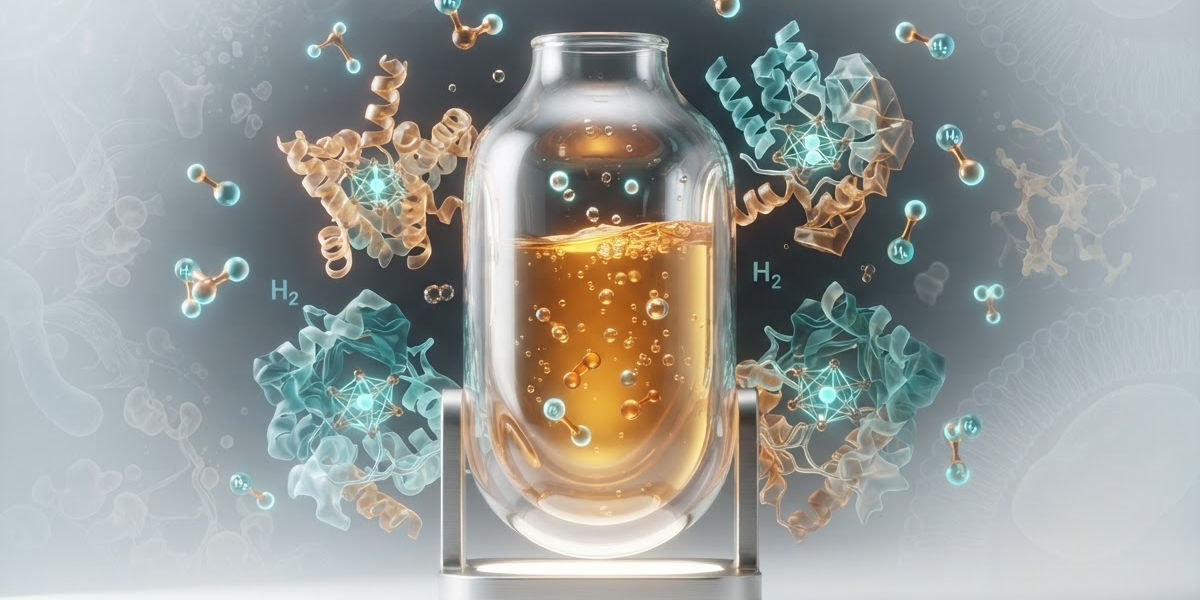
hydrogen is widely regarded as a cornerstone of a climate-neutral energy and chemical industry. To realize its full potential, however, it must be stored and transported safely, efficiently, and with minimal energy input. In a new review article, researchers from RWTH and the Helmholtz Institute Erlangen-Nürnberg for Renewable Energy examine how biological systems could help shape the next generation of liquid hydrogen storage technologies.
In a review article accepted for publication in the journal Renewable and Sustainable Energy Reviews, titled , Dr. Michael Geißelbrecht, Hannes Mandon, Prof. Peter Wasserscheid, and Prof. Lars Lauterbach investigate which principles underlying biological hydrogen conversion could inspire the next generation of liquid organic hydrogen carriers (LOHCs). These liquid compounds can chemically bind hydrogen, store it, and release it when needed. Because they remain in liquid form throughout the process, they can largely be handled using existing infrastructure for liquid fuels and other energy carriers.
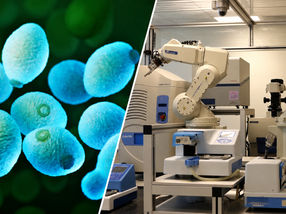
A major challenge remains, however. Many current LOHC systems require high temperatures, specialized catalysts, and carefully controlled operating conditions to store and release hydrogen efficiently. This is where biology offers valuable inspiration. Living organisms can convert hydrogen and electrons with remarkable efficiency under mild conditions. To do so, microorganisms rely on hydrogenases, enzymes that activate and release hydrogen, together with highly sophisticated biological redox systems.

“Biological catalysts demonstrate how hydrogen can be converted with remarkable selectivity under mild conditions. These natural design principles could inspire a new generation of bio-inspired LOHC systems. Our goal is to test these concepts using hydrogen-converting biocatalysts and assess their potential for sustainable hydrogen technologies,” says Professor Lars Lauterbach of the Institute of Applied Microbiology at RWTH Aachen University.
The research brings together two fields that have largely evolved independently: molecular biocatalysis and chemical hydrogen storage. Lauterbach’s group at RWTH contributes its expertise in hydrogen-dependent biocatalysts and biological systems for converting gaseous substrates, while Professor Peter Wasserscheid 's team at the Helmholtz Institute Erlangen-Nürnberg for Renewable Energy develops liquid organic hydrogen carrier technologies. At the WSS Research Centre catalaix, these complementary approaches are combined to advance catalytic technologies for a sustainable circular economy.
“LOHC technologies are particularly attractive because they store hydrogen in liquid form, allowing them to take advantage of existing storage and transport infrastructure,” says Wasserscheid. “By drawing inspiration from biological systems, we can identify new strategies for making future LOHC systems operate under milder conditions, with greater selectivity and longer catalyst lifetimes.”
The review highlights several biological principles that could help shape future hydrogen storage technologies. These include tailored microenvironments at catalytic sites, redox-active mediators, proton-coupled electron transfer, and coupled reaction pathways. In the long term, these concepts could help lower reaction temperatures, reduce unwanted side reactions, and extend the lifetime of both catalysts and carrier molecules.
Rather than introducing a new LOHC compound, the publication presents a conceptual framework for designing the next generation of catalysts and carrier molecules, combining the robustness of chemical systems with the precision of biological ones. By bringing together expertise from RWTH and the Helmholtz Institute, the researchers open new avenues for hydrogen storage technologies that are more efficient, more selective, and ultimately more sustainable.
Original publication


Other news from the department science