Klaus Grohe Prize 2026 awarded for the first time to two researchers
Edward Tate and Nicolas Winssinger share the €75,000 prize for medicinal chemistry
Advertisement


The 2026 Klaus Grohe Prize will be awarded to Professor Dr. Edward Tate, Imperial College London, United Kingdom, and Professor Dr. Nicolas Winssinger, University of Geneva, Switzerland. For the first time, two awardee will share the award, and for the first time, it will be endowed with €75,000 – making the Klaus Grohe Prize one of the most prestigious prizes for medicinal chemistry in Europe. It is awarded by the Klaus Grohe Foundation, which is affiliated with the German Chemical Society (GDCh). The award ceremony will take place on September 6, 2026, during the EFMC Medicinal Chemistry 2026 Conference in Basel, Switzerland. At the same event, on September 9, 2026, the 2026 Klaus Grohe Young Young Scientist Award will be presented to Dr. Sebastian Pomplun, Leiden University, Netherlands.
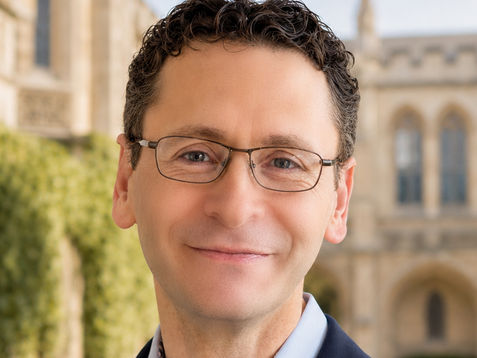
Edward Tate
privat
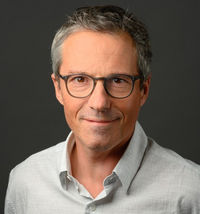
Nicolas Winssinger
privat
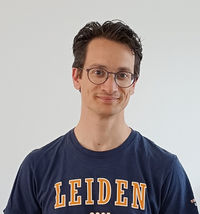
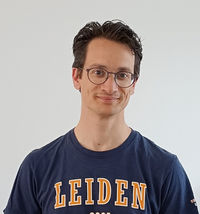
Sebastian Pomplun
privat
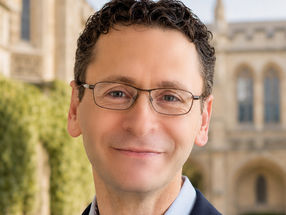
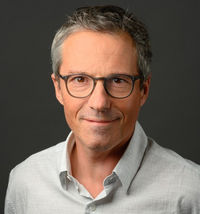
Edward Tate pioneered the chemical biology of protein lipidation—the study of how cells attach fat molecules to proteins. This process controls thousands of proteins but remained largely unexplored for a long time due to a lack of suitable tools. Tate's lab invented them: bioorthogonal probes that do not disrupt cellular processes and are now considered the gold standard. They are used worldwide.
Basic research has led to therapies that, for example, block viral replication or attack tumor cells. Tate is also a co-founder of Myricx Bio, a company that has raised over $120 million. Myricx Bio develops inhibitors of the enzyme N-myristoyltransferase, which keeps cancer cells alive. These inhibitors are incorporated into targeted antibody-drug conjugates for cancer therapy and are expected to enter initial clinical trials soon.
Nicolas Winssinger uses nucleic acids (the building blocks of the hereditary molecule) in an unusual way. Normally they only carry genetic information, but in his work they control chemical reactions and the structure of molecules. This results in molecular circuits with molecular logic that react like sensors to signals in the body and then, for example, release an active ingredient.
This opens up avenues for "smart" medications and diagnostics. His latest success is a programmable anticoagulant (blood thinner) whose effect can be selectively switched on and off. This is particularly valuable for safety-critical therapies. It represents a completely new type of treatment.
The Klaus Grohe Young Scientist Award 2026 recognizes Sebastian Pomplun's young, rapidly growing research program on novel chemical mechanisms of action. Pomplun synthesizes cell-penetrant miniproteins to specifically target transcription factors (key points of gene regulation). He also develops mass spectrometry-based platforms for screening large compound libraries. The advisory board particularly commends his creativity and productivity.
About the person: Edward Tate
Edward William Tate (born 1975) studied chemistry at the University of Durham, UK, until 1996 and received his PhD in organic chemistry from the University of Cambridge, UK, in 2000. After postdoctoral positions at the École Polytechnique and the Pasteur Institute, Paris, France (2000–2003), Tate became a research associate in 2004. From 2006, he was a BBSRC research fellow, from 2010 a senior lecturer, and from 2012 a reader at Imperial College London, UK. From 2019 to 2021, he was scientific Head at Myricx Bio. Since 2014, he has been Professor of Chemical Biology, and since 2023, he has held the GSK Chair of Chemical Biology at Imperial College London; since 2017, he has also been a Satellite Group Leader at the Francis Crick Institute, London. He has received numerous awards, including the RSC Corday-Morgan Prize (2020), founded several biotechnology companies, and has been invited to give over 200 lectures internationally.
About the person: Nicolas Winssinger
Nicolas Winssinger (born 1970 in Belgium) studied chemistry at Tufts University, Medford, USA, until 1993. He received his PhD in chemistry from the Scripps Research Institute, La Jolla, USA, in 2000, where he also completed a postdoctoral fellowship until 2002. After working as a research scientist at Sphinx Pharmaceuticals (1993–1995), he was an associate professor at the Université Louis Pasteur, Strasbourg, France (2002–2005), and subsequently a professor at the Université de Strasbourg, Strasbourg, France (2005–2012), where he headed the Laboratory for Organic and Bioorganic Chemistry. Since 2012, Winssinger has been a professor in the Department of Organic Chemistry at the University of Geneva, Geneva, Switzerland. He served as head of the department for a time and has been president of the Chemistry and Biochemistry Section since 2021. He has received numerous awards, including the ERC Young Investigator Award (2008) and the Prix Guy Ourisson (2008). Winsinger is and has been a member of numerous committees and advisory boards and has authored 220 articles and held 11 patents.
About Sebastian Pomplun
Sebastian J. Pomplun (born 1985) studied chemistry and pharmaceutical technologies at La Sapienza University of Rome, Italy, until 2011. He received his PhD in Organic and Medicinal Chemistry from the Max Planck Institute of Psychiatry/LMU Munich in 2015. He then held postdoctoral positions at Roche Diagnostics in Penzberg, Germany (2015–2018) and at the Massachusetts Institute of Technology in Boston, USA (2019–2021). From 2021, he was an Assistant Professor at the Leiden Academic Centre for Drug Research (LACDR) at Leiden University, Netherlands, and since 2024, also an Oncode Junior Investigator. Since May 2024, he has been an Associate Professor of Drug Discovery there. In addition, since 2026, he has been Chief Scientific Head (CSO) of the biotechnology company PeptoTx. He secured over 4 million euros in research funding, including an ERC Starting Grant, filed over ten patents, and published numerous papers as a corresponding author.
For the Klaus Grohe Prize
The Klaus Grohe Prize has been awarded since 2020 to scientists who have distinguished themselves through excellent work in researching new principles of drug discovery and whose research results make a significant contribution to their application. The prize is endowed with 75,000 euros and is awarded every two years.
For the Klaus Grohe Young Scientist Award
The Klaus Grohe Young Scientist Award for Medicinal Chemistry was established to support young scientists at European research institutions. The prize money amounts to €25,000 and may only be used for research purposes.


Other news from the department science