New theory for latest high-temperature superconductors
Rice, Rutgers physicists explain, predict properties of iron compounds
Advertisement


Physicists from rice and Rutgers universities have published a new theory that explains some of the complex electronic and magnetic properties of iron "pnictides." In a series of startling discoveries this spring, pnictides were shown to superconduct at relatively high temperatures. The surprising discoveries created a great deal of excitement in the condensed matter physics community, which has been scrambling to better understand and document the unexpected results.
High-temperature superconductivity remains one of the great, unexplained mysteries of condensed matter physics. Until the discovery of the iron pnictides, the phenomena was limited to a class of copper-based compounds called "cuprates".
"There is a great deal of excitement in the quantum condensed matter community about the iron pnictides," said paper co-author Qimiao Si, Rice University theoretical physicist. "For more than 20 years, our perspective was limited to cuprates, and it is hoped that this new class of materials will help us understand the mechanism for high-temperature superconductivity."
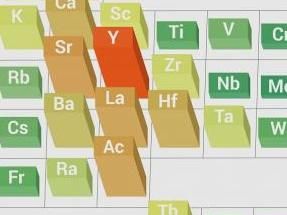
The 2006 discovery of superconductivity in one iron pnictide did not receive much notice from the physics community, since it occurred only below several kelvins. In February 2008, a group from Japan discovered superconductivity above 20 kelvins in another of the iron pnictides. In March and April, several research groups from China showed that related iron pnictides superconduct at temperatures greater than 50 kelvins.
In their new theory, Si and Rutgers University theorist Elihu Abrahams explain some of the similarities and differences between cuprates and pnictides. The arrangement of atoms in both types of materials creates a "strongly correlated electron system" in which electrons interact in a coordinated way and behave collectively.
Si and Abrahams propose that the pnictides exhibit a property called "magnetic frustration," a particular atomic arrangement that suppresses the natural tendency of iron atoms to magnetically order themselves in relation to each other. These frustration effects enhance magnetic quantum fluctuations, which may be responsible for the high-temperature superconductivity.
"Precisely how this happens is one of the challenging questions in strongly correlated electron systems," Abrahams said. "But even though we don't know the precise mechanism, we are still able to make some general predictions about the behavior of pnictides, and we've suggested a number of experiments that can test these predictions." The tests include some specific forms of the electronic spectrum and spin states.
The new pnictide theory appears in Physical Review Letters.


Other news from the department science