Engineers develop a laser solution to power plants slowed by slagging
A new optical technology uses artificial intelligence to allow operators to make rapid adjustments to prevent costly ash accumulation in boilers
Advertisement


Quietly, and with little of the fanfare accompanying the relentless surge in gasoline costs, the price of coal has doubled in less than a year. The reasons are varied. Worldwide demand for coal is growing sharply. Bad weather has hampered production in Australia and China. Shipping problems have slowed exports from Australia and South Africa. Because coal-fired power plants produce half the electricity in the U.S., the spike in prices has increased utility bills in some states, just as consumers are already coping with rising food and gas prices. The climbing coal costs are also giving power plants owners an incentive to innovate, says Carlos Romero.
Romero is associate director of Lehigh's Energy Research Center, which in 30 years has gained renown for, among other accomplishments, solutions that enable power plants to run more efficiently and cleanly. In the past two years, Romero has worked with the Energy Research Co. (ERCo) of Staten Island, N.Y., to develop an optical technology that would allow power plant operators to make rapid adjustments to prevent boiler slagging and fouling problems.
Slagging occurs when coal ash accumulates, at high temperatures, outside the tubes that carry steam inside a power plant boiler. Slagging reduces heat transfer from the flue gas to the steam tubes and decreases a plant's efficiency. In extreme cases slagging can require a boiler to be shut down while heat transfer surfaces are cleaned or repaired. According to a report by the Electric Power Research Institute, slagging and associated problems cost coal-fired power plants $2.4 billion each year.
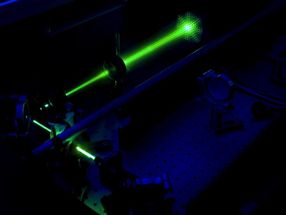
The ERC and ERCo have applied a technique called laser-induced breakdown spectroscopy, or LIBS, to provide instant analysis of the elemental composition of the coal being burned and correlation of the fusion temperature of the coal ash, which is affected by the ratio of the elemental ingredients. The LIBS system uses a pulsating laser with two frequencies, one infrared (IR) and one visible light. The laser vaporizes a sample and gives a distinct elemental signature represented by intensity and wavelength. From these data, a software package containing artificial neural network models estimates ash fusion temperature and predicts coal slagging potential.
Traditional techniques for measuring coal composition and ash fusion temperature require operators to remove a sample from a boiler and test it in a lab, which can take up to three days. LIBS provides instantaneous data without interrupting the process. Operators also have the option of taking the measurements with a nuclear analyzer that uses gamma rays. But the analyzer has a large footprint, says Romero, and is potentially hazardous. LIBS is the size of a table top and is relatively safe to use. The LIBS system was verified in lab experiments and then tested at Brayton Point Station, a 1,150-MW coal-fired power plant in Somerset, Mass.
"Our results have been very positive," says Romero. "LIBS analyzes coal composition accurately and with good repeatability. It also predicts ash-fusion temperature accurately, with results that compare very favorably with the results obtained using the American Society for Testing Materials' (ASTM) standards."


Other news from the department research and development








These products might interest you





Most read news







More news from our other portals


























See the theme worlds for related content
Topic World Spectroscopy
Investigation with spectroscopy gives us unique insights into the composition and structure of materials. From UV-Vis spectroscopy to infrared and Raman spectroscopy to fluorescence and atomic absorption spectroscopy, spectroscopy offers us a wide range of analytical techniques to precisely characterize substances. Immerse yourself in the fascinating world of spectroscopy!

Topic World Spectroscopy
Investigation with spectroscopy gives us unique insights into the composition and structure of materials. From UV-Vis spectroscopy to infrared and Raman spectroscopy to fluorescence and atomic absorption spectroscopy, spectroscopy offers us a wide range of analytical techniques to precisely characterize substances. Immerse yourself in the fascinating world of spectroscopy!