Baden-Württemberg has potential for its own sustainable fuel production
DME-based e-fuels could become cheaper than methanol
Advertisement


How can Baden-Württemberg reduce greenhouse gases in the transport sector and produce sustainable fuels itself? The "e-fuels fürs LÄND" project, coordinated by the Fraunhofer Institute for Solar Energy Systems ISE, investigated the production of e-fuels with maximum added value in Baden-Württemberg, resilient business models and a rapid market ramp-up. According to the findings, dimethyl ether (DME) has the potential to reduce the production costs of sustainable fuels thanks to the efficient new INDIGO process. The project was funded by the Baden-Württemberg Ministry of Transport.
The project consortium investigated the entire value chain of sustainable fuels: from the production of hydrogen andCO2 from the air (direct air capture, DAC) to the intermediate products methanol and dimethyl ether through to fractions of diesel and petrol or sustainable aviation fuels (SAF). Dimethyl ether plays a central role as an intermediate product: the gas is non-toxic, has a high energy density and great potential for the production of fuels as an energy source and products for the chemical industry. The project looked at the DME exporting countries Finland, Spain and Brazil in four scenarios (short-term, innovation, reference and long-term scenario) for the years 2030 to 2040 in order to cover as many climate zones and framework conditions as possible. Four technologies "Made in Baden-Württemberg" were evaluated: Direct Air Capture, hydrogen or synthesis gas production (bioliq® process of the Karlsruhe Institute of Technology KIT), DME production (INDIGO process of Fraunhofer ISE) and the production of SAF and other fuel fractions. The entire value chain - from the production of DME abroad using renewable electricity and carbon from sustainable sources or the air to the conversion into fuels in Baden-Württemberg - was then evaluated in techno-economic terms. Methanol as the current state of the art served as a reference for comparison.
Process development "Made in Baden-Württemberg"
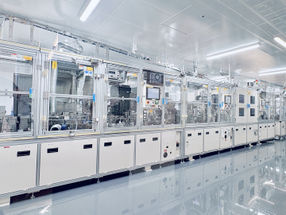
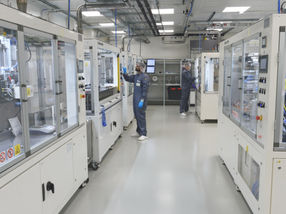
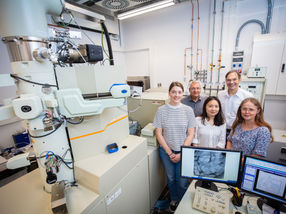
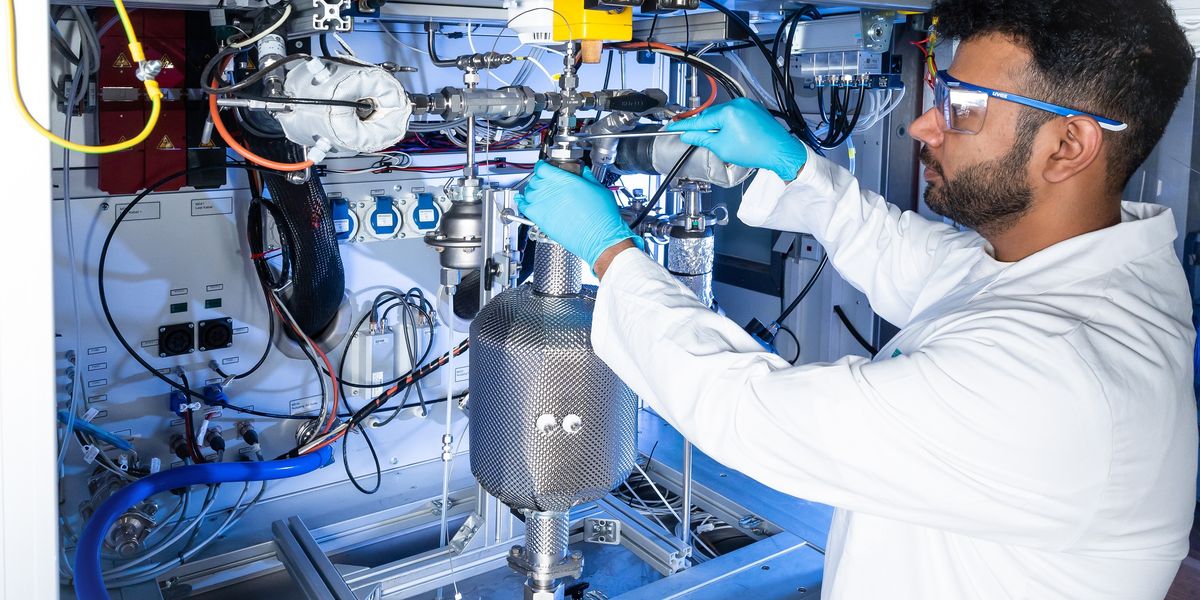
In addition to analyzing the value chains, the project also developed specific manufacturing processes. Purem GmbH and Fraunhofer ISE investigated a direct air capture process based on solid sorbents. The newly developed DAC test stand was run in cyclical operation with industrially relevant air flows and revealed energy efficiency potential. "The developed scaling concept enables cost-effective production of DAC modules in automated production environments in the automotive industry. Further experimental studies on a pilot scale are required for investment decisions," explains Robert Szolak, head of the Sustainable Synthesis Products department at Fraunhofer ISE.
In a process simulation, the researchers compared two DME synthesis processes (INDIGO from Fraunhofer ISE, conventional process) and methanol synthesis in terms of their techno-economic key figures. The INDIGO process showed significantly lower operating and total costs. The project partner Mineraloelraffinerie Oberrhein has the option of implementing this process as a licensee in its refinery and benefiting from the low production costs of this process "Made in Baden-Württemberg".
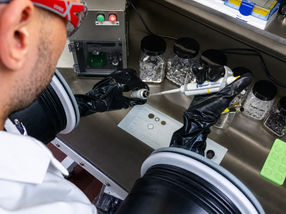
In its laboratory, KIT investigated the individual processes for olefin and fuel synthesis from DME for the first time by simulating the combined process at a technically relevant scale and in continuous operation. Compared to the state of the art based on methanol, energy efficiency increases by up to 90 percent andCO2 emissions fall accordingly. By processing selected oligomerization products, gasoline and diesel fractions as well as SAF were produced and the promising potential for the synthesis of DME-based fuels was demonstrated.
In the techno-economic analyses, the team determined the fuel production costs for synthetically produced DME for four scenarios. The costs in the innovation scenario (with "Made in Baden-Württemberg" technology) are always lower than in the reference scenario (with methanol). This is due to the more efficient fuel production based on DME and the efficient INDIGO synthesis technology, which leads to lower investment and operating costs.
"Our study has shown that the transformation to sustainable fuels based on DME offers significant potential for reducing costs. Baden-Württemberg, with its industrial base and strong mechanical and plant engineering sector, has ideal conditions for the market ramp-up of e-fuels. In order to leverage this potential, proactive entrepreneurial action and a supportive industrial and technology policy are required," explains Dr. Achim Schaadt, Head of the Sustainable Synthetic Products department.
Note: This article has been translated using a computer system without human intervention. LUMITOS offers these automatic translations to present a wider range of current news. Since this article has been translated with automatic translation, it is possible that it contains errors in vocabulary, syntax or grammar. The original article in German can be found here.


Other news from the department research and development