Recovering critical materials from batteries
Chinese inventors selected as finalists for the European Inventor Award 2026
Advertisement


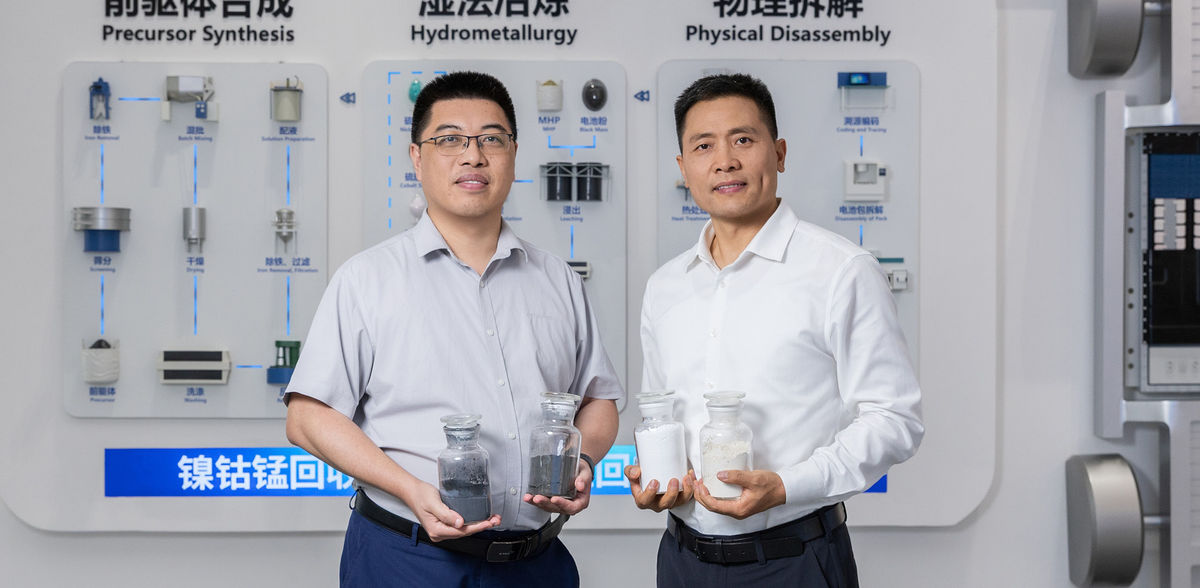
As global demand for electric vehicles and energy storage grows rapidly, securing sustainable supplies of critical battery materials has become a strategic priority worldwide. A new study from the European Patent Office and the International Energy Agency on battery circularity estimates that around 1.2 million electric vehicle batteries could reach the end of their lives in 2030, and 14 million in 2040. Against this backdrop, Yu Haijun and Xie Yinghao have developed a patented recycling technology for the directed recovery of reusable lithium nickel cobalt manganese oxide (NCM) from spent lithium-ion batteries. For this work, the Chinese team has been selected as finalists in the ‘Non-EPO Countries’ category of the European Inventor Award 2026 by an independent jury.
Recovering battery materials at a mega-industrial scale
Conventional battery recycling methods often involve breaking spent batteries down into low-value outputs or relying on multiple energy-intensive processing steps. These approaches can limit recovery efficiency and reduce the environmental benefits of recycling. Furthermore, the recovered materials are difficult to reintegrate into new battery manufacturing.
The Chinese team addressed this challenge by developing a method known as directed recycling. Instead of separating batteries back into individual raw elements, the technology converts spent batteries and production scrap directly into regenerated cathode materials perfectly suitable for manufacturing new batteries. By preserving the functional structure of the materials, the method significantly improves efficiency, achieving a recovery rate of up to 99.6%, reduces energy use and lowers emissions. “With its ultra-high recovery rates, superior material performance, and exceptionally low processing costs, we are reducing our reliance on millions of tons of virgin nickel, cobalt and lithium ore, which is a major contribution to sustainability,” said Yu Haijun.
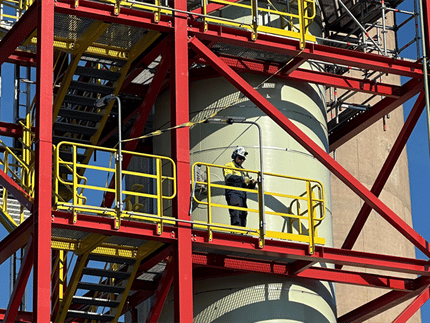
The technology was developed for nickel-cobalt-manganese (NCM) materials from lithium-ion batteries, which are widely used in the electric vehicle industry. Through successive technology iterations, the team improved new material performance, safety and lifespan, enabling regenerated materials to meet the various stringent requirements of automotive applications.
Building a circular battery ecosystem
The invention grew out of practical experience with battery manufacturing and waste management. In the early 2000s, the team observed the growing obstacle of managing spent batteries alongside China’s dependence on imported raw materials. This insight led to the establishment of Brunp Recycling and a long-term research effort focused on scalable recycling technologies.
Yu Haijun later led the conceptual development of reverse product positioning design and directed recycling technologies, assembling a multidisciplinary team to overcome technical bottlenecks in battery regeneration. Following Brunp’s integration into the CATL ecosystem, the technology has further achieved ultra-large industrial-scale application and applied across major global electric vehicle supply chains.
The recycling method supports a more circular battery economy. In alignment with the European Commission roadmap linked to the Batteries Regulation, material recovery targets rise from 90% by 2027 to 95% by 2031 for cobalt, copper, lead and nickel, with lithium targets increasing from 50% to 80% over the same period. Against this policy backdrop, higher-efficiency recycling helps keep critical materials in use for longer and reduces pressure on primary extraction.
“We are excited to see China and Europe working together on new energy industry. In the near future, I think the battery recycling segment will become a big issue that both Europe's new-energy industry and the society as a whole need to think about,” said Yu Haijun.
Yu Haijun and Xie Yinghao are two of the finalists in the ‘Non-EPO Countries’ category of the European Inventor Award 2026. The other ‘Non-EPO Countries’ finalists are the Chilean agricultural engineer Aníbal Montalva Rodríguez and architect Miguel Ángel Fernández Donoso for their living biofilter that improves air quality and the American inventor Emily Morris and German professor Thorsten Stoesser for their modular hydropower system. The European Patent Office will announce the winners during a livestreamed ceremony from Berlin on 2 July 2026. In addition to the four award categories, the Popular Prize will be decided through a combined vote by the public and the independent jury. Public voting opens on 12 May 2026 and will run until the ceremony on 2 July 2026.


Other news from the department research and development







Most read news




More news from our other portals

















See the theme worlds for related content
Topic World Battery Technology
The topic world Battery Technology combines relevant knowledge in a unique way. Here you will find everything about suppliers and their products, webinars, white papers, catalogs and brochures.

Topic World Battery Technology
The topic world Battery Technology combines relevant knowledge in a unique way. Here you will find everything about suppliers and their products, webinars, white papers, catalogs and brochures.