Chemical recycling: a must-have for the future of the site
New packaging law in Germany, rules for mass balance in Brussels
Advertisement


A new Conversio study shows: Germany could recycle significantly more plastics. Chemical processes offer additional opportunities as a supplement to mechanical recycling - especially for waste that can hardly be recycled to a high standard using conventional processes. Last year, however, only four smaller pilot plants for the chemical recycling of mixed polyolefins were in operation in Germany (max. 4,000 tons/year per plant) and one industrial plant (20,000 tons/year) for the pyrolysis of used tires. Two industrial plants for mixed polyolefin waste (24,600 tons/p.a. and 50,000 tons/p.a.) are currently under construction, 10 further plants of various sizes are being planned.
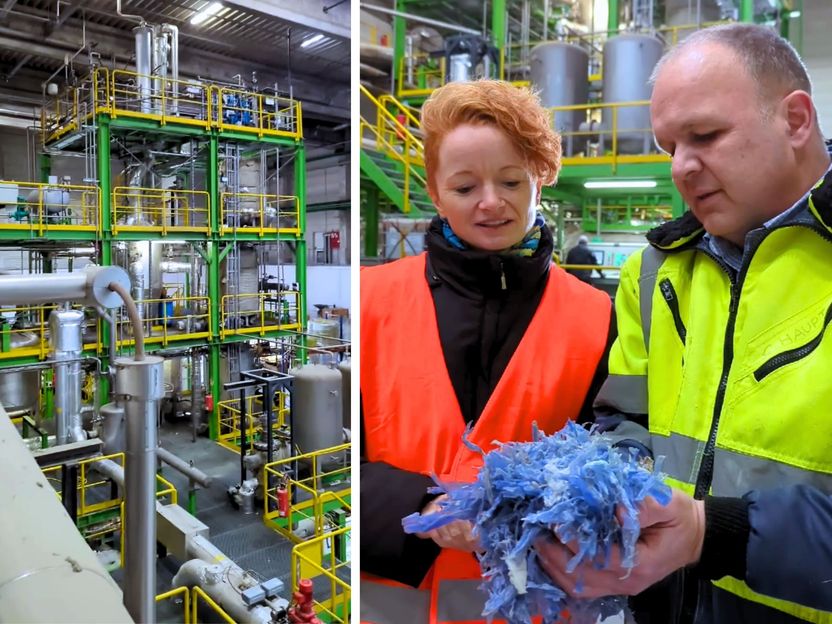
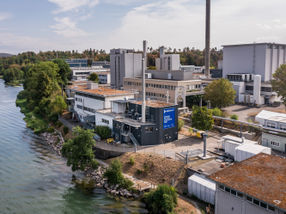
Chemical recycling plant in Ennigerloh, North Rhine-Westphalia: In this plant, complex plastic waste is broken down into its basic chemical substances. Chemical recycling produces oils, gases and solids that can be reused for the production of new plastics and partially replace fossil raw materials in the production process.
© Plastics Europe Deutschland
The industry wants to get started, but is being held back
Matthias Belitz from the German Chemical Industry Association believes that politicians now have a responsibility: "Chemical recycling is nowhere near where it could be. It is a technology of the future, both for the reduction of greenhouse gases and for the supply of raw materials. This is a clear win-win situation for climate protection and resilience. But as long as key legal issues remain unresolved, the necessary investments will not get off the ground."
Without clear guidelines, Germany will fall behind
"So far, the installed capacity for chemical recycling in Europe has mainly been located outside Germany," says Dr. Christine Bunte from Plastics Europe Germany. "The mention of chemical recycling in the new Packaging Implementation Act is an important first step towards leveraging the potential here in Germany too. An important decision is still missing at European level on how chemical recycling can also be counted towards the quotas for the use of recycled plastics. This endless discussion about mass balancing must therefore be brought to an end quickly. We hope that the German government will exert appropriate pressure in Brussels."
In addition to a clear legal framework for chemical processes, the associations are also campaigning for solvent-based processes to be promoted as part of the solution. This achieves significantly higher purities than conventional mechanical recycling processes, so that more waste can be recycled and particularly high-quality recyclates can be produced.
Background: What is chemical recycling?
In chemical recycling, plastics are broken down into their basic chemical substances. This produces carbon-containing oils and gases, as well as solids. These oils and gases can be reused to manufacture plastics and partially replace fossil raw materials in plastics production. Chemical recycling is therefore considered an important building block for the defossilization of plastics production. However, as chemically recycled materials have so far only been used to a small extent in the processing of new products, they are processed together with fossil-based materials. Therefore, their proportion in the end product cannot be determined directly. The proportion of raw materials is therefore allocated to the end products via mass balances, similar to fair trade chocolate, green electricity or biomass.
Facts at a glance: The state of chemical recycling in Germany
Current capacities: Last year, five plants were in operation in Germany, which together can take in around 20,000 tons of used tires and 10,000 tons of plastic waste per year. This corresponds to only a very small amount of the total plastic waste in Germany, which amounts to over six million tons annually.
What would be possible: According to the study, around half a million tons of suitable waste will be available for chemical recycling as a supplement to mechanical recycling by 2035. This mainly includes residual materials and mixed plastic waste from the Yellow Bag, which is still incinerated today because it cannot be mechanically recycled.
Planned expansion: If all currently planned projects are implemented, the capacity of chemical recycling could increase to up to 0.8 million tons, which corresponds to around thirteen percent of German plastic waste. However, due to delays in individual investments, the authors of the study assume an average increase in volume to around 0.3 million tons by 2035.
What can be recycled: In Germany, investments are likely to focus primarily on plants for pyrolysis and oiling. These chemical recycling processes are particularly suitable for highly mixed plastic fractions and composite plastics that are too complex or too contaminated for high-quality mechanical recycling, including polyolefin-rich residues (with a high proportion of HDPE, LDPE, PP), used tires and certain PS and PMMA waste.
Most important source of raw materials: The majority of plastic waste suitable for chemical recycling comes from lightweight packaging (LVP) collection ("yellow bag/yellow garbage can"): Around 92 percent of the current input comes from this stream, with the remainder coming from commercial waste and industrial sources.
Note: This article has been translated using a computer system without human intervention. LUMITOS offers these automatic translations to present a wider range of current news. Since this article has been translated with automatic translation, it is possible that it contains errors in vocabulary, syntax or grammar. The original article in German can be found here.


Other news from the department business & finance