C3 Prozess- und Analysentechnik
 Verified
Katanax X-100
Fully Electric Single-Position Fusion Fluxer Without Gas or Other Media
C3 Prozess- und Analysentechnik GmbH
Full electric, no other media needed
Full automatic
Cold to cold - Operation
Safe and Efficient Sample Preparation for XRF and ICP Analytics
The production of fusion tablets for X-ray fluorescence analysis (XRF) or acid digests for ICP analysis (ICP-AES, ICP-OES, or ICP-MS) is one of the standard methods used in sample preparation.
The pre-ground and homogenized sample, such as cement, rock, or ore, is mixed with a suitable fluxing agent (e.g., lithium borate) and melted in a platinum crucible in a furnace. The oxide sample is completely dissolved in borate glass and, after the dissolution process, is emptied from the platinum crucible intothe mold while still hot. This produces a homogeneous fused tablet with an extremely smooth surface without matrix effects.
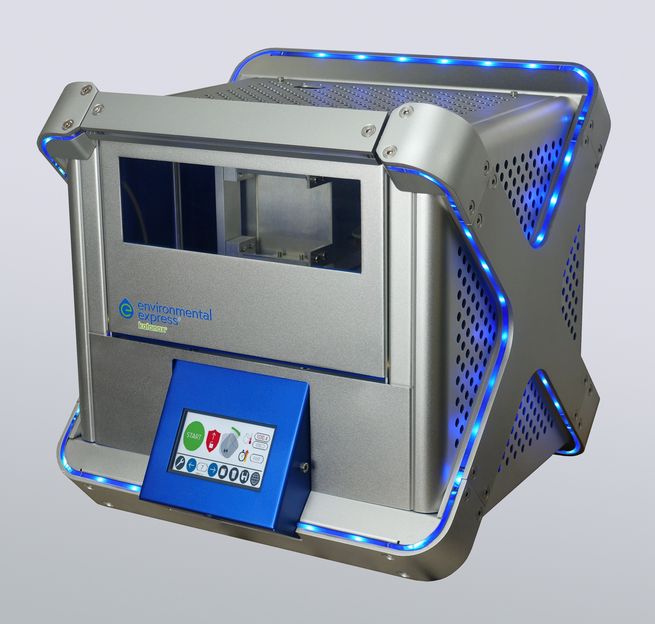
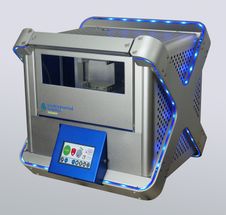
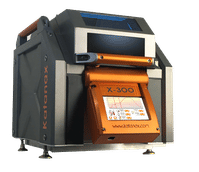
Like the two other Katanax models, the X-Fluxer X-300 and the X-Fluxer X-600, the Katanax X-Fluxer X-100 is a fully automatic and purely electric fusion digestion device that ensures fast, simple, and, above all, reproducible sample preparation of one sample in parallel, with a throughput of up to 5 to 7 samples per hour. The Katanax X-Fluxer X-100 requires NO gas or other media, only a 230V power connection (single-phase), which is the key safety aspect for most users. The device therefore offers a high level of safety when used in the laboratory, while requiring minimal infrastructure. In addition, it offers melt-resistant crucible and pouring bowl holders, melt-resistant and individually controlled heating elements, and an adjustable holding temperature to minimize the heating time between individual digestions.
With the Katanax X-Fluxer X-100, you can choose to produce either a fusion tablet for XRF or an acid digestion, e.g., for ICP-OES/ICP-MS, using the optionally available stirring module. Here, the hot melt is poured into a stirred Teflon beaker with an acid bath. Both processes (melting tablet production and acid digestion) can be performed alternately in the same device.
The Katanax X-Fluxer X-100 is operated intuitively via a color LCD touchscreen with a multilingual graphical interface (including German, English, French, Spanish, Russian, Italian, Portuguese, Italian, and Chinese) and is preprogrammed with various digestion methods (e.g., for oxides, minerals, metals, alloys, fluorides, sulfides, peroxide and acid digestion, etc.) that can be used directly or adapted to specific samples. This allows the user to begin sample preparation immediately. The parameters for the multi-step heating process, the mixing time and intensity (speed and deflection angle of the crucible), and for the decanting and cooling process (passive and active via fans) are specified, stored, and run automatically. They can be retrieved and edited by the operator at any time. This means that the majority of existing and routinely processed samples can already be handled. The Katanax Fluxer X-Fluxer X-100 is therefore a fusion digestion device for all conceivable applications – it can also be used for solid oxidation, peroxide and pyrosulfate digestion. For new samples and methods, we also offer our users free, customer-specific method development based on material samples sent in, including the creation of individual application documents.
1
Katanax X-100 fusion fluxer
2
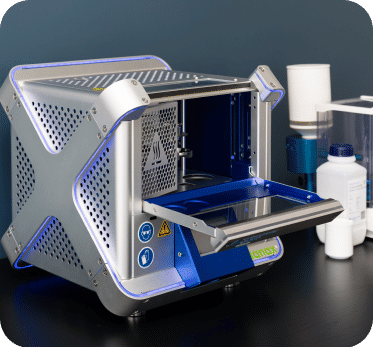
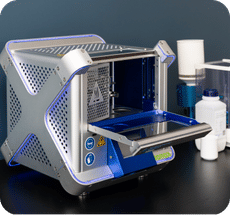
Katanax X-100 side view
3
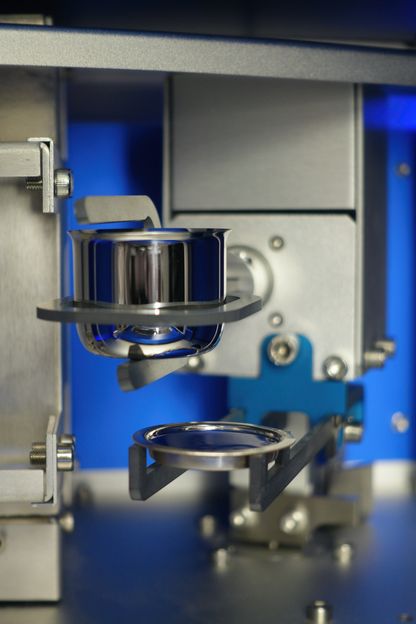
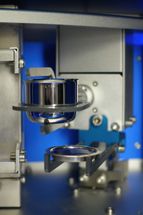
Katanax X-100 platinum ware
Experience this product live at the trade fair
Request information about Katanax X-100 now
Fusion equipment: Katanax X-100
Fully Electric Single-Position Fusion Fluxer Without Gas or Other Media

Product classification Katanax X-100
Product categories
Applications
Manufacturers of similar products
Advertisement


Find more fusion equipment and related products
Find Katanax X-100 and related products in the theme worlds
Topic world Digestion
Sample digestion is a critical step in chemical analysis that often determines the success or failure of an investigation. It involves the targeted transformation and preparation of a sample to make the components of interest accessible for analysis. Various methods such as thermal, chemical or enzymatic digestion are used to dissolve matrix components, remove unwanted components and release target substances.
Topic world Digestion
Sample digestion is a critical step in chemical analysis that often determines the success or failure of an investigation. It involves the targeted transformation and preparation of a sample to make the components of interest accessible for analysis. Various methods such as thermal, chemical or enzymatic digestion are used to dissolve matrix components, remove unwanted components and release target substances.
© 1997-2026 LUMITOS AG, All rights reserved