
 Verified
Quadrupole mass spectrometers:
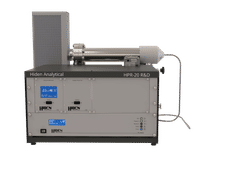
HPR-20 EGA
TGA-MS coupling with helium carrier gas and detection below 100 ppb
Detect evolved gases from 100% to below 100 ppb across the standard 200 amu mass range
Use helium carrier gas with enhanced light-gas pumping and reduced spectral interference
Couple to commercial or high-pressure TGA systems using heated, low-volume interfaces
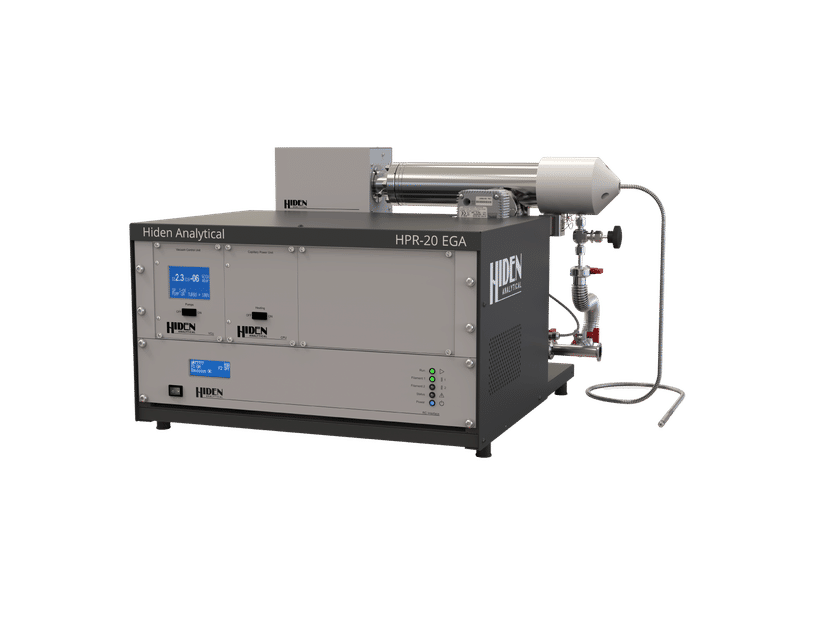
Heated low-volume interfaces for commercial TGA systems and high-pressure sampling
Product Overview
The HPR-20 EGA is a compact bench-top quadrupole mass spectrometer configured for continuous analysis of gases and vapours evolved from thermogravimetric analysers. It combines a heated quartz inert capillary inlet, application-specific TGA interfaces, enhanced pumping for light gases and EGAsoft data acquisition. This coordinated arrangement helps researchers relate mass-loss and temperature data to the chemical species released during heating, cooling or isothermal stages.
Optimised Coupling to TGA Systems
The standard QIC inlet samples from 100 mbar to 2 bar gauge. Its heated, low-volume design supports fast transfer of permanent gases and vapours while reducing condensation, memory effects and peak tailing. The flexible capillary operates at temperatures up to 200 C, with a stated sampling response below 300 ms.
Interface systems are available for most commercially available TGA instruments, with custom designs for specialist requirements. Re-entrant furnace sampling positions the sampling point close to the TGA furnace region to minimise transfer delay. Where required, robust clamping arrangements and an in-line heated filter can be incorporated. Alternative interfaces support direct sampling from advanced TGA systems operating at pressures up to 30 bar.
Enhanced Light-Gas Pumping and Sensitive Detection
An external dry scroll pump provides combined sample-bypass and UHV foreline pumping, supporting fast response and effective handling of light gases. This enables helium to be used as a TGA carrier gas without compromising sample flow or response. Compared with nitrogen or argon, helium can reduce mass spectral interference and support clearer identification of evolved species.
The HPR-20 EGA covers concentrations from 100% to below 100 ppb, subject to the sample, species and spectral interferences. The standard mass range is 200 amu, with 300 and 510 amu options. Adjustable ionisation energy can reduce fragmentation and simplify spectra for selected compounds, supporting interpretation of complex gas and vapour mixtures.
EGAsoft for Application-Specific Data Acquisition
EGAsoft is designed for TA-MS workflows and supports staged data acquisition triggered by TGA start-stop signals or autosamplers. Tools include 3D bar-scan viewing, peak integration and deconvolution, background subtraction, automatic spectral-overlap removal and automatic MS triggering. Custom export formats support transfer to compatible TGA software and NIST database searching. Temperature signals can be displayed alongside the mass spectrometer data, helping users compare thermal events with changes in evolved-gas composition within established analysis workflows.
This application-specific workflow reduces manual data handling and supports consistent comparison between experiments.
Applications
- TGA-MS and TA-MS evolved gas analysis
- Thermal decomposition and desorption studies
- Catalysis and temperature-programmed reaction studies
- Fuel-cell research
- CVD, MOCVD and ALCVD studies
- Environmental monitoring
1
HPR-20 EGA
Request information about HPR-20 EGA now
Quadrupole mass spectrometers: HPR-20 EGA
TGA-MS coupling with helium carrier gas and detection below 100 ppb

Product classification HPR-20 EGA
Product categories
Applications
Manufacturers of similar products


Find more quadrupole mass spectrometers and related products

Find HPR-20 EGA and related products in the theme worlds
Topic World Mass Spectrometry
Mass spectrometry enables us to detect and identify molecules and reveal their structure. Whether in chemistry, biochemistry or forensics - mass spectrometry opens up unexpected insights into the composition of our world. Immerse yourself in the fascinating world of mass spectrometry!

Topic World Mass Spectrometry
Mass spectrometry enables us to detect and identify molecules and reveal their structure. Whether in chemistry, biochemistry or forensics - mass spectrometry opens up unexpected insights into the composition of our world. Immerse yourself in the fascinating world of mass spectrometry!