Detection of little-known flame retardant in the environment
Advertisement


Chemists at Indiana University have published research findings on their discovery of a new and relatively unknown flame retardant in the environment. Their study is the first to detect the potentially toxic chemical in North America.
The chemical, called TTBP-TAX, is part of a new class of triazine-based "alternative" compounds that have been introduced as substitutes for earlier generations of flame retardants that were banned or removed from the market because of health and environmental concerns.
The researchers found the chemical not only in an electronic waste facility, where it would be expected, but in the bedrooms and living rooms of homes in Bloomington, Indiana.

"We don't know much about these compounds," said Marta Venier, a scientist in the School of Public and Environmental Affairs at Indiana University Bloomington and the study's lead author. "This research shows they are in the environment and we come into contact with them, but we don't know much about their effects."
Flame-retardant chemicals have been widely used in consumer products and building materials. They often escape into the environment, where they may persist for years, and have been linked to a variety of human health issues and environmental problems.
The IU researchers' discovery came about by accident and involved chemical detective work led by Guo, the paper's first author. They were analyzing samples from an electronics recycling facility in Canada, measuring known flame retardants. During the analysis, they noticed that the mass spectrometer produced a peak indicating the presence of a chemical they didn't recognize.
By analyzing the structure of the chemical, they guessed it was TTBP-TAX, which had been previously reported in the environment in a 2014 study from the Netherlands. They obtained lab standards and confirmed their hypothesis. Then they decided to look for it in additional samples.
They found significant concentrations of the chemical in all of the dust and air samples from the Canadian e-waste recycling facility. They also found it in 70 percent of household dust samples collected from 20 homes near where the IU researchers live in Bloomington, Indiana. They did not find the compound, or found only trace amounts, in outdoor air, water and sediment samples.
TTBP-TAX, also known as 2,4,6-tris(2,4,6-tribromophnoxy)-1,3,5-triazine, has been manufactured in Asia and imported to the U.S. by several companies, primarily for use in plastic casings for electronics products. Manufacturers say the product is safe, but it can easily degrade to the compound 2,4,6-TBP, which is linked to acute toxicity in fish and to reproductive and developmental toxicity in rodents.
"For most of these compounds, we don't know their effects and toxicity," Venier said, "and until we know they are safe, we shouldn't be coming into contact with them."
She said it is likely that other triazine-based flame retardants are in the environment but haven't been detected because scientists don't know about them or lack the analytical tools to measure them.
Original publication
Jiehong Guo, William A. Stubbings, Kevin Romanak, Linh V. Nguyen, Liisa Jantunen, Lisa Melymuk, Victoria Arrandale, Miriam L. Diamond, and Marta Venier; "Alternative Flame Retardant, 2,4,6-Tris(2,4,6-tribromophenoxy)-1,3,5-triazine, in an E-waste Recycling Facility and House Dust in North America"; Environmental Science & Technology; 2018



Other news from the department science





















Most read news












More news from our other portals

























Last viewed contents

Search for new semiconductors heats up with gallium oxide
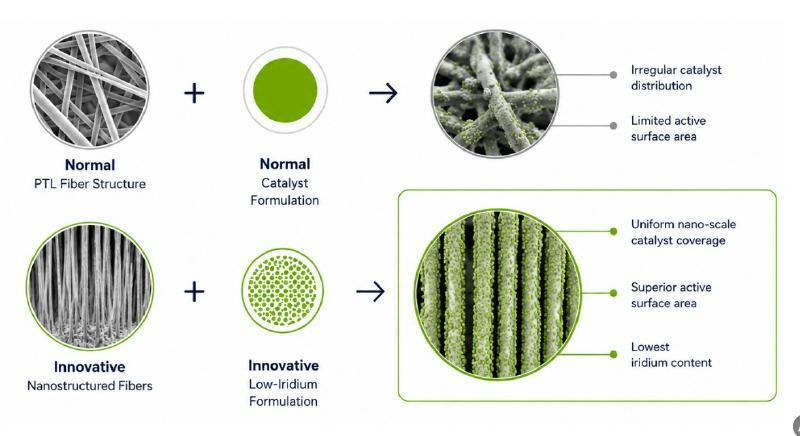
Smoltek Hydrogen and Heraeus Precious Metals advance next-generation ultra-low iridium electrolysis technology

Chemistry without detours: Researchers introduce a two-step process for producing phosphorus-containing chemicals - This promising innovation not only contributes to environmental protection but also saves significant time and costs

Evidence stacks up for poisonous books containing toxic dyes

Adhesives from waste wood, biofuel from straw - EU research project on the potential of agroforestry waste as environmentally friendly raw materials completed
Computational trick enables better understanding of exotic state of matter - New process relevant for fusion and materials research
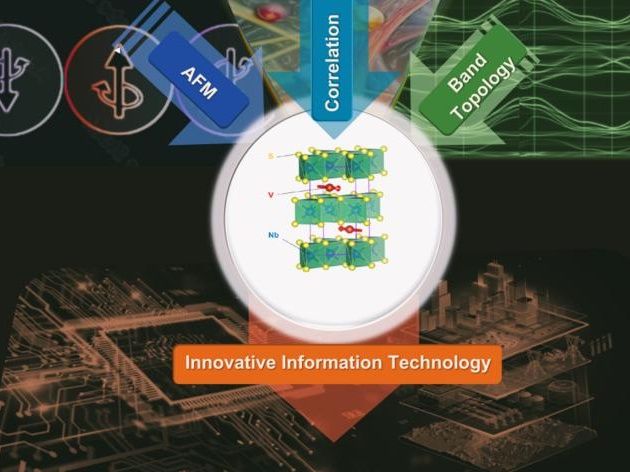
Pushing boundaries: Detecting the anomalous Hall effect without magnetization in a new class of materials - The first experimental evidence for the anomalous Hall effect emerging in a collinear antiferromagnet with non-Fermi liquid behavior
Unveiling how water and ions impact chemical reactivities at solid-aqueous interfaces
Chemistry meets biology: controlling artificial cell membranes through catalysis - Researchers develop an artificial metalloenzyme-based platform that enables programmable control of artificial membrane behavior
'Hot' oxygen atoms on titanium dioxide motivated by more than just temperature - PNNL scientists find unexpected chemical behavior on catalyst surface

New method measures the 3D position of individual atoms - The method developed at the Universities of Bonn and Bristol uses an ingenious physical principle