Researchers design efficient low-cost system for producing power at night
Rooftop radiative cooling system could provide lighting power when solar energy is unavailable
Advertisement


Researchers have designed an off-grid, low-cost modular energy source that can efficiently produce power at night. The system uses commercially available technology and could eventually help meet the need for nighttime lighting in urban areas or provide lighting in developing countries.
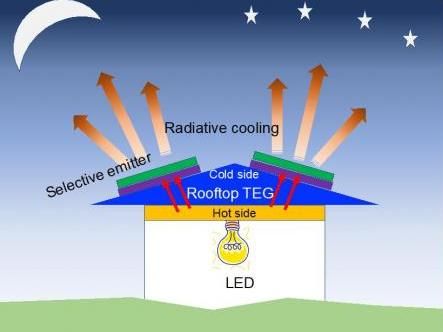
Researchers have designed an off-grid, low-cost modular energy source that uses radiative cooling to efficiently produce power for lighting at night.
Lingling Fan and Wei Li, Stanford University
Although solar power brings many benefits, its use depends heavily on the distribution of sunlight, which can be limited in many locations and is completely unavailable at night. Systems that store energy produced during the day are typically expensive, thus driving up the cost of using solar power.
To find a less-expensive alternative, researchers led by Shanhui Fan from Stanford University looked to radiative cooling. This approach uses the temperature difference resulting from heat absorbed from the surrounding air and the radiant cooling effect of cold space to generate electricity.

In The Optical Society (OSA) journal Optics Express, the researchers theoretically demonstrate an optimized radiative cooling approach that can generate 2.2 Watts per square meter with a rooftop device that doesn't require a battery or any external energy. This is about 120 times the amount of energy that has been experimentally demonstrated and enough to power modular sensors such as ones used in security or environmental applications.
"We are working to develop high-performance, sustainable lighting generation that can provide everyone - including those in developing and rural areas - access to reliable and sustainable low cost lighting energy sources," said Lingling Fan, first author of the paper. "A modular energy source could also power off-grid sensors used in a variety of applications and be used to convert waste heat from automobiles into usable power."
Maximizing power generation
One of the most efficient ways to generate electricity using radiative cooling is to use a thermoelectric power generator. These devices use thermoelectric materials to generate power by converting the temperature differences between a heat source and the device's cool side, or radiative cooler, into an electric voltage.
In the new work, the researchers optimized each step of thermoelectric power generation to maximize nighttime power generation from a device that would be used on a rooftop. They improved the energy harvesting so that more heat flows into the system from the surrounding air and incorporate new commercially available thermoelectric materials that enhance how well that energy is used by the device. They also calculated that a thermoelectric power generator covering one square meter of a rooftop could achieve the best trade-off between heat loss and thermoelectric conversion.
"One of the most important innovations was designing a selective emitter that is attached to the cool side of the device," said Wei Li, a member of the research team. "This optimizes the radiative cooling process so that the power generator can more efficiently get rid of excessive heat."
The researchers demonstrated the new approach by using computer modeling to simulate a system with realistic physical parameters. The models reproduced previous experimental results faithfully and revealed that the optimized system designed by the researchers could come close to what has been calculated as the maximum efficiency using thermoelectric conversion.
In addition to carrying out experiments, the researchers are also examining optimal designs for operating the system during the day, in addition to nighttime, which could expand the practical applications of the system.
Original publication


Other news from the department science




















Most read news












More news from our other portals


























Last viewed contents
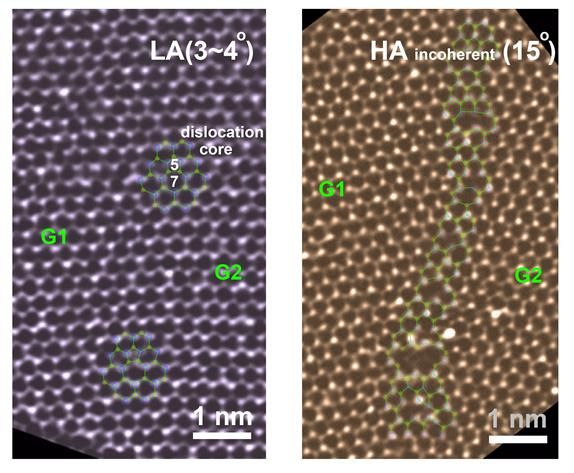
Electric transport across molybdenum disulfide grain boundaries

Magnetic nanoparticles change their magnetic structure in a magnetic field - International research team studies the effects of magnetic fields on magnetic nanoparticles
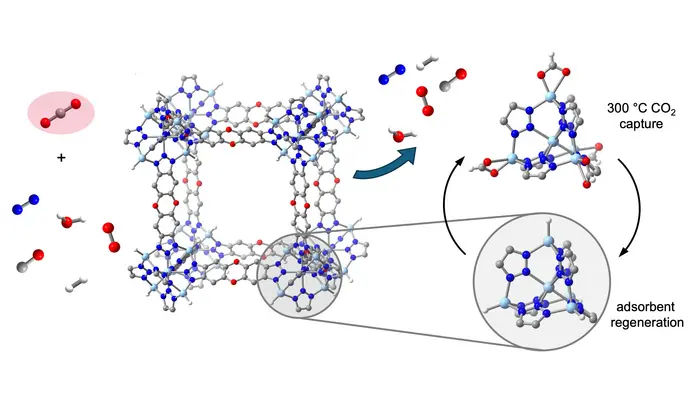
Breakthrough in capturing 'hot' CO2 from industrial exhaust - A metal-organic framework is capable of capturing CO2 at extreme temperatures

Quantum Tricks to Unveil the Secrets of Topological Materials
The nano-lasagna: Novel 2D materials gain momentum - Research team develops environmentally friendly MXene synthesis without hazardous hydrofluoric acid for industrial scaling

Starch Instead of Plastic: Colombian Startup Reinventing Fruit Packaging - Natupla: From ISC3 start-up of the month to a pioneer in starch-based, biodegradable plastics
Researchers Test Novel Titanium-Air Battery - This is the first time that experimental results of such a battery have been published
Flow research on the outskirts of space - Experiments in weightlessness isolate classic diffusion phenomenon
Hydrogen chloride can now be stored, processed, and electrolyzed safely thanks to breakthrough - New method paves the way for safer, more sustainable hydrogen and base chemical production
Bayer wins BDI Environmental Prize - Complexing agent helps to reduce impact on inshore waters

Do We Need to Reassess Chemicals? - Chlorinated organic substances can be converted into dioxins in the atmosphere
