Team tracks real-time molecular motions
Important new insights into a key process for the development of more efficient solar cells
Advertisement


The efficiency of solar cells can be significantly increased with a certain physical effect. A research team has now observed in detail for the first time how molecular movements influence this effect.

In the singlet exciton fission process, a singlet exciton (blue) is created upon absorbing light and then splits into two triplets (red) on ultrafast timescales. The team tracked real-time molecular motions acompanying this process in pentacene.
Jörg Harms, MPSD
Researchers from the Fritz Haber Institute (FHI) in Berlin, the Max Planck Institute for the Structure and Dynamics of Matter (MPSD) in Hamburg and the Julius-Maximilians-Universität Würzburg have provided important new insights into a key process for the development of more efficient solar cells and other light-based technologies, called singlet exciton fission. They have managed to track how molecules of a promising material, single crystals comprised of pentacene molecules, move in real time as singlet fission takes place, showing that a collective motion of molecules may be the origin of the fast timescales connected to this process.
Subtle Details dictate the Efficiency
Energy generation in light-based technologies relies on the ability of materials to convert light into electrical power and vice-versa. Certain organic molecular solids have the peculiar ability to significantly increase the solar to electrical power conversion efficiency, thanks to a process called singlet exciton fission (SEF). In this process two electron hole pairs, which are called excitons, are generated by the absorption of one light quantum (a photon). Because of the pronounced technological implications, it is no wonder that tremendous research efforts have been dedicated to understand how SEF really works.

The efficiency and speed of the SEF process are related to the way molecules arrange themselves in the material. Despite hundreds of studies on the topic, however, there had been no way to observe in real time how exactly the molecules move in order to facilitate the SEF event. Understanding this bit of the puzzle is essential to optimize SEF materials and further increase their efficiency.
Snapshots of the atomic structure
In a study published in Sciences Advances today, researchers from the FHI, the MPSD and the chair of Experimental Physics VI at Julius-Maximilians-Universität Würzburg have managed to track how molecules in a crystalline material build from pentacene molecules move during the SEF process, using an experimental technique called “femtosecond electron diffraction”. Such a technique can capture snapshots of the atomic structure in real-time as the SEF process unfolds. In order to be able to capture these snapshots in pentacene, a material which only contains small and light atoms, the measurements had to reach an exceptional stability and resolution.
“We have brought such experiments to a point where they can treat these materials, which is very exciting for chemistry, biology and materials science. These measurements have revealed that truly collective molecular motions accompany the SEF process in pentacene. Specifically, an ultrafast delocalized oscillation of pentacene molecules has been identified, which facilitates efficient energy and charge transfer across large distances”, says Heinrich Schwoerer from MPSD.
Molecules sliding with Respect to each other
Thanks to state-of-the-art theory, the team could reveal the molecular motions involved in the initial excitation event and how these motions trigger more complex molecular motions involving many molecules of the crystal. “Our theory analysis could resolve very complex molecular motions. We could identify a dominant one that involves molecules sliding with respect to each other, and that can only be triggered through the coupling of electronic excitations to other more localized molecular motions, that then, in turn, couple to this key motion also observed in experiment ”, says Mariana Rossi from MPSD.
These collective atomic motions observed by the team involved in the project may well be the key to explain how the two excitons generated from the SEF process can separate, which is a prerequisite to harvest their charges in a solar energy device. “Simply put, our picture is that these molecular motions efficiently neutralize the forces that keep the two excitons together right after they have been generated, providing a possible explanation about the origin of the ultrafast timescales related to the fission, and thereby facilitate the high efficiency of solar to electrical energy conversion”, says Hélène Seiler, a postdoctoral fellow at the FHI in the group of Ralph Ernstorfer.
"Beyond providing important insights into the SEF process, this work shows that it is possible to reveal the atomic motion in more complex, functional organic materials, which are delicate and composed of light atoms" says Sebastian Hammer from the University of Würzburg.
Original publication



Other news from the department science





















Most read news












More news from our other portals

























Last viewed contents

Researchers turn coffee and plastic waste into climate solution - “What begins with a Starbucks coffee cup and a discarded plastic water bottle can become a powerful tool in the fight against climate change...”

Team develops bioprocess for converting plant materials into valuable chemicals

Wonder material graphene claims yet another superlative
Magnets trump metallics - Magnetic fields can block conductivity of carbon nanotubes

Cellphone converts into powerful chemical detector - With only $50 worth of components, an ordinary cellphone transforms into a sophisticated scientific instrument, capable of identifying chemicals, drugs, and pathogens
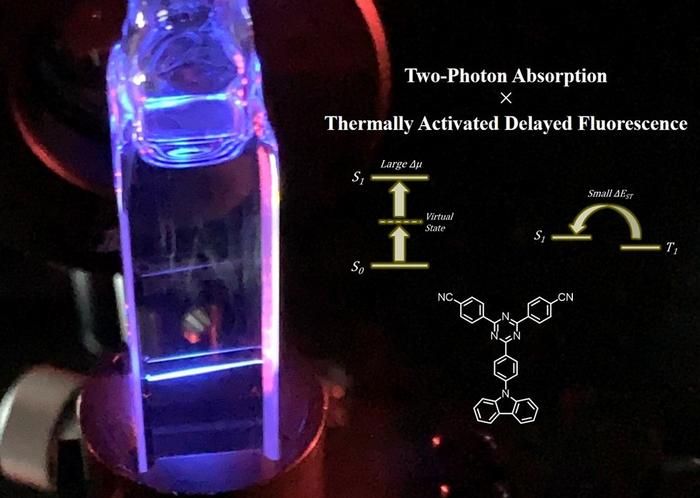
Dual-function organic molecule may advance display technologies and medical imaging - Researchers overcome a long-standing molecular design challenge by realizing efficient light emission and photon absorption in the same compound.

Cylib selected as Strategic Project under EU Critical Raw Materials Act - cylib is building a facility in Dormagen designed to process up to 140,000 EV batteries per year
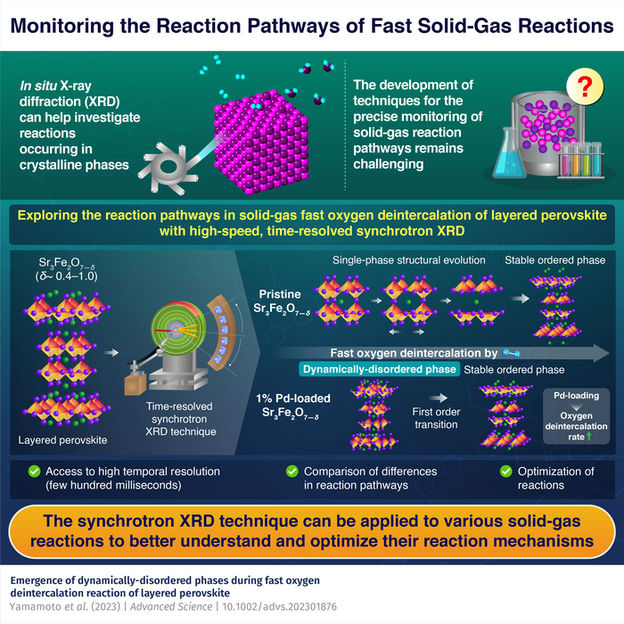
Advanced X-ray technique unveils fast solid-gas chemical reaction pathways
BASF invests in alkoxylate capacity expansion
PerkinElmer Acquires C&A Service Solutions Ltd.
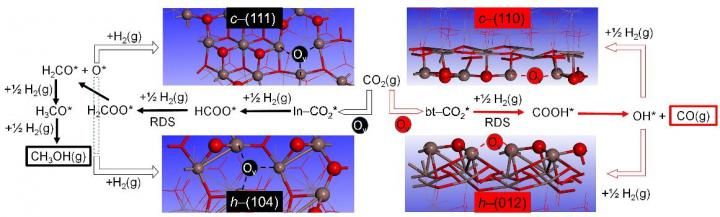
Efficient indium oxide catalysts designed for CO2 hydrogenation to methanol - Promising way to directly convert CO2 into methanol for industrial applications