Energy Conversion: Make carbonate not carbon dioxide
Scientists developed a technique to avoid CO2 in energy conversion processes with carbon-containing fuels
Advertisement


Nature knows several ways how to capture carbon dioxide (CO2). The most prominent one is photosynthesis, where sun light is used to fix CO2 into biomass. Nowadays, research groups around the world try hard to mimic this process and to realize artificial photosynthesis. The ultimate goal is to efficiently ‘photo-transform’ CO2 into synthetic fuels. However, nature knows also other strategies for capturing carbon dioxide, such as dissolving CO2 as carbonate (CO32-) in the oceans. Shellfish then make use of the dissolved carbonate and build CaCO3-based solid structures for shelter, which finally end up safely in rocks around the globe.
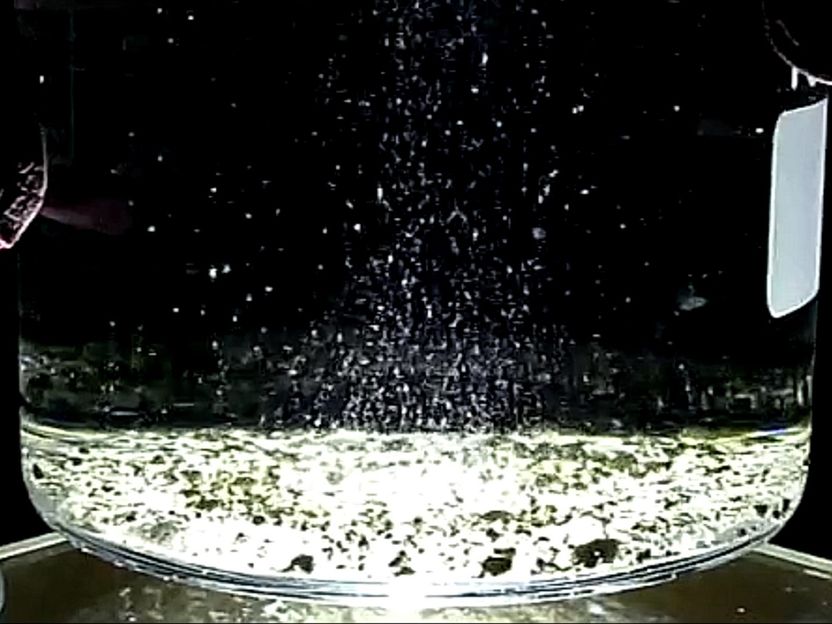
Detail from the experiment: Hydrogen bubbles emerging on the catalyst and carbonate crystals precipitating from the solution.
© Nano-Institut / LMU
Inspired by the way shellfishes capture carbon dioxide, LMU scientists at the Nano-Institute Munich developed the vision to transform a carbon-containing fuel into a carbon-free fuel without releasing CO2 but capture carbon as carbonate. They chose alkaline methanol and devised a light-triggered system, which efficiently produced hydrogen and carbonate in the form of tiny stones. They introduced a novel multi-layer device to make maximum use of the incident light and the catalysts.
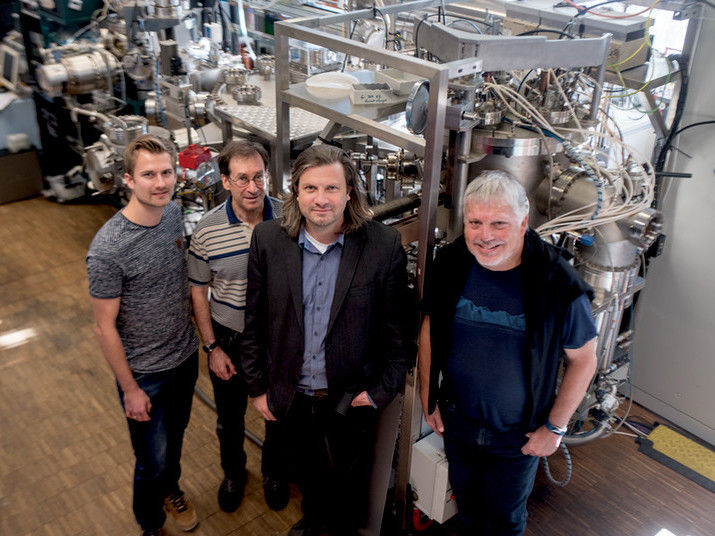
Dr. Yiou Wang, who performed most of the experimental work is a Fellow of the Alexander-von-Humboldt foundation working at the Chair for Photonics and Optoelectronics led by Prof. Jochen Feldmann. He remembers: ‘I had two moments of great excitement: First when I saw the hydrogen bubbles emerging on the catalyst and second when I noticed the carbonate crystals precipitating from the solution.’ Dr. Jacek Stolarczyk, an expert in artificial photosynthesis, adds: ‘Light is an excellent means of triggering energy conversion reactions, more convenient to use than heat and pressure.’
A possible application is the in-situ production of required hydrogen from low-cost alcohols, which avoids the risks to store and transport hydrogen before use in fuel cells. Such a carbon-neutral and light-triggered process produces hydrogen safely and efficiently, which could enable scalable fabrication and hold promise for broad and practical applications. Prof. Jochen Feldmann states: ‘Avoiding CO2-emission by binding the carbon in carbonates might generally become an important concept when using carbon-containing fuels.’
Original publication


Other news from the department science




















Most read news












More news from our other portals


























Last viewed contents
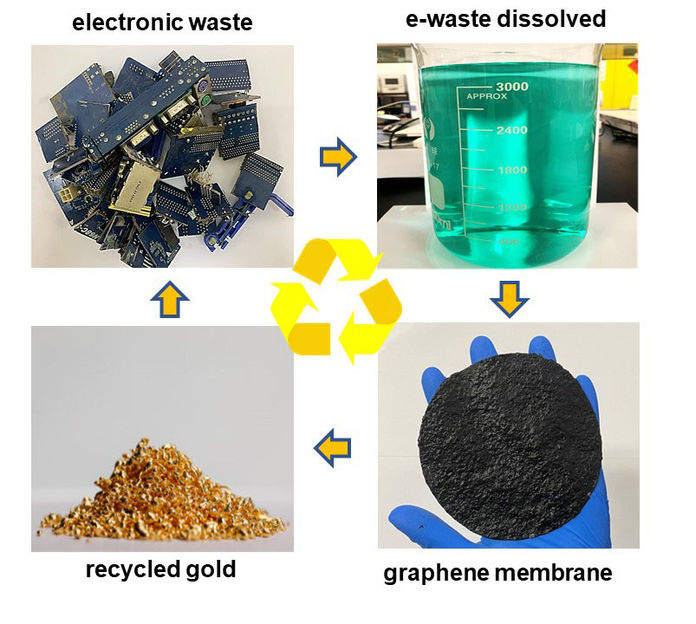
Graphene as 'the philosopher’s stone’: turning waste into gold - "This apparent magic is essentially a simple electrochemical process"

Cleaner air as a result of coronavirus lockdown - Lockdowns in early summer 2020 meant that the amount of soot in the atmosphere, which is harmful to the climate and to health, almost halved
DSM and Chemtrix sign collaboration agreement in Continuous Flow Chemistry
Jülich Neutron Scientists Inaugurate Unique Device in the USA - European researchers obtain access to world’s strongest neutron source
LANXESS strengthens commitment to renewable raw materials with investment in BioAmber - Companies have developed phthalate-free plasticizers from bio-based succinic acid
Plasma acceleration: It’s all in the mix - A pinch of nitrogen and artificial intelligence are moving laser plasma acceleration a big step closer to practical applications

Univar Solutions to be Acquired by Apollo Funds for $8.1 Billion

First experimental evidence of 3-D aromaticity in stacked antiaromatic compounds

Anton Paar acquires product line for particle characterization
Physicists come up with a way to make cleaner fuel cells
Novel hybrid nanocages for faster catalysis - Hybrid bio-nanocages could effectively catalyze reactions to yield industrially important products