First brew beer, then store energy
Chemists create carbon materials for energy storage device from brewery waste
Advertisement


Modern energy storage systems are an important building block for a climate-friendly future. “Modern” means not only that their performance meets the demands of a high-tech society, but also that they can be produced and recycled sustainably. In the search for new resources, scientists sometimes hit upon surprising raw materials – for example brewery waste. Chemists at Friedrich Schiller University Jena, together with Spanish colleagues, have tested brewer’s spent grain as a bio-source to produce materials for electrochemical energy storage systems. They obtained carbon, which can be used as an electrode in batteries, and activated carbon as an electrode material for supercapacitors. For their experiments, the chemists used waste from the “Papiermühle”, a hotel, restaurant and brewery in Jena.
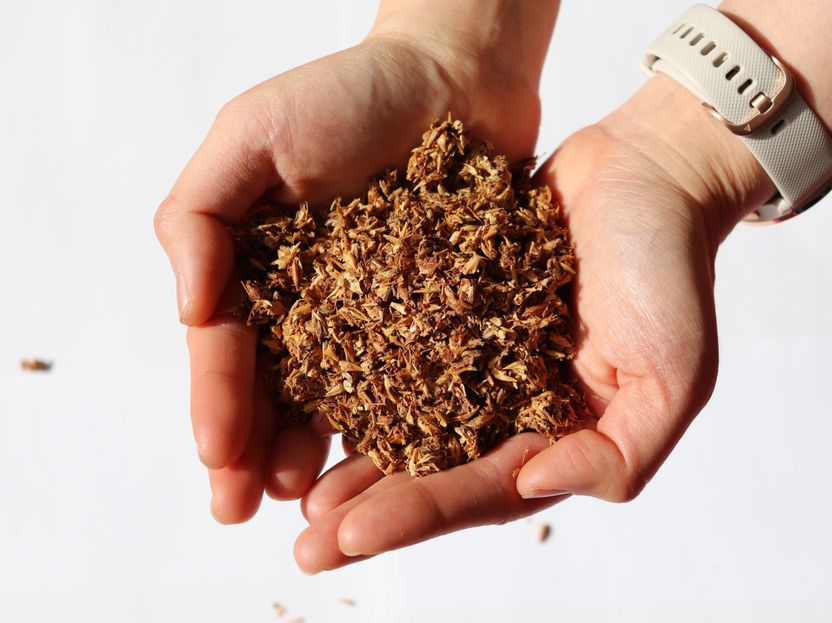
Chemists at the University of Jena use brewer's grains as a biological resource for the fabrication of electrochemical energy storage systems.
Christian Leibing
The researchers developed a method in which they produced carbonaceous materials suitable for storage application. In the case of activated carbon, they maximised the surface area and optimised the pore size of the materials. When used as an electrode in supercapacitors, these carbons guarantee very high capacitance and make it possible to produce a device with high energy density.
Brewer’s spent grains widely available
But why did the team choose brewery waste of all things? “For some years now, we’ve been researching the suitability of different biological raw materials for realising carbon-containing materials that we use to create energy storage devices,” explains Prof. Andrea Balducci from the University of Jena. “And brewery waste meets important criteria for this: its chemical composition is in principle very suitable for the applications we’re targeting. Furthermore, brewer’s spent grains are available in large quantities – in the European Union, for example, around 6.8 billion tonnes were produced in 2019, 1.5 billion tonnes of which in Germany alone. Breweries are also well distributed around the country, which makes the waste readily available, so that long journeys are not necessary to obtain the raw materials.” The researchers in Jena were able to source their brewer’s spent grains for their experiments from a local brewery.
Although waste products from breweries are abundant, the scientific community has so far paid them little attention, says Balducci. Activated carbon for supercapacitors, for example, is currently obtained mainly from coconut shells. This could change in the future, although more research is needed. “This type of waste could be an interesting option for producing materials for supercapacitors if certain factors can be further optimised, such as the cost or the chemical composition of the raw material,” adds Balducci. “We’ll work in further projects to better understand the advantages and limitations of using this abundant material, so that it might then be used more widely in the production of sustainable energy storage.”
Original publication
S. Darlami Magar, C. Leibing, J. L. Gόmez-Urbano, R. Cid, D. Carriazo, A. Balducci: „Brewery waste derived activated carbon for high performance electrochemical capacitors and lithium-ion capacitors“, Electrochimica Acta, 2023.
S. D. Magar, C. Leibing, J. L. Gόmez-Urbano, D. Carriazo, A Balducci: “Brewers’ spent grains derived carbon as anode for alkali metal ion batteries”, Energy Technology, 2200379, (2022).


Other news from the department science





















Most read news












More news from our other portals

























See the theme worlds for related content
Topic World Battery Technology
The topic world Battery Technology combines relevant knowledge in a unique way. Here you will find everything about suppliers and their products, webinars, white papers, catalogs and brochures.

Topic World Battery Technology
The topic world Battery Technology combines relevant knowledge in a unique way. Here you will find everything about suppliers and their products, webinars, white papers, catalogs and brochures.
Last viewed contents

Artificial Intelligence has learned to estimate oil viscosity - Indirect measurements are a lucky alternative for a variety of sectors
‘Smart plastic’ material is step forward toward soft, flexible robotics and electronics - A new plastic-like material can be manipulated to be soft and stretchy or hard and rigid with only the application of a catalyst and visible light
Exotic vibrations in new materials - New insights show universal applicability of carbyne as a sensor
BASF increases price for Vitamin B2

First controllable nanoscale gas-liquid interface fabricated
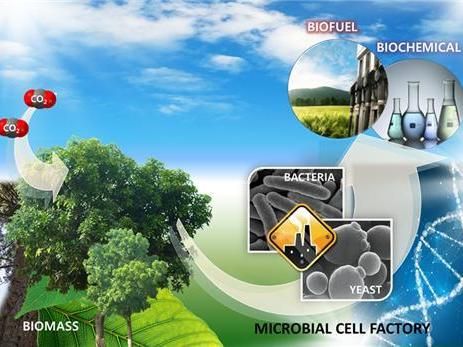
Biodiesel made from discarded cardboard boxes - Development of a microorganism that doubles the yield of biodiesel precursor production using genetic scissors and based on the principles of evolution

Breakthrough for efficient and high-speed spintronic devices - New soft X-ray source could be used for many applications in physics, chemistry, and biology

Keep safe and cool in the pool - Novel chip sensor quickly and continuously does all the work of a chemistry laboratory

“Dictionaries” make fluorescence-based data for integrative structure models and their dynamics accessible - 3D structures of biomolecules

PSL - Powder Systems Limited - Liverpool, United Kingdom
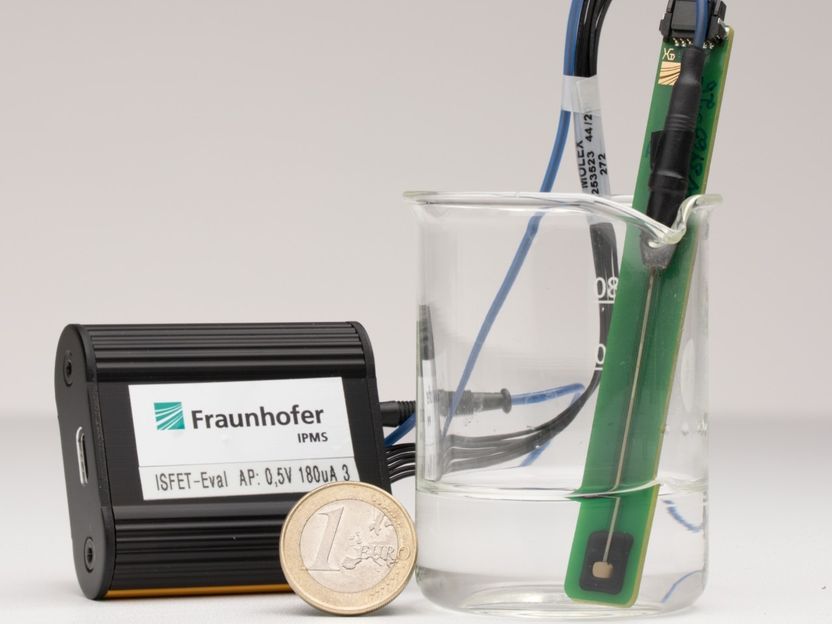
Significant progress achieved in chemical liquid analysis - ISFET-based pH sensor-control successfully miniaturized and optimized for easy use