Microbial Toxins: A New Link to Parkinson's Disease?
Researchers uncover a potential environmental trigger for Parkinson's disease

Advertisement


Published in Environment International, a groundbreaking study from the Institute of Biological Chemistry and Centre for Microbiology and Environmental Systems Science (CeMESS) at the University of Vienna, in collaboration with the University of Konstanz and the Albert Einstein College of Medicine, reveals a microbial metabolite's role in inducing Parkinson's-like symptoms. This discovery could reshape our understanding of the environmental triggers of parkinson's disease.
The underlying causes of Parkinson's disease, a debilitating neurodegenerative condition, are not well understood. While genetic mutations are known to cause Parkinson's, a staggering 90% of cases are sporadic, with no clear genetic origin. Scientists suspect environmental factors could play a role – and substances like pesticides and industrial chemicals have been investigated for potential links to neurodegeneration. Among the possible culprits also are microbial metabolites.
Recent studies highlight the gut-brain axis's importance, suggesting that our microbiome might influence neurodegenerative diseases. Notably, the gut microbiome of Parkinson's patients differs from that of healthy individuals. Some microbial metabolites have even been shown to specifically target dopamine-producing neurons, which are crucially affected in Parkinson's disease.
Motivated by these findings and the potential role of a specific bacterial metabolite in inducing Parkinson's-like symptoms, researchers from the University of Vienna, the University of Konstanz, and the Albert Einstein College of Medicine embarked on a comprehensive study. They focused on a metabolite produced by the bacterium Streptomyces venezuelae, which previous research hinted might cause selective damage to dopamine-producing neurons.
The team isolated and identified this metabolite and exposed human dopamine-producing neurons to it. The results were clear: the metabolite had a destructive effect, mirroring the neuronal loss observed in Parkinson's disease. To further validate their findings, the researchers introduced this bacterial metabolite to worms, which then exhibited movement difficulties and specific neuronal patterns akin to those seen in human Parkinson's patients.
Marcel Leist from the University of Konstanz and Thomas Böttcher from the University of Vienna collaborated in spearheading this pioneering study that bridges the realms of microbial biochemistry and molecular neuroscience. The scientists remarked, "Our research provides a tangible link between a specific bacterial metabolite and symptoms resembling Parkinson's disease. It's a step forward in understanding how our environment, down to the microbes around us, might influence the onset or progression of such diseases."
This discovery not only offers a fresh perspective on the triggers of Parkinson's but also opens up new avenues for research. Could other microbial substances influence neurodegenerative diseases? How do these substances interact with our neurons? And most importantly, can this knowledge lead to new treatments or preventive measures? While the study is just the beginning, it's a promising step towards unraveling the mysteries of Parkinson's and other neurodegenerative diseases.
Original publication
Anna-Katharina Ückert, Sina Rütschlin, Simon Gutbier, Nathalie Christine Wörz, Mahfuzur R. Miah, Airton C. Martins, Isa Hauer, Anna-Katharina Holzer, Birthe Meyburg, Ann-Kathrin Mix, Christof Hauck, Michael Aschner, Thomas Böttcher, Marcel Leist; "Identification of the bacterial metabolite aerugine as potential trigger of human dopaminergic neurodegeneration"; Environment International, Volume 180


Other news from the department science



















Most read news











More news from our other portals

























Last viewed contents
LGC Standards continues its growth in emerging markets with first Russian office
Improving the degradation of toxic hydrocarbons - Initiation of a worldwide research project under the direction of the HZI
Dance of the molecules: New methods of producing tailor-made materials - Scientists observe vibrational dynamics of organic acid molecules on iron oxide surface

New insights into binding configuration and mobility of molecules on nanoparticle surfaces - Physicists investigate binding between molecules and nanoparticles with high resolution
New method developed for investigating the internal structure of atoms - Previously unknown properties of the element samarium revealed
Cereplast to Establish Italy-Based Bioplastic Manufacturing Plant - Plant Expected to Have 100,000 Tons of Capacity
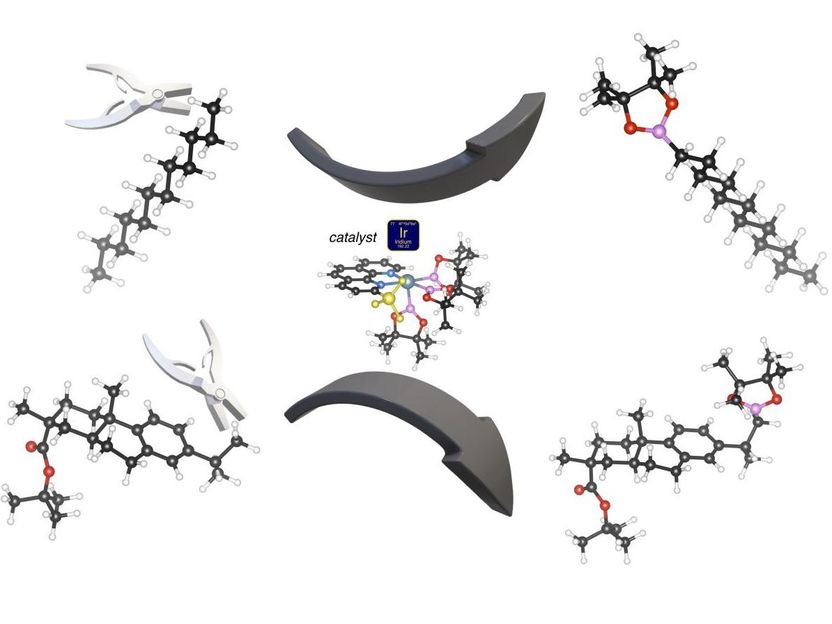
Scientists finally crack nature's most common chemical bond - Holy grail of synthesis: Carbon-hydrogen bonds in hydrocarbon molecules have resisted functionalization until now
Finnish Composites Distributor Terpol OY Appointed by Scott Bader
