Ytterbium thin-disk lasers pave the way for sensitive detection of atmospheric pollutants
The laser's capacity to generate high-power, stable pulses in the SWIR range is a game-changer for field-resolved spectroscopy and femtosecond fieldoscopy

Advertisement


Alongside carbon dioxide, methane is a key driver of global warming. To detect and monitor the climate pollutants in the atmosphere precisely, scientists at the Max Planck Institute for the Science of Light (MPL) have developed an advanced laser technology. A high-power ytterbium thin-disk laser drives an optical parametric oscillator (OPO) to generate high-power, stable pulses in the short-wave infrared (SWIR) spectral range. This allows researchers to detect and analyze a wide variety of atmospheric compounds. This novel method can play a crucial role in tracking greenhouse gas cycles and the effects of climate change and was recently published in the journal APL Photonics.
Short-lived pollutants play a critical role in global warming. For example, methane is of particular relevance to the global greenhouse effect because its warming potential is 25 times higher than that of carbon dioxide. However, detecting and monitoring these pollutants is challenging for two reasons. Firstly, water vapor interferes and overlaps with the absorption spectra of many gases in the standard infrared ranges normally used for detection. Secondly, these pollutants are difficult to detect due to their volatile presence in the atmosphere. By targeting the SWIR range, where pollutants such as methane absorb strongly while water absorption remains minimal, the new laser system offers unprecedented detection sensitivity and accuracy.
Central to this innovation is the ytterbium thin-disk laser, which produces high-power, femtosecond pulses at megahertz repetition rates. This allows the system to pump an OPO, converting laser pulses to the SWIR range with remarkable power and intensity. Operating at twice the repetition rate of the pump laser, the OPO delivers stable, tunable SWIR pulses optimized for high-sensitivity spectroscopic applications. The team’s pioneering approach also integrates broadband, high-frequency modulation of the OPO output, which allows the enhancement of the signal-to-noise ratio, providing even greater detection precision.
"The output of our laser system can be scaled to higher average and peak power, due to the power scalability of ytterbium thin-disk lasers. Employing the system for the accurate detection of pollutants in real time allows deeper insights into greenhouse gas dynamics. This could help address some of the challenges we face in understanding climate change." said Anni Li, PhD student at the MPL.
The laser's capacity to generate high-power, stable pulses in the SWIR range is a game-changer for field-resolved spectroscopy and femtosecond fieldoscopy, methods which enable re-searchers to detect and analyze a wide range of atmospheric compounds with minimal interference.
“This new technology is not only applicable to atmospheric monitoring and gas sensing, but also holds potential for other scientific fields such as earth-orbit communication, where high bandwidth modulated lasers are required.” said Dr. Hanieh Fattahi, the lead researcher on the project. The researchers plan to develop the system further with the goal of creating a versatile platform for real-time pollutant monitoring and earth-space optical communications.
Original publication



Other news from the department science





















Most read news












More news from our other portals

























See the theme worlds for related content
Topic World Spectroscopy
Investigation with spectroscopy gives us unique insights into the composition and structure of materials. From UV-Vis spectroscopy to infrared and Raman spectroscopy to fluorescence and atomic absorption spectroscopy, spectroscopy offers us a wide range of analytical techniques to precisely characterize substances. Immerse yourself in the fascinating world of spectroscopy!

Topic World Spectroscopy
Investigation with spectroscopy gives us unique insights into the composition and structure of materials. From UV-Vis spectroscopy to infrared and Raman spectroscopy to fluorescence and atomic absorption spectroscopy, spectroscopy offers us a wide range of analytical techniques to precisely characterize substances. Immerse yourself in the fascinating world of spectroscopy!
Last viewed contents

Shedding light on mechanisms of electrochemical energy storage - UV-visible spectroscopy gives researchers a tool to study battery materials - a breakthrough that could speed the design of higher performing energy storage devices

Researchers discover new ultra strong material for microchip sensors - A material that doesn't just rival the strength of diamonds and graphene, but boasts a yield strength 10 times greater than Kevlar

Brown chemists report promising advance in fuel-cell technology

Climate pioneers cooperate to produce solar fuels - INERATEC joins forces with Synhelion

Micro- and nanoplastics in the body are passed on during cell division - That plastic may increase metastasis of tumors

Search for new semiconductors heats up with gallium oxide
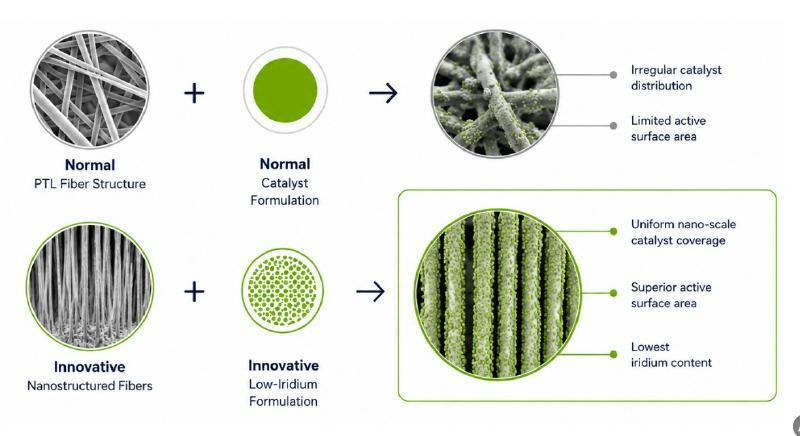
Smoltek Hydrogen and Heraeus Precious Metals advance next-generation ultra-low iridium electrolysis technology

Chemistry without detours: Researchers introduce a two-step process for producing phosphorus-containing chemicals - This promising innovation not only contributes to environmental protection but also saves significant time and costs

Evidence stacks up for poisonous books containing toxic dyes

Adhesives from waste wood, biofuel from straw - EU research project on the potential of agroforestry waste as environmentally friendly raw materials completed

Computational trick enables better understanding of exotic state of matter - New process relevant for fusion and materials research