Efficiently and Sustainably Killing Bacteria
Electrocatalytic sterilization: nanowires produce localized highly alkaline microenvironments
Advertisement


Harmful microorganisms such as bacteria represent one of the largest threats to human health. Efficient sterilization methods are thus a necessity. In the journal Angewandte Chemie, a research team has now introduced a novel, sustainable, electrocatalytic sterilization method based on electrodes covered with copper oxide nanowires. These generate very strong local electric fields thereby producing highly alkaline microenvironments that efficiently kill bacteria.
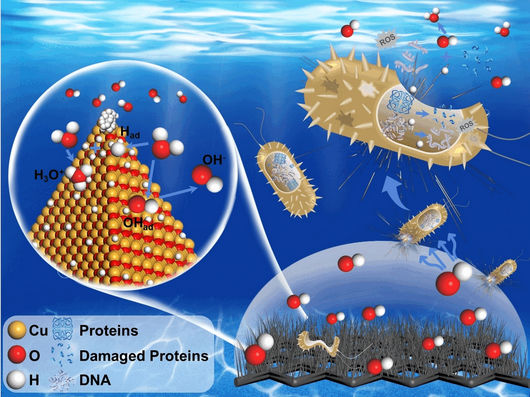
© Wiley-VCH
Conventional disinfection methods, such as chlorination, treatment with ozone, hydrogen peroxide oxidation, and irradiation with ultraviolet light have disadvantages, including harmful by-products and high energy consumption. Electrochemical disinfection methods, which rely primarily on a pulsed high-voltage electric field and the electrocatalytic generation of highly oxidative radicals, are more efficient and sustainable. However, they require either high voltage or a significant gas supply, which limits their application in practice.
A team led by Tong Sun and Yuanhong Xu at Qingdao University (China) have now proposed a novel, in situ, electrocatalytic sterilization method that induces localized highly alkaline microenvironments in neutral electrolytes under a constant current at relatively low voltage. Most bacteria cannot survive in such extremely alkaline environments.
The method is successful owing to cathodes made of a copper wire mesh that is coated with copper oxide nanowires. On highly curved structures such as the tips of nanowires, extremely strong local electric fields can form, allowing electrocatalysts to function very effectively. At the cathode, the hydrogen evolution reaction (HER) facilitates the efficient adsorption of hydronium ions (H3O+) by the nanowires, producing a rapid increase in the hydroxide ion concentration (OH-) in their immediate surroundings. This produces a localized, highly alkaline microenvironment. The overall pH value of the sterilization solution is only slightly increased, so it does not require neutralization before disposal.
The resulting highly alkaline microenvironment kills off bacteria within a few minutes, as the team demonstrated with Escherichia coli (E. coli). The bacteria are killed due to collapse of protein transport through the bacterial cell membrane because there are effectively no protons available in this environment. This inhibits ATP synthesis, resulting in an energy deficit and oxidative stress. In addition, the NADPH/NAD+ equilibrium, critical for gene regulation and metabolism, is disrupted. The bacteria die off.
This new approach could be a starting point for the development of high-performance, nanostructured electrocatalysts for efficient, environmentally friendly, and safe electrochemical disinfection strategies for a variety of sterilization applications.
Original publication


Other news from the department science





















Most read news












More news from our other portals

























Last viewed contents

Artificial Intelligence has learned to estimate oil viscosity - Indirect measurements are a lucky alternative for a variety of sectors
‘Smart plastic’ material is step forward toward soft, flexible robotics and electronics - A new plastic-like material can be manipulated to be soft and stretchy or hard and rigid with only the application of a catalyst and visible light
Exotic vibrations in new materials - New insights show universal applicability of carbyne as a sensor
BASF increases price for Vitamin B2

First controllable nanoscale gas-liquid interface fabricated
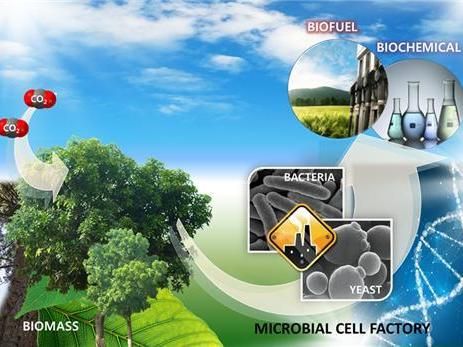
Biodiesel made from discarded cardboard boxes - Development of a microorganism that doubles the yield of biodiesel precursor production using genetic scissors and based on the principles of evolution

Breakthrough for efficient and high-speed spintronic devices - New soft X-ray source could be used for many applications in physics, chemistry, and biology

Keep safe and cool in the pool - Novel chip sensor quickly and continuously does all the work of a chemistry laboratory

“Dictionaries” make fluorescence-based data for integrative structure models and their dynamics accessible - 3D structures of biomolecules

PSL - Powder Systems Limited - Liverpool, United Kingdom
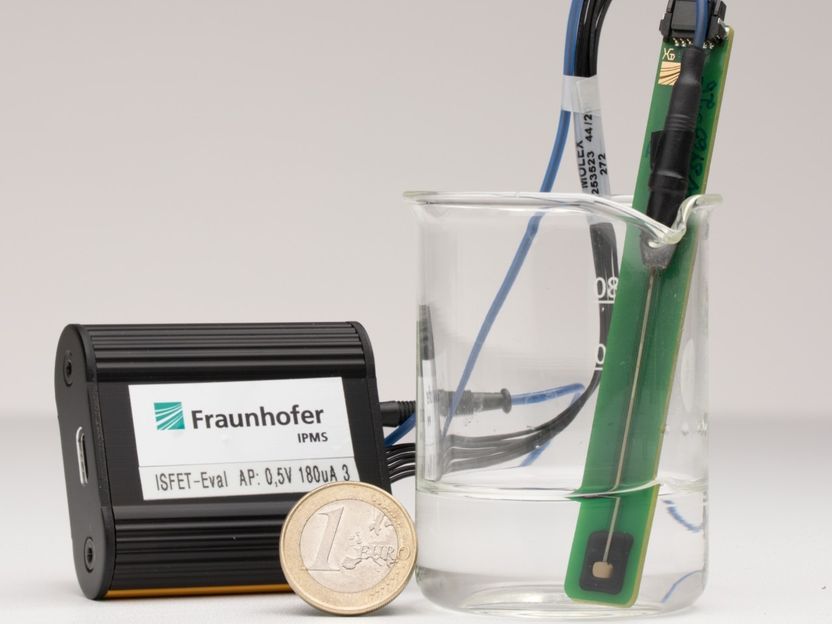
Significant progress achieved in chemical liquid analysis - ISFET-based pH sensor-control successfully miniaturized and optimized for easy use