Bacterium Produces “Organic Dishwashing Liquid” to Degrade Oil
A study has illuminated the mechanism by which this marine creature produces the detergent
Advertisement


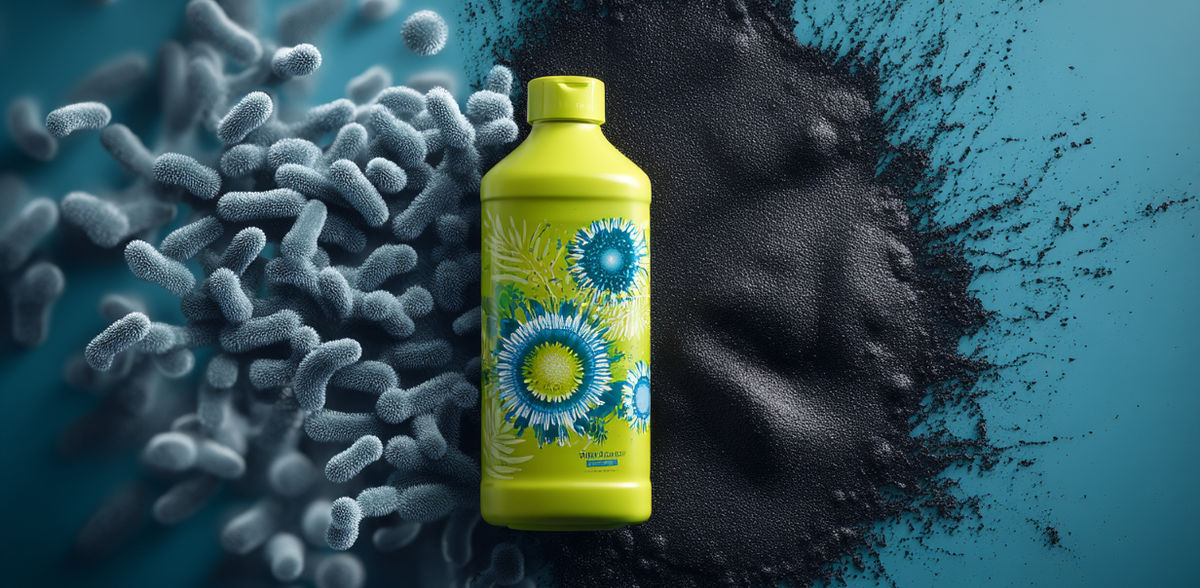
The marine bacterium Alcanivorax borkumensis feeds on oil, multiplying rapidly in the wake of oil spills, and thereby accelerating the elimination of the pollution, in many cases. It does this by producing an “organic dishwashing liquid” which it uses to attach itself to oil droplets. Researchers from the University of Bonn, RWTH Aachen University, Heinrich Heine University Düsseldorf and research center Forschungszentrum Jülich have now discovered the mechanism by which this “organic dishwashing liquid” is synthesized. Published in the prominent international journal Nature Chemical Biology, the research findings could allow the breeding of more efficient strains of oil-degrading bacteria.
Loosely translated into English, the Latin name of the bacterium is “alkane eaters from Borkum.” Indeed, the name says it all, for alkanes are chains of hydrocarbons that exist in petroleum in large quantities. A. borkumensis feeds on energy-rich chains which occur naturally in the sea—and on non-naturally-occurring chains like those dispersed in oil spills. In many cases the bacteria multiply rapidly, thereby accelerating the pollution-clearing process.
Oil and water don’t mix
Because of the well-known fact that oil and water don’t mix, in order to eat its favorite food, the microscopic sea creature requires a chemical aid. It makes it for itself, producing a kind of natural dishwashing liquid. This “detergent” is a compound consisting of the amino acid glycine and a sugar-fatty acid compound. “The molecules have a water-soluble part and a fat-soluble part,” explains Professor Peter Dörmann, who is a biochemist at the University of Bonn's IMBIO institute (Institute of Molecular Physiology and Biotechnology of Plants). “The bacteria settle on the surface of the oil droplets, where they form a biofilm.”
The mechanism by which the alkane eater synthesizes this detergent was not understood until a working group led by Professor Karl-Erich Jaeger of Forschungszentrum Jülich and the Heinrich Heine University Düsseldorf intensively studied the bacterium’s genome. “In our research we identified a gene cluster which we believed could play a role in production of the molecule,” Professor Jaeger relates. And indeed, when the genes of this cluster were “switched off”, the bacteria were impaired in their ability to attach to oil droplets. “As a result they absorbed less oil, and grew much more slowly,” said Professor Lars Blank of RWTH Aachen University.
Potential biotech applications
A doctoral student of Professor Dörmann, Jiaxin Cui, ultimately succeeded in elaborating the synthetic pathway by which A. borkumensis produces the detergent. Three enzymes are involved in this process, in which the molecule is assembled step by step. The three genes contain the instructions for building these biocatalysts, without which the bonding process cannot efficiently proceed. “We successfully transferred the genes involved to a different bacterium, which then produced the detergent as well,” Cui explains.
Bacteria like A. borkumensis are important for degrading oil pollution, thus these findings are of significant interest, possibly leading to the development of new, more effective strains. “This natural detergent could have biotech applications as well, such as for microbial production of key chemical compounds from hydrocarbons," says Dörmann, who is a member of the University of Bonn Transdisciplinary Research Area (TRA) “Sustainable Futures.”
Original publication
Jiaxin Cui, Maximilian Fassl, Vaisnavi Vasanthakumaran, Maya Marita Dierig, Georg Hölzl, Tobias Karmainski, Till Tiso, Sonja Kubicki, Stephan Thies, Lars M. Blank, Karl-Erich Jaeger, Peter Dörmann; "Biosurfactant biosynthesis by Alcanivorax borkumensis and its role in oil biodegradation"; Nature Chemical Biology, 2025-5-9


Other news from the department science





















Most read news












More news from our other portals

























Last viewed contents
Scientists use copper nanowires to combat the spread of diseases
Ytterbium thin-disk lasers pave the way for sensitive detection of atmospheric pollutants - The laser's capacity to generate high-power, stable pulses in the SWIR range is a game-changer for field-resolved spectroscopy and femtosecond fieldoscopy
Shedding light on mechanisms of electrochemical energy storage - UV-visible spectroscopy gives researchers a tool to study battery materials - a breakthrough that could speed the design of higher performing energy storage devices

Researchers discover new ultra strong material for microchip sensors - A material that doesn't just rival the strength of diamonds and graphene, but boasts a yield strength 10 times greater than Kevlar

Brown chemists report promising advance in fuel-cell technology

Climate pioneers cooperate to produce solar fuels - INERATEC joins forces with Synhelion

Micro- and nanoplastics in the body are passed on during cell division - That plastic may increase metastasis of tumors

Search for new semiconductors heats up with gallium oxide
Smoltek Hydrogen and Heraeus Precious Metals advance next-generation ultra-low iridium electrolysis technology
Chemistry without detours: Researchers introduce a two-step process for producing phosphorus-containing chemicals - This promising innovation not only contributes to environmental protection but also saves significant time and costs

Evidence stacks up for poisonous books containing toxic dyes