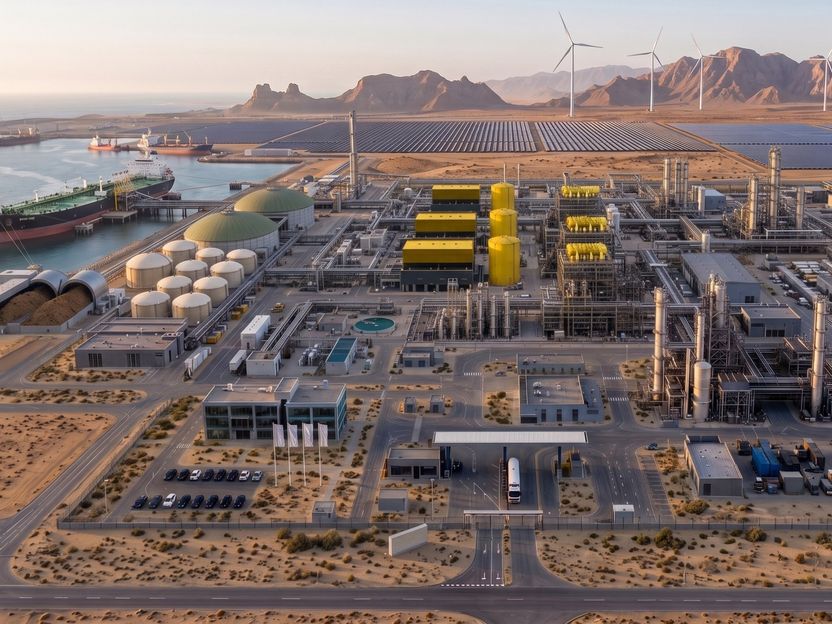
Solar-powered method lights the way to a ‘de-fossilized’ chemical industry
“Artificial leaf” with organic semiconductors and bacterial enzymes for sustainable conversion of CO₂ – without toxic components
Advertisement


Researchers have demonstrated a new and sustainable way to make the chemicals that are the basis of thousands of products – from plastics to cosmetics – we use every day.
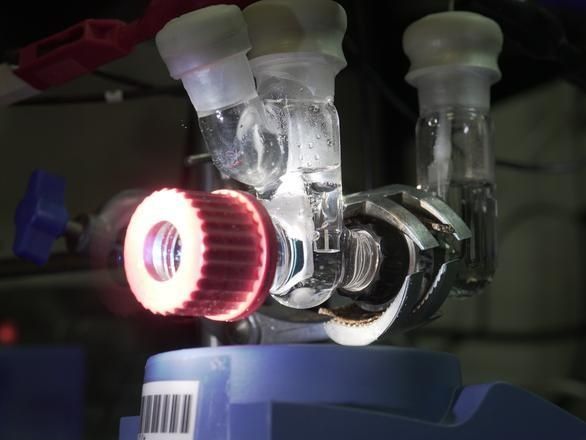
Semi-artificial organic photocathode in operation
Celine Yeung
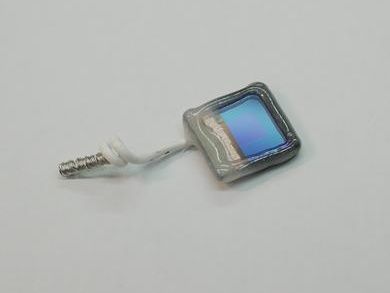
Semi-artificial organic photocathode
Celine Yeung
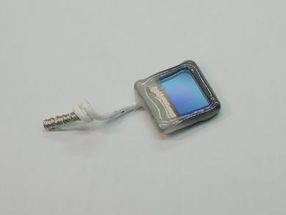
Hundreds of thousands of chemicals are manufactured by the chemical industry, which transforms raw materials – usually fossil fuels – into useful end products. Due to its size and its use of fossil fuel feedstocks, the chemical industry is responsible for roughly 6% of global carbon emissions.
But researchers, led by the University of Cambridge, are developing new methods that could one day lead to the ‘de-fossilisation’ of this important sector.
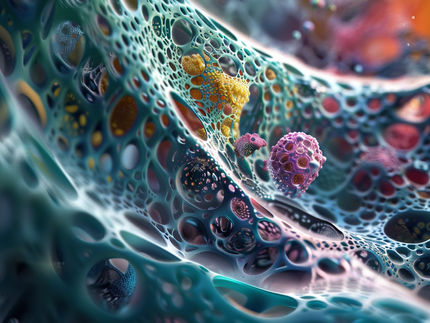
They have developed a hybrid device that combines light-harvesting organic polymers with bacterial enzymes to convert sunlight, water and carbon dioxide into formate, a fuel that can drive further chemical transformations.
Their ‘semi-artificial leaf’ mimics photosynthesis: the process plants use to convert sunlight into energy, and does not require any external power source. Unlike earlier prototypes, which often relied on toxic or unstable light absorbers, the new biohybrid design avoids toxic semiconductors, lasts longer, and can run without additional chemicals that previously hindered efficiency.
In tests, the researchers used sunlight to convert carbon dioxide into formate and then used it directly in a ‘domino’ chemical reaction to produce an important type of compound used in pharmaceuticals, with high yield and purity.
Their results, reported in the journal Joule, mark the first time that organic semiconductors have been used as the light-harvesting component in this type of biohybrid device, opening the door to a new family of sustainable artificial leaves.
The chemical industry is central to the world economy, producing products from pharmaceuticals and fertilisers, to plastics, paints, electronics, cleaning products, and toiletries.
“If we’re going to build a circular, sustainable economy, the chemical industry is a big, complex problem that we must address,” said Professor Erwin Reisner from Cambridge’s Yusuf Hamied Department of Chemistry, who led the research. “We’ve got to come up with ways to de-fossilise this important sector, which produces so many important products we all need. It’s a huge opportunity if we can get it right.”
Reisner’s research group specialises in the development of artificial leaves, which turn sunlight into carbon-based fuels and chemicals without relying on fossil fuels. But many of their earlier designs depend on synthetic catalysts or inorganic semiconductors, which either degrade quickly, waste much of the solar spectrum, or contain toxic elements such as lead.
“If we can remove the toxic components and start using organic elements, we end up with a clean chemical reaction and a single end product, without any unwanted side reactions,” said co-first author Dr Celine Yeung, who completed the research as part of her PhD work in Reisner’s lab. “This device combines the best of both worlds – organic semiconductors are tuneable and non-toxic, while biocatalysts are highly selective and efficient.”
The new device integrates organic semiconductors with enzymes from sulphate-reducing bacteria, splitting water into hydrogen and oxygen or converting carbon dioxide into formate.
The researchers have also addressed a long-standing challenge: most systems require chemical additives, known as buffers, to keep the enzymes running. These can break down quickly and limit stability. By embedding a helper enzyme, carbonic anhydrase, into a porous titania structure, the researchers enabled the system to work in a simple bicarbonate solution — similar to sparkling water — without unsustainable additives.
“It’s like a big puzzle,” said co-first author Dr Yongpeng Liu, a postdoctoral researcher in Reisner’s lab. “We have all these different components that we’ve been trying to bring together for a single purpose. It took us a long time to figure out how this specific enzyme is immobilised on an electrode, but we’re now starting to see the fruits from these efforts.”
“By really studying how the enzyme works, we were able to precisely design the materials that make up the different layers of our sandwich-like device,” said Yeung. “This design made the parts work together more effectively, from the tiny nanoscale up to the full artificial leaf.”
Tests showed the artificial leaf produced high currents and achieved near-perfect efficiency in directing electrons into fuel-making reactions. The device successfully ran for over 24 hours: more than twice as long as previous designs.
The researchers are hoping to further develop their designs to extend the lifespan of the device and adapt it so it can produce different types of chemical products.
“We’ve shown it’s possible to create solar-powered devices that are not only efficient and durable but also free from toxic or unsustainable components,” said Reisner. “This could be a fundamental platform for producing green fuels and chemicals in future – it’s a real opportunity to do some exciting and important chemistry.”
Original publication


Other news from the department science





















Most read news











More news from our other portals



























See the theme worlds for related content
Topic world Synthesis
Chemical synthesis is at the heart of modern chemistry and enables the targeted production of molecules with specific properties. By combining starting materials in defined reaction conditions, chemists can create a wide range of compounds, from simple molecules to complex active ingredients.
Topic world Synthesis
Chemical synthesis is at the heart of modern chemistry and enables the targeted production of molecules with specific properties. By combining starting materials in defined reaction conditions, chemists can create a wide range of compounds, from simple molecules to complex active ingredients.
Last viewed contents
Digital lab day 2025 celebrates international success - virtual battery day 2025 follows in November

RE:VOLTAGE and CometHire Win the HTW Startup Challenge 2026 in Berlin - The competition awarded 10,000 euros in prize money in the GreenTech and Impact Entrepreneurship categories
Atomic reshuffle paves way for record-breaking catalysts for hydrogen production - "This opens a new strategy for designing adaptive catalysts for a wide range of applications"

Global underground CO₂ storage hits record 43.6 million tonnes - London Register expands reach
Research Breakthrough on the Path to a New Reserve Antibiotic - For the first time, chemists have succeeded in synthesizing the highly potent natural compound neosorangicin A

Endress+Hauser expands its presence in the U.S. - 44 million euros are being invested in the new facility in Greenwood, Indiana
Plastic bottles could find new life in batteries as graphite - Penn State researchers converting PET waste into synthetic graphite that outperforms natural graphite
Turning food waste into carbon captors - Expected to be cheaper than other capture methods

Study shows: Lithium and sodium-ion technologies are more closely linked than assumed - "Switching to a new battery technology does not automatically open the door to new market players"

ETH spin-offs sweep the board at Venture Awards
How to generate and steer electrons in liquid water - Surprising results reveal a new aspect of extremely strong electric fields in liquid water