Aviation Fuel Production from Tomato Residues: TU Graz Coordinates Visionary EU project
Advertisement


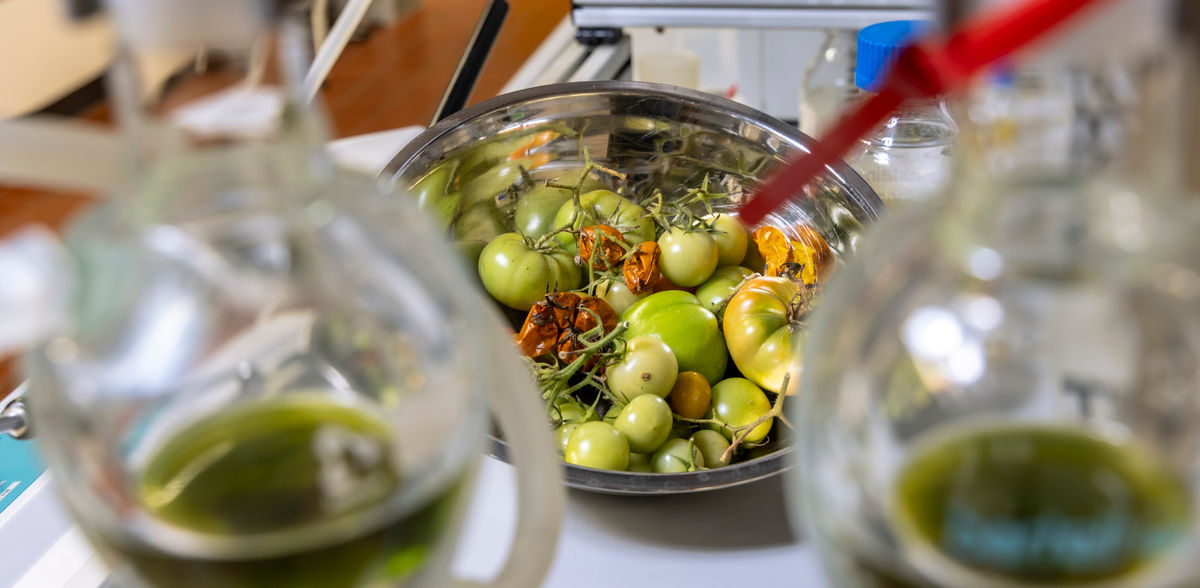
Residual biomass from tomato production is turned into climate-friendly aviation fuel. The aim of the EU ToFuel project is to develop a waste-free and CO₂-neutral biorefinery concept that produces sustainable and economically competitive aviation fuel.
Waste from tomato processing will serve to power aircraft. Under the leadership of Graz University of Technology (TU Graz), the EU project ToFuel is developing a new biorefinery concept that will convert tomato residues into sustainable aviation fuel as well as into fertiliser, animal feed and nutritional oil. The research team is aiming for a waste-free and climate-neutral process that is also economically competitive and thus makes an important contribution to the defossilization of air transport.
Residual material as a valuable resource
Tomatoes are the second most consumed vegetable in the world after potatoes. The EU is the third largest producer with around 17 megatonnes of tomatoes harvested. However, tomato production produces large quantities of residual biomass – plant material such as flowers, leaves and stems, peel, seeds and tomatoes of inadequate quality. Most of these residues are incinerated as agricultural waste or disposed of at high cost.
At the same time, the goal of European climate neutrality and the associated reduction of CO₂ emissions in the aviation sector is largely dependent on the production of competitive and sustainable aviation fuels (SAF) from renewable raw materials. “According to estimates, around three per cent of the sustainable aviation fuels required in Europe by 2030 could be covered from the amount of tomato pomace produced throughout the EU, i.e. the residues from tomato processing,” explains project manager Marlene Kienberger from the Institute of Chemical Engineering and Environmental Technology at TU Graz.
From plant to oil to aviation fuel
In order to turn tomato waste into a high-quality fuel, the biomass must first be processed so that microorganisms can utilise it efficiently. ToFuel is investigating two modern fractionation technologies. During extrusion, the biomass is treated under heat and pressure and then broken down into its cellular components by an abrupt drop in pressure. This creates an optimally digested biomass for the subsequent fermentation process, in which microorganisms produce lipids that are later processed into aviation fuel. In the second fractionation technology, hydrothermal liquefaction, the biomass is converted into bio-oil and biochar under high pressure and at high temperatures.
Before the extracted bio-oil can be refined into aviation fuel, it must be purified of mainly nitrogen-containing interfering ions. These unwanted ions would otherwise have a negative impact on the subsequent conversion into a sustainable aviation fuel. The corresponding fractionation, biotechnological and purification processes are being developed by the Laboratório Nacional de Energia e Geologia (LNEG) in Lisbon, TU Graz and the University of Zagreb in close cooperation.
The lipids and bio-oil are then converted into a fuel that fulfils the international quality standards for sustainable aviation fuel using the HEFA process at the University of Leoben. HEFA stands for “hydrogenated esters and fatty acids” and is a process for producing sustainable aviation fuel from vegetable, animal or recycled fats and oils.
The processes developed in the project are gradually being scaled up to a pre-industrial scale and comprehensively tested. Consortium leader Marlene Kienberger emphasises: “Our clear goal is to produce sustainable aviation fuel based on tomato waste at a competitive sales price. Ultimately, sustainable aviation fuels simply have to be economically viable.” The project team is also analysing the ecological, economic and social impact of the technologies. The utilisation of tomato residues also creates new sources of income for food processing companies.
Strong European consortium
The official project start date for “ToFuel: An integrated biorefinery for sustainable aviation fuel production from tomato residues” is 1 January 2026. A total of eleven partners from seven European countries are working on ToFuel. In addition to TU Graz, these include the Portuguese research institute LNEG, the University of Zagreb, Vienna University of Technology, Lappeenranta University of Technology in Finland, University of Leoben and the Fraunhofer-Gesellschaft. Industry partners Mutti and Podravka will provide tomato residues and contribute their many years of expertise in processing plant-based raw materials. The research will be accompanied by a comprehensive commercialisation and publication strategy, which will be developed by the project partners ESEIA and EEIP. At least six PhDs, twelve master’s and 15 bachelor’s students are to be trained as part of the project. The project budget amounts to 3.5 million euros over four years, one million of which will go to the consortium leader TU Graz.


Other news from the department science





















Most read news











More news from our other portals



























Last viewed contents

Research team paves the way for compact, inexpensive free-electron lasers - Laser-plasma FEL could resolve the bottleneck in research measurement times

Evonik is cutting 3,200 jobs worldwide and sharpens growth strategy - Businesses and German sites with clear roles
Oxyle: Industrial pilot validates performance basis for full-scale system targeting >99.9% degradation of C3-PFAS - Oxyle successfully validated its PFAS destruction solution on-site at an industrial facility, demonstrating readiness for industrial-scale implementation

New core-shell design for anodes significantly increases performance of sodium-ion batteries - Researchers coat porous carbon with a filter-like layer that allows sodium ions to pass through while keeping disruptive electrolyte molecules out

New "chemical armor" could unlock the holy grail of solid-state battery technology - A simple one-step coating builds a silicon-indium hybrid shield on lithium metal, quadrupling current density and extending battery cycle life
Scientists unveil mechanism behind greener ammonia production
Siemens to digitalize one of Europe's largest renewable hydrogen projects - Physics-based digital twin and real-time optimization
Collaboration between University of Bristol and Malvern Panalytical - Bringing academia and business together to solve global challenges

Digital lab day 2025 celebrates international success - virtual battery day 2025 follows in November

RE:VOLTAGE and CometHire Win the HTW Startup Challenge 2026 in Berlin - The competition awarded 10,000 euros in prize money in the GreenTech and Impact Entrepreneurship categories

Atomic reshuffle paves way for record-breaking catalysts for hydrogen production - "This opens a new strategy for designing adaptive catalysts for a wide range of applications"
