Step towards sustainable hydrogen production with cyanobacteria
An oxygen-free microenvironment protects the sensitive enzymes
Advertisement


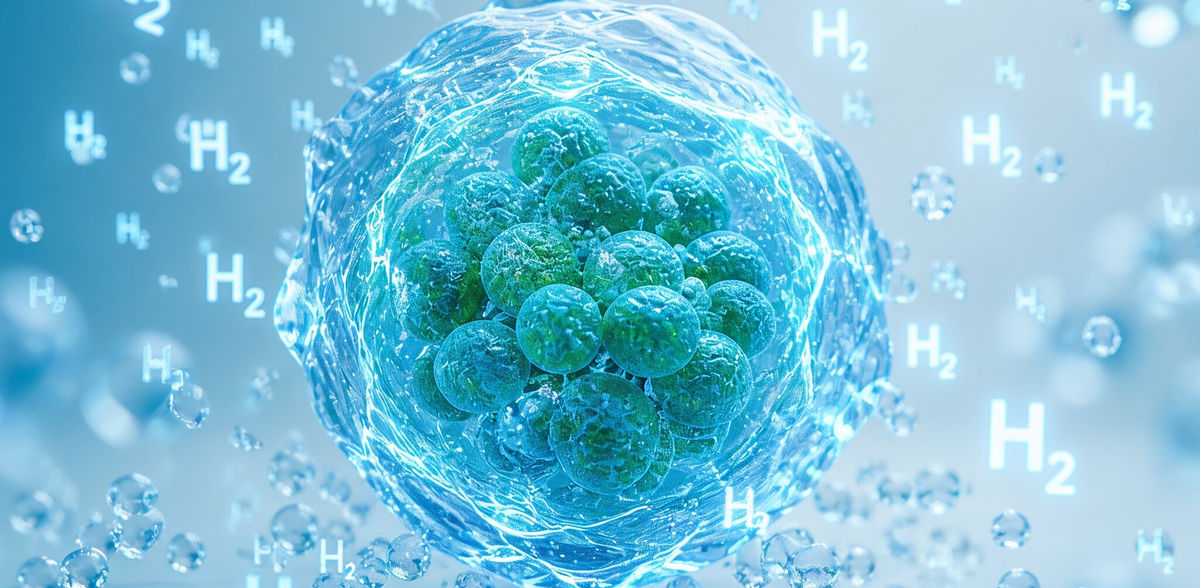
A research team from the University of Kassel, Ruhr University Bochum and Universidade Nova Lisbon (Portugal) has developed a method to improve photosynthetic hydrogen production using cyanobacteria. The study, published in the journal Angewandte Chemie International Edition, could contribute to the production of clean energy.
Under certain conditions, cyanobacteria (also known colloquially as "blue-green algae") are able to produce hydrogen using photosynthesis - a promising approach for generating clean energy. However, the oxygen produced during photosynthesis inhibits the activity of certain enzymes, so-called hydrogenases, which are necessary for hydrogen production. Previous approaches to oxygen removal were either inefficient or required the use of additional chemicals and carbohydrates, which impaired the sustainability of the process.
Protection enables continuous hydrogen production
The team led by Prof. Dr. Wolfgang Schuhmann from Bochum, Prof. Dr. Kirstin Gutekunst from Kassel and Dr. Felipe Conzuelo from Lisbon has now found a solution: By integrating cyanobacteria mutants into a special redox polymer deposited on an electrode, the cells can be protected from oxygen. The polymer contains viologen groups that are reduced by applying an electrical potential and thus efficiently break down the oxygen in the cells' environment.
The system creates an oxygen-free microenvironment directly around the cells so that the hydrogenases remain active and can continuously produce hydrogen. "This is an important step towards sustainable and scalable biotechnological hydrogen production," says the research team.
Genetically optimized cyanobacteria increase efficiency
The use of genetically modified cyanobacteria was particularly successful. In these mutants, the hydrogenase is genetically linked directly to the so-called photosystem I of photosynthesis. These mutants showed significantly longer and more stable hydrogen production compared to wild-type cells in the polymer.
Biophotovoltaics for the production of green hydrogen
The results of the study open up new possibilities for the development of bio-photovoltaic systems that convert sunlight directly into hydrogen. "Our approach combines the advantages of living cells - such as self-repair and longevity - with the precision of electrochemical systems," says Kirstin Gutekunst.
Note: This article has been translated using a computer system without human intervention. LUMITOS offers these automatic translations to present a wider range of current news. Since this article has been translated with automatic translation, it is possible that it contains errors in vocabulary, syntax or grammar. The original article in German can be found here.
Original publication


Other news from the department science





















Most read news











More news from our other portals



























See the theme worlds for related content
Topic world Synthesis
Chemical synthesis is at the heart of modern chemistry and enables the targeted production of molecules with specific properties. By combining starting materials in defined reaction conditions, chemists can create a wide range of compounds, from simple molecules to complex active ingredients.
Topic world Synthesis
Chemical synthesis is at the heart of modern chemistry and enables the targeted production of molecules with specific properties. By combining starting materials in defined reaction conditions, chemists can create a wide range of compounds, from simple molecules to complex active ingredients.
Last viewed contents
Atomic reshuffle paves way for record-breaking catalysts for hydrogen production - "This opens a new strategy for designing adaptive catalysts for a wide range of applications"

Global underground CO₂ storage hits record 43.6 million tonnes - London Register expands reach
Research Breakthrough on the Path to a New Reserve Antibiotic - For the first time, chemists have succeeded in synthesizing the highly potent natural compound neosorangicin A

Endress+Hauser expands its presence in the U.S. - 44 million euros are being invested in the new facility in Greenwood, Indiana
Plastic bottles could find new life in batteries as graphite - Penn State researchers converting PET waste into synthetic graphite that outperforms natural graphite
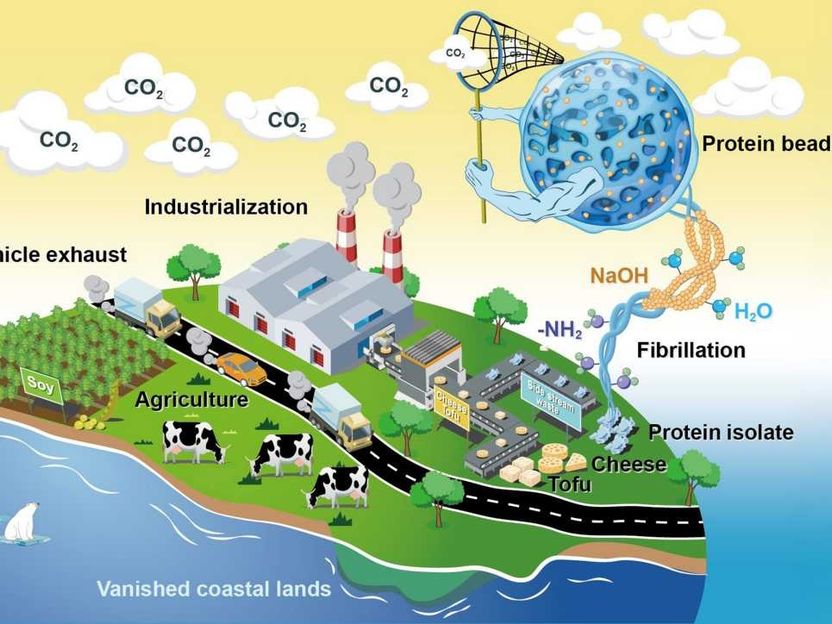
Turning food waste into carbon captors - Expected to be cheaper than other capture methods

Study shows: Lithium and sodium-ion technologies are more closely linked than assumed - "Switching to a new battery technology does not automatically open the door to new market players"

ETH spin-offs sweep the board at Venture Awards
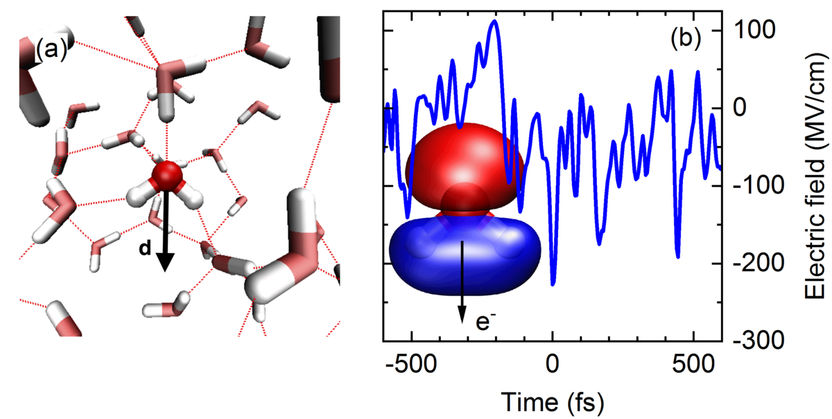
How to generate and steer electrons in liquid water - Surprising results reveal a new aspect of extremely strong electric fields in liquid water
Turning renewable energy into drop-in fuels - Synhelion advances scale-up with large-scale synthetic fuel project in Morocco
30 Million Euros for Catalyst Research Using AI-Controlled Laboratories - ASCEND is leveraging automated learning loops and 3D thin-film catalysts to develop industrially viable drop-in substitutes.
