Atomic reshuffle paves way for record-breaking catalysts for hydrogen production
"This opens a new strategy for designing adaptive catalysts for a wide range of applications"
Advertisement


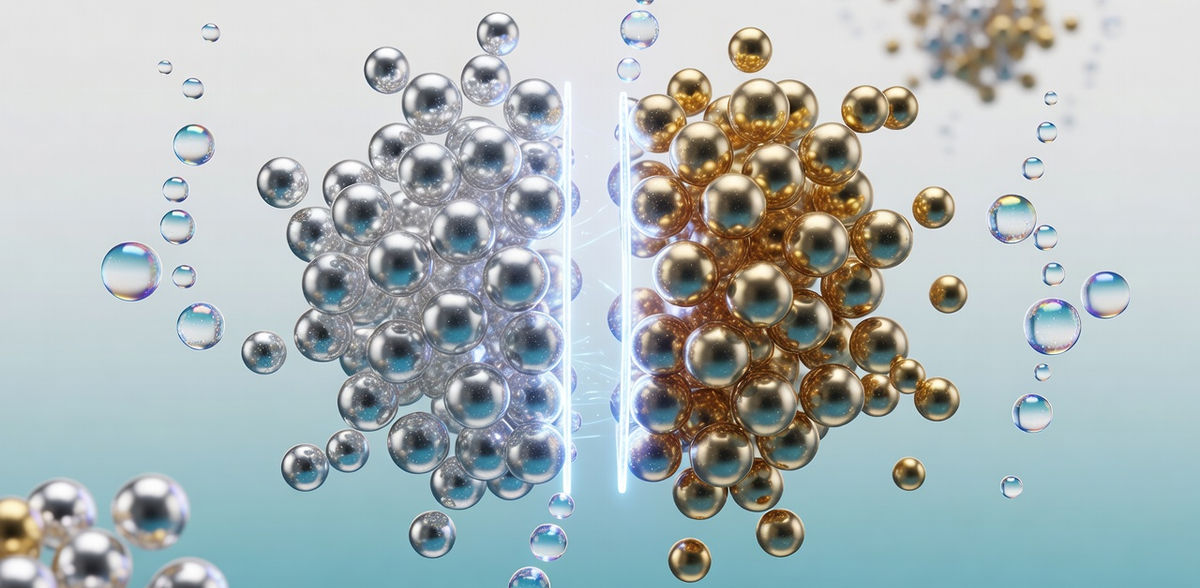
Researchers have discovered that atoms can be mixed, separated and recombined within the same experiment, providing a pathway to a record-breaking catalyst for green hydrogen production.
In the study, the team created nanoscale particles containing only a few dozen platinum and nickel atoms and observed unusual dynamic behaviour in direct space and in real time. As the two metals separate from one another, while maintaining an interface, they become highly active for electrochemical water splitting, leading to efficient hydrogen evolution.
The project is led by the University of Nottingham in collaboration with the University of Birmingham, Diamond Light Source, and Ulm University in Germany. The study has been published in Advanced Materials.
Dr Jesum Alves Fernandes, in the School of Chemistry, University of Nottingham, who led the research team, said: “What makes this discovery exciting is that we can reversibly tune the structure of the particle while directly observing the process at the atomic scale. This opens a new strategy for designing adaptive catalysts for a wide range of applications.”
When milk is added to coffee, the two substances mix together effortlessly and cannot spontaneously separate. This process is dictated by the second law of thermodynamics, which regulates the behaviour of molecules and atoms, leading to an increase in entropy, or a measure of disorder.
Dr Emerson Kohlrausch, who led experimental work in the University of Nottingham’s School of Chemistry, said, “Initially, when we looked at the platinum-nickel nanoparticles under the electron microscope, we saw that the two types of atoms are mixed, as one would expect in an alloy. However, only a few seconds later, the two metals started to separate from each other in front of our eyes. This was an astonishing observation, as it appeared to go against conventional thermodynamic behaviours.”
To image a material by electron microscopy, the atoms must interact with a beam of fast electrons, which can transfer some of their energy to the atoms in the sample. This stimulates atoms to reshuffle in the particle to occupy new positions, which, in the case of intermetallic platinum-nickel, leads to the separation of the metals.
As soon as nickel is separated from platinum, it picks up oxygen atoms from the environment, forming an oxide. “This results in nanoparticles made of two halves – platinum metal and nickel oxide, separated by an atomically defined interface. We create new types of hybrid particles and observe their formation in realtime, which is unprecedented,” says Professor Andrei Khlobystov, Professor of Nanomaterials at the University of Nottingham, who champions the use of electron microscopy for imaging chemical reactions.
The team utilised the electron beam as both an imaging tool and a source of energy for chemical reactions in the past, demonstrating the first real-time observation of chemical bond breaking and forming, and crystal nucleation. Professor Ute Kaiser, who led the SALVE project that developed a unique microscope for these experiments at Ulm University, Germany, said: “It is important to create conditions under which we can track positions of every atom. To achieve this, we employed the thinnest possible material to support the nanoparticles – the graphene sheet, and carefully controlled electron beam energy and flux.”
Remarkably, the metals can be mixed together again if the conditions are changed, forming an alloy, and the same process can be repeated several times. Dr Emerson Kohlrausch said, “Rather than behaving like rigid solid objects, the particles appeared to behave like living creatures, responding to the environment. This inspired us to harness their dynamics for catalysis”.
The researchers explored platinum-nickel particles for hydrogen production via electrochemical water splitting. They showed that the metal separation process discovered in the electron microscope also occurs under the reaction conditions. Dr Jesum Alves Fernandes said, “What makes these particles so effective is the cooperation between the two materials after separation. Platinum and nickel oxide each perform different roles in water splitting, and sharing an atomic boundary enables the ultimate cooperation between them.”
The cooperative effect boosts the hydrogen production from water, making this material one of the most effective catalysts for water splitting. Beyond hydrogen production, the findings could influence the future design of catalysts for energy conversion, chemical manufacturing, and sustainable industrial processes.
Original publication
Emerson C. Kohlrausch, Christopher Leist, Gazi N. Aliev, Mohsen Danaie, Matthew Young, Madasamy Thangamuthu, Yifan Chen, William J. Cull, Wolfgang Theis, Ute Kaiser, Andrei N. Khlobystov, Jesum Alves Fernandes; "Direct Imaging Reveals the Atomic Mechanism of Active‐Site Formation in Nanoclusters for Hydrogen Production"; Advanced Materials, 2026-6-3


Other news from the department science





















Most read news











More news from our other portals



























Last viewed contents

Global underground CO₂ storage hits record 43.6 million tonnes - London Register expands reach
Research Breakthrough on the Path to a New Reserve Antibiotic - For the first time, chemists have succeeded in synthesizing the highly potent natural compound neosorangicin A

Endress+Hauser expands its presence in the U.S. - 44 million euros are being invested in the new facility in Greenwood, Indiana
Plastic bottles could find new life in batteries as graphite - Penn State researchers converting PET waste into synthetic graphite that outperforms natural graphite
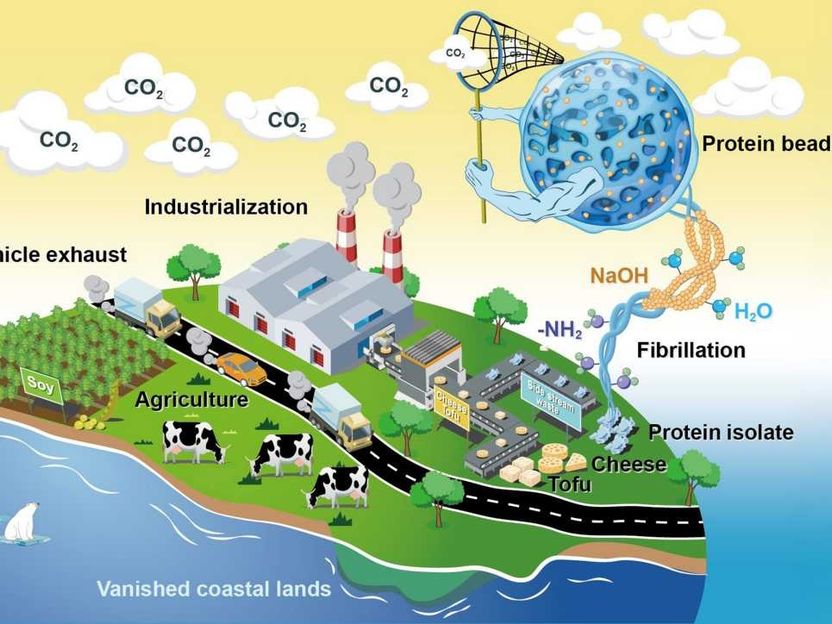
Turning food waste into carbon captors - Expected to be cheaper than other capture methods

Study shows: Lithium and sodium-ion technologies are more closely linked than assumed - "Switching to a new battery technology does not automatically open the door to new market players"

ETH spin-offs sweep the board at Venture Awards
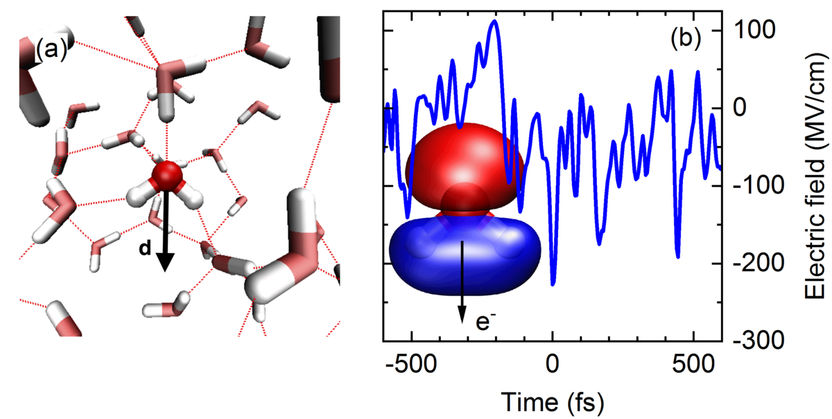
How to generate and steer electrons in liquid water - Surprising results reveal a new aspect of extremely strong electric fields in liquid water
Turning renewable energy into drop-in fuels - Synhelion advances scale-up with large-scale synthetic fuel project in Morocco
30 Million Euros for Catalyst Research Using AI-Controlled Laboratories - ASCEND is leveraging automated learning loops and 3D thin-film catalysts to develop industrially viable drop-in substitutes.
