AI helps scientists design better biochar catalysts for removing antibiotic pollution
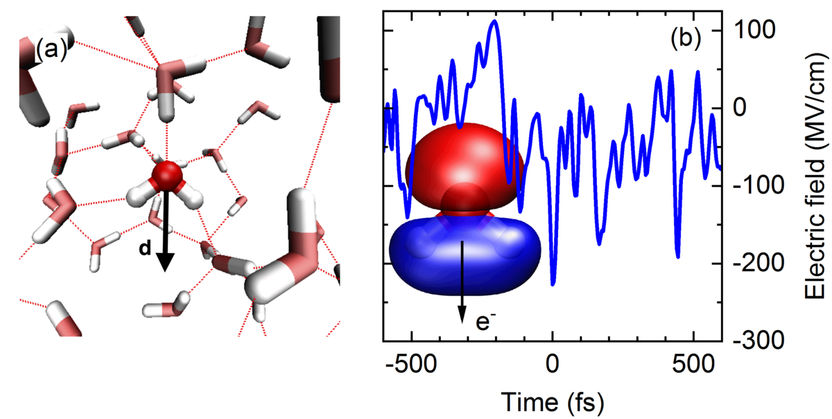
Biochar produced at 450 to 550 °C generates particularly high levels of reactive oxygen species
Advertisement


A new study shows that deep learning can predict how fast biochar materials break down antibiotic contaminants, offering a faster path toward cleaner water and smarter environmental remediation.
Antibiotic pollution is an increasing environmental and public health concern. These compounds can enter rivers, groundwater, wastewater systems, and agricultural environments, where they may persist, affect aquatic organisms, and contribute to the spread of antibiotic resistance. Biochar, a carbon-rich material made from biomass, has shown promise as a sustainable catalyst for degrading antibiotics. Yet designing the right biochar for the right treatment system remains difficult because many factors influence performance at the same time.
A research team has now developed an interpretable artificial intelligence framework that can predict the reaction rate of antibiotic degradation in biochar-catalyzed systems. The study, published in Biochar, combines environmental chemistry, materials science, and deep learning to identify which biochar traits and reaction conditions matter most.
"Biochar-based catalysts are highly promising, but their performance is controlled by complex interactions among pore structure, surface chemistry, persistent free radicals, oxidant dosage, and pollutant concentration," said the corresponding authors. "Our goal was to build a practical AI tool that not only predicts degradation kinetics, but also explains why certain systems work better than others."
The team compiled a comprehensive dataset from 75 peer-reviewed studies, covering multiple antibiotic classes, including tetracyclines, fluoroquinolones, and sulfonamides. They evaluated 16 input features across three major categories: biochar catalyst properties, elemental composition, and reaction conditions. Six machine learning models were tested, including Random Forest, XGBoost, LightGBM, Support Vector Regression, Multilayer Perceptron, and TabPFN, a transformer-based deep learning model designed for tabular data.
TabPFN delivered the strongest predictive performance, achieving a test R² of 0.91 and a root mean square error of 0.021. This performance exceeded that of tree-based, kernel-based, and conventional neural network models, showing the ability of transformer-based learning to handle small but complex environmental datasets.
Beyond prediction, the model revealed key mechanistic insights. Catalyst properties contributed 59.3% of the model's predictive power, followed by reaction conditions at 25.9% and elemental composition at 14.8%. The most influential factors included persistent free radicals, total pore volume, oxidant concentration, pollutant concentration, graphitic structure, average pore size, biochar dosage, and the Raman ID/IG ratio.
The analysis suggests that biochars rich in persistent free radicals formed at approximately 450 to 550 °C can promote reactive oxygen species generation, accelerating antibiotic degradation. A total pore volume above 0.23 cm³ g⁻¹ was also linked to stronger catalytic performance, likely because improved porosity enhances pollutant adsorption, oxidant transport, and access to active sites.
The study also identified practical operating windows. Moderate oxidant concentrations of about 0.5 to 5.5 mg L⁻¹ improved degradation, while excessive oxidant may reduce efficiency through radical scavenging. Lower pollutant concentrations, particularly below 22 mg L⁻¹, were associated with faster degradation because active sites remained more available.
To support real-world use, the researchers embedded the model into a user-friendly web-based graphical interface. Users can input catalyst properties, elemental composition, and reaction conditions to estimate antibiotic degradation rates. In external validation, the tool predicted new biochar catalyst performance with errors below 20%.
"This framework can help researchers screen biochar catalysts before conducting extensive experiments," the authors said. "It provides a faster, more explainable, and more cost-effective route for optimizing treatment systems for antibiotic-contaminated water."
The findings demonstrate how interpretable AI can move environmental remediation from trial-and-error testing toward data-guided catalyst design. By linking prediction with mechanistic understanding, the study offers a general strategy for improving biochar-based technologies and other complex catalytic systems used in pollution control.
Original publication


Other news from the department science





















Most read news











More news from our other portals



























Last viewed contents
The Potential of Sodium Ion Batteries - A Balanced View on a Promising Technology

Vianode and FAAM recycle graphite from production scrap to produce anode material - Companies advance industrial-scale closed-loop recycling of battery-grade graphite

A molecular strategy for longer-lasting, dendrite-free zinc batteries
Atomic reshuffle paves way for record-breaking catalysts for hydrogen production - "This opens a new strategy for designing adaptive catalysts for a wide range of applications"

Global underground CO₂ storage hits record 43.6 million tonnes - London Register expands reach
Research Breakthrough on the Path to a New Reserve Antibiotic - For the first time, chemists have succeeded in synthesizing the highly potent natural compound neosorangicin A
Endress+Hauser expands its presence in the U.S. - 44 million euros are being invested in the new facility in Greenwood, Indiana
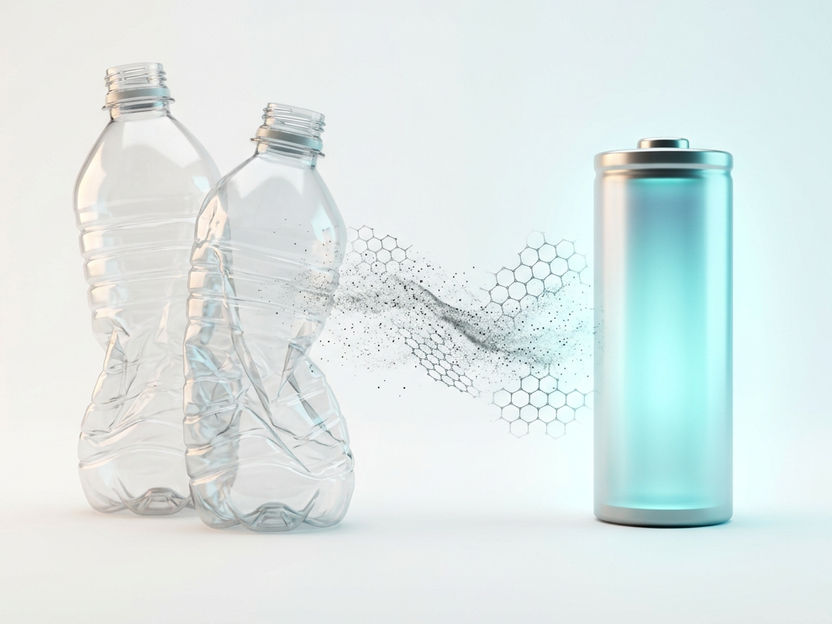
Plastic bottles could find new life in batteries as graphite - Penn State researchers converting PET waste into synthetic graphite that outperforms natural graphite
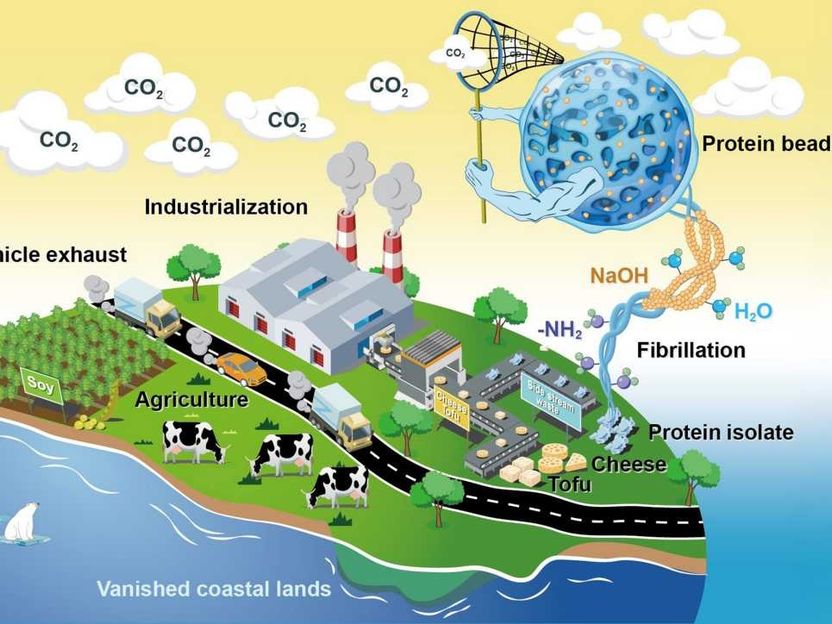
Turning food waste into carbon captors - Expected to be cheaper than other capture methods

Study shows: Lithium and sodium-ion technologies are more closely linked than assumed - "Switching to a new battery technology does not automatically open the door to new market players"

ETH spin-offs sweep the board at Venture Awards